


Korea Weather by Month (2026): Temperatures, Rainy Season and the Best Time to Visit Seoul
October 16, 2026 | by Korea Bestie
Updated 27 November 2026 · By the Korea Bestie team
Korea has four very distinct seasons: humid summers, cold dry winters, and two short, gorgeous seasons in between. Here’s Korea’s weather by month, what to wear, and when to go.
Last checked: October 2026. Temperatures are typical Seoul averages. Southern cities like Busan are a few degrees milder in winter.
⚡ Quick answer · key facts
- Best months April–May and mid-September to early November: mild, mostly dry and colorful.
- Rainiest July and August. Most of Seoul’s rain falls between late June and mid-September.
- Coldest January, often below freezing with a sharp wind. Pack a padded coat.
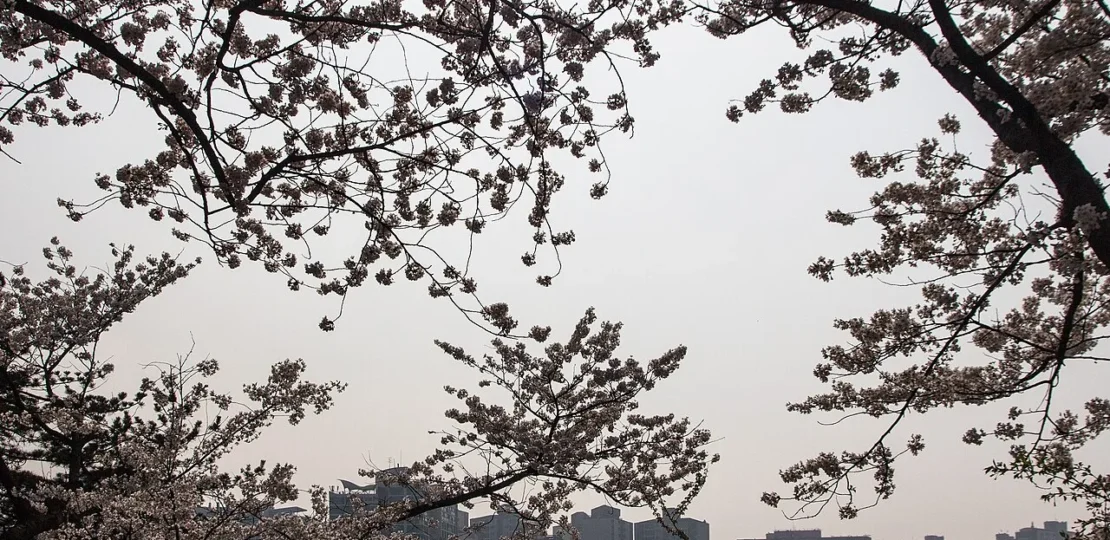
- Cherry blossoms early April. Autumn leaves: late October to early November in Seoul.
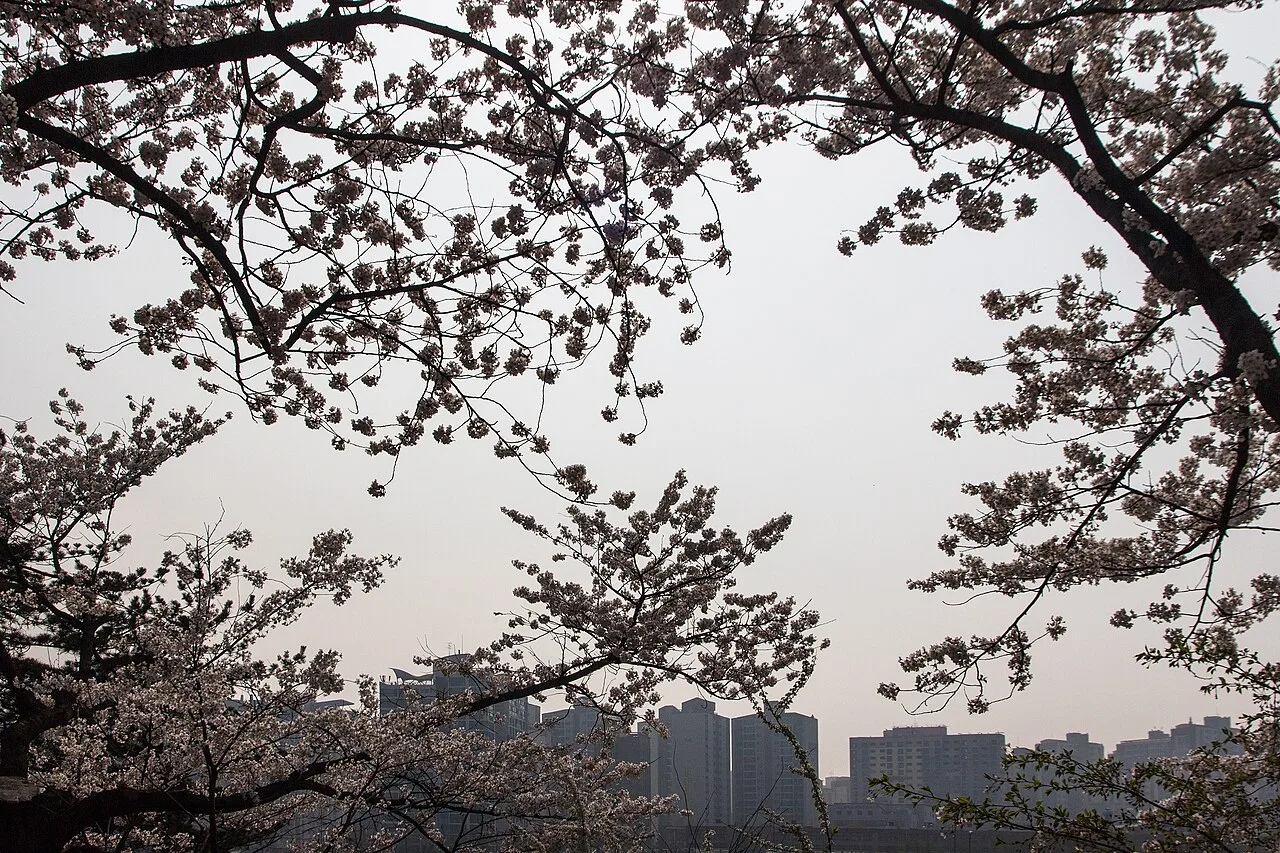
Table of contents
What is the weather like in Korea each month?
| Month | Typical range | What it’s like | Wear |
|---|---|---|---|
| Jan–Feb | -8 to 3°C (18–37°F) | Dry, freezing, windy | Padded coat, thermals, hat, gloves |
| Mar | 1 to 11°C (34–52°F) | Chilly, occasional yellow dust | Warm jacket, layers |
| Apr | 7 to 18°C (45–64°F) | Cherry blossoms in early April | Light jacket |
| May | 13 to 24°C (55–75°F) | Sunny, pleasant | T-shirt plus light layer |
| Jun | 18 to 28°C (64–82°F) | Warm, rainy season starts late month | Light clothes, umbrella |
| Jul–Aug | 23 to 31°C (73–88°F) | Hot, humid, monsoon downpours | Breathable clothes, umbrella, sunscreen |
| Sep | 17 to 27°C (63–81°F) | Warm, drying out | Light clothes |
| Oct | 9 to 21°C (48–70°F) | Crisp, clear, autumn leaves late month | Layers, light jacket |
| Nov | 2 to 12°C (36–54°F) | Cold mornings, late leaves | Coat |
| Dec | -5 to 4°C (23–39°F) | Cold, festive lights | Winter coat |
When is the best time to visit Korea?
- Spring (April–May) and autumn (mid-September to early November) have the most comfortable weather and the prettiest scenery.
- Summer is hot and wet, but good for beaches in Busan and indoor sights.
- Winter is cold and dry, with fewer crowds, ski resorts and snowy palaces.


What should I pack for Korea?
- Comfortable walking shoes. You’ll walk 15,000+ steps a day.
- Many sights involve hills and stairs, especially Bukchon.
- Pack light and buy cheap umbrellas and heat packs at convenience stores when you need them.
When is the rainy season in Korea?
Korea’s summer monsoon, called jangma (장마), usually reaches Seoul in late June and lasts about a month. Most of the year’s rain falls between late June and mid-September, and July and August are the wettest months by far: Seoul averages roughly 400 mm (16 in) of rain in July, compared with under 30 mm in January. Rain often comes as heavy downpours rather than all-day drizzle, so you can still sightsee between showers.
- Buy a cheap umbrella at any convenience store when you need one. Many stations have umbrella bag stands at the entrance.
- Late summer and early autumn can bring typhoons, mostly to the south coast, Busan and Jeju. Ferries and flights to Jeju are the first things to be cancelled, so keep those plans flexible.
- Plan rainy-day backups: museums, covered markets, department-store food halls and the big underground shopping arcades.
📊 Seoul in official numbers (KMA normals, 1991–2020)
| Measure | Seoul normal |
|---|---|
| Annual mean temperature | 12.8 °C |
| Coldest month | January, −1.9 °C |
| Warmest month | August, 26.1 °C |
| Wettest month | July, 414.4 mm |
| Driest month | January, 16.8 mm |
| Summer rain (Jun–Aug) | 892.1 mm — about 63% of the year's 1,417.9 mm |
| Winter rain and snow (Dec–Feb) | 67.6 mm |
Source: Korea Meteorological Administration – Seoul normals 1991–2020 · checked 27 November 2026
What about fine dust and air quality?
Some days, mostly in late winter and spring, the air turns hazy with fine dust (미세먼지, misemeonji) and occasional yellow dust (황사) blown in from the continent. It varies a lot from week to week. Check the air quality forecast on Naver (search “미세먼지”) or the weather app on your phone, and on “bad” days do indoor sightseeing and wear a KF94 mask, sold at every convenience store and pharmacy.
Is the weather different outside Seoul?
- Busan and the south coast: a few degrees milder in winter, with less snow, and often breezy by the sea. Summer is just as hot and humid as Seoul.
- Jeju Island: the mildest winters in Korea but windy, and very changeable weather, especially on Hallasan.
- Gangwon-do mountains (Pyeongchang, Seoraksan): much colder in winter, with real snow, which is why the ski resorts are there. Autumn color arrives there one to three weeks earlier than in Seoul.
What is each season good for?
- Spring: cherry blossoms along Yeouido and Seokchon Lake in early April, palace gardens in bloom, outdoor cafés and Han River picnics.
- Summer: Busan’s beaches, night markets, river parks in the evening and air-conditioned shopping. Book hotels early around the late-July to mid-August holiday peak.
- Autumn: the most comfortable weather of the year, hiking, palace foliage and festivals. Our Seoul fall foliage guide has this year’s forecast.
- Winter: ski day trips (see ski resorts near Seoul), Christmas markets and lights, snowy palaces and hot soups. Indoor spaces are well heated, so wear layers you can take off.
Weather is only half the picture: before you lock in dates, check the 2027 Korean holiday dates — trains sell out and many shops close around Seollal (6–9 February) and Chuseok (14–16 September).
🧮 Plan it: Korea Travel Prices · Korea Travel Budget Calculator
💬 Asked on Google before people found this page
Does it rain a lot in Korea?
Mostly in summer: the rainy season starts in late June, and July and August bring monsoon downpours. Spring and autumn are much drier.
FAQ
Does it snow in Seoul?
Yes, a few times each winter, usually lightly. It rarely stays on the ground for long in the city, but sidewalks and stairs can be icy in January.
Is Korea humid in summer?
Very. From July to August it’s hot and sticky even at night, so choose breathable clothes and plan breaks indoors.
What’s the worst month to visit Korea?
There’s no bad month, but mid-July to August is the least comfortable (heat, humidity and downpours), and January is the coldest. Both are fine if you plan indoor time.
Do I need a heavy coat in March or November?
Not a full winter coat, but a warm jacket and layers. Mornings and evenings can be near freezing in late November.
Plan the rest of your trip
- Gyeongbokgung Palace guide — beautiful in every season
- eSIM vs SIM card — stay connected
- Incheon Airport to Seoul — getting into the city
Free: Seoul in 3 Days planner (PDF)
A 4-page printable plan with timings, closed days, Korean names to show taxi drivers, a budget and rainy-day swaps. Enter your email and we’ll send it, plus occasional new Korea guides (unsubscribe anytime).
Sources: Climate of Seoul (KMA 1991–2020 normals, via Wikipedia) · Korea Meteorological Administration (official)
Photos: Alexey Komarov / Wikimedia Commons, CC BY 3.0 · revi / Wikimedia Commons, CC BY 2.0 kr · Korea.net / Korean Culture and Information Service (Jeon Han) / Wikimedia Commons, CC BY-SA 2.0
RELATED POSTS
View all

Best Map Apps for Korea (2026): Naver Map vs Kakao Map vs Google Maps
October 22, 2026 | by Korea Bestie
Halloween in Seoul (2026): Itaewon, Hongdae, Road Closures and Safety Tips
October 24, 2026 | by Korea Bestie

WOWPASS Exchange Rate (2026): How Top-Ups Work, Fees and Whether It’s a Good Deal
November 4, 2026 | by Korea Bestie