

Korean Winter Street Food (2026): Bungeoppang, Hotteok and Where to Find Them
November 1, 2026 | by Korea Bestie
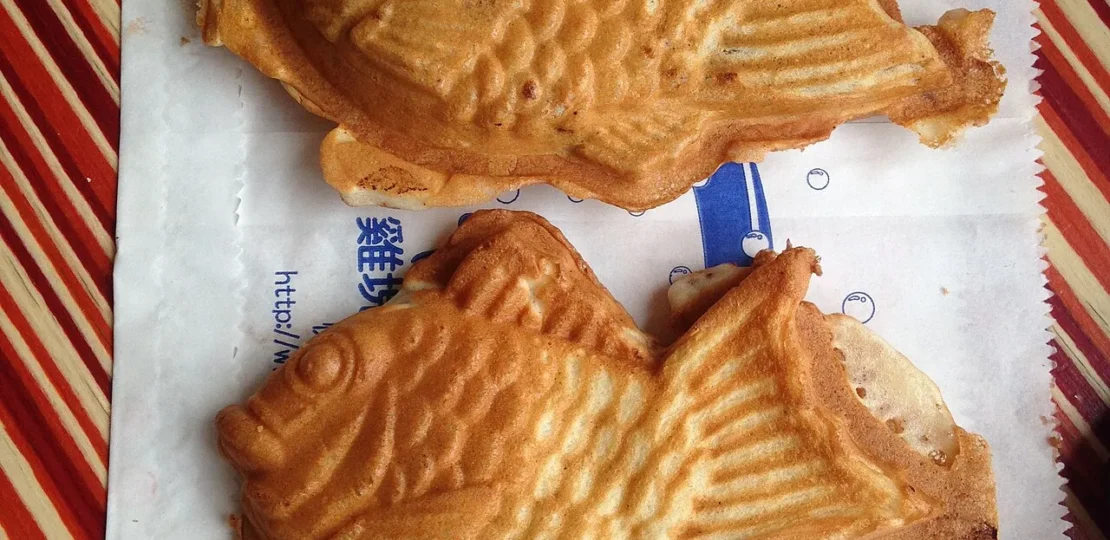
Korean winter street food is one of the best reasons to visit Korea between November and February. As soon as the air turns cold, carts and tiny stalls appear on street corners selling bungeoppang (fish-shaped pastries filled with sweet red bean), hotteok (syrupy filled pancakes), roasted sweet potatoes, chestnuts, egg bread and fish-cake skewers in hot broth. Most cost less than a coffee and are made to be eaten while walking. This guide explains what each snack is, where to find it in Seoul and Busan, roughly what it costs and how to order.
Last checked: 31 October 2026. Street-food prices vary by stall and have risen in recent years; treat the figures below as typical, not fixed. Dollar figures use about 1,330 KRW = 1 USD (October 2026).
Quick answer
- Must-try: Bungeoppang and hotteok — both are sweet, hot and cheap.
- Savoury pick: Eomuk (fish-cake skewers) with free hot broth.
- Where: Myeongdong, Namdaemun Market, Gwangjang Market, subway exits and university areas; in Busan, BIFF Square in Nampo.
- Season: Most winter stalls appear from about November to February.
- Pay with: Cash is safest; many stalls now take cards or transfers.
On this page
- What are the classic Korean winter snacks?
- What is bungeoppang?
- What is hotteok and how do you eat it?
- Where can I find winter street food in Seoul?
- How much does Korean street food cost?
- How do I order and pay?
- When is street-food season?
- Can vegetarians and people with allergies eat it?
- Notes for families
- FAQ
First time in Korea? Start here: our step-by-step guide from landing to your first day.
What are the classic Korean winter snacks?
| Snack | What it is | Taste | Tip |
|---|---|---|---|
| Bungeoppang (붕어빵) | Fish-shaped waffle-like pastry baked in an iron mould | Crisp outside, red bean or custard inside | Ask for ‘pat’ (red bean) or ‘syukeurim’ (custard) |
| Hotteok (호떡) | Pan-fried dough filled with brown sugar, cinnamon and nuts | Very sweet, hot syrup | Let it cool a moment — the filling burns |
| Gyeranppang (계란빵) | Small loaf of sweet bread with a whole egg baked on top | Sweet and savoury | Good, filling breakfast on the go |
| Eomuk (어묵) | Fish-cake skewers simmered in broth | Savoury, warming | The broth is free; pour it into a paper cup |
| Gun-goguma (군고구마) | Sweet potatoes roasted in a drum oven | Soft, naturally sweet | Sold by weight or in paper bags |
| Gunbam (군밤) | Roasted chestnuts | Nutty | Often sold from the same carts as sweet potatoes |
| Hoppang (호빵) | Steamed buns | Red bean, pizza or vegetable fillings | Every convenience store keeps them in a warmer |
What is bungeoppang?
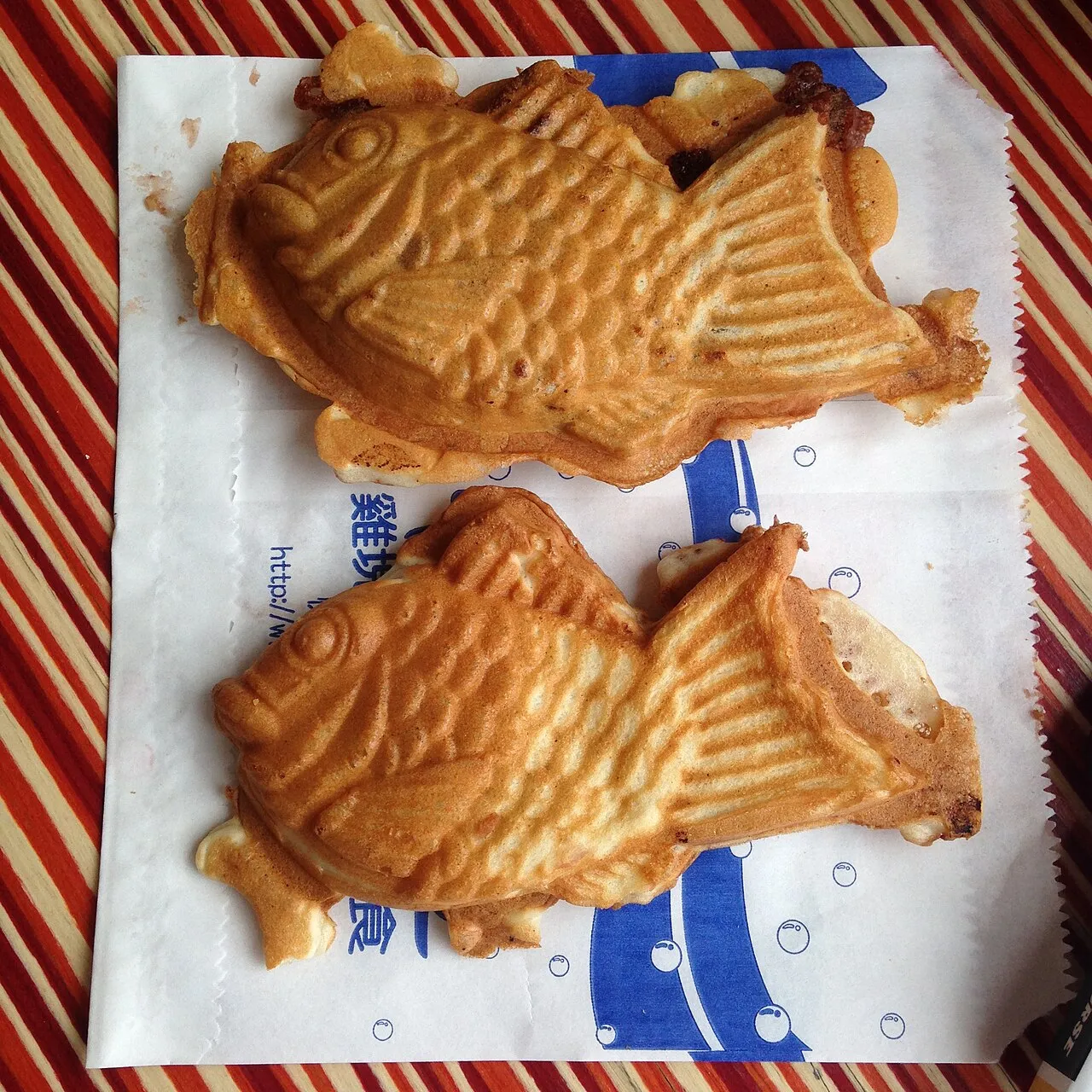
Bungeoppang means “carp bread”. The batter is poured into fish-shaped iron moulds, filled with sweet red bean paste and baked until the edges are crisp. It’s closely related to Japanese taiyaki, which arrived in Korea in the first half of the 20th century, and it has been a winter street snack for decades. Today you’ll also see custard, chocolate, sweet potato and even cheese fillings, plus mini versions sold by the bag. Koreans joke about whether to eat the head or the tail first — there’s no wrong answer.
Stalls sell bungeoppang by the piece or in small bundles. Many have become harder to find in central Seoul as costs have gone up, and locals sometimes use stall-finder apps or community maps to track them down. If you see one near a subway exit, buy a few while they’re hot.
What is hotteok and how do you eat it?
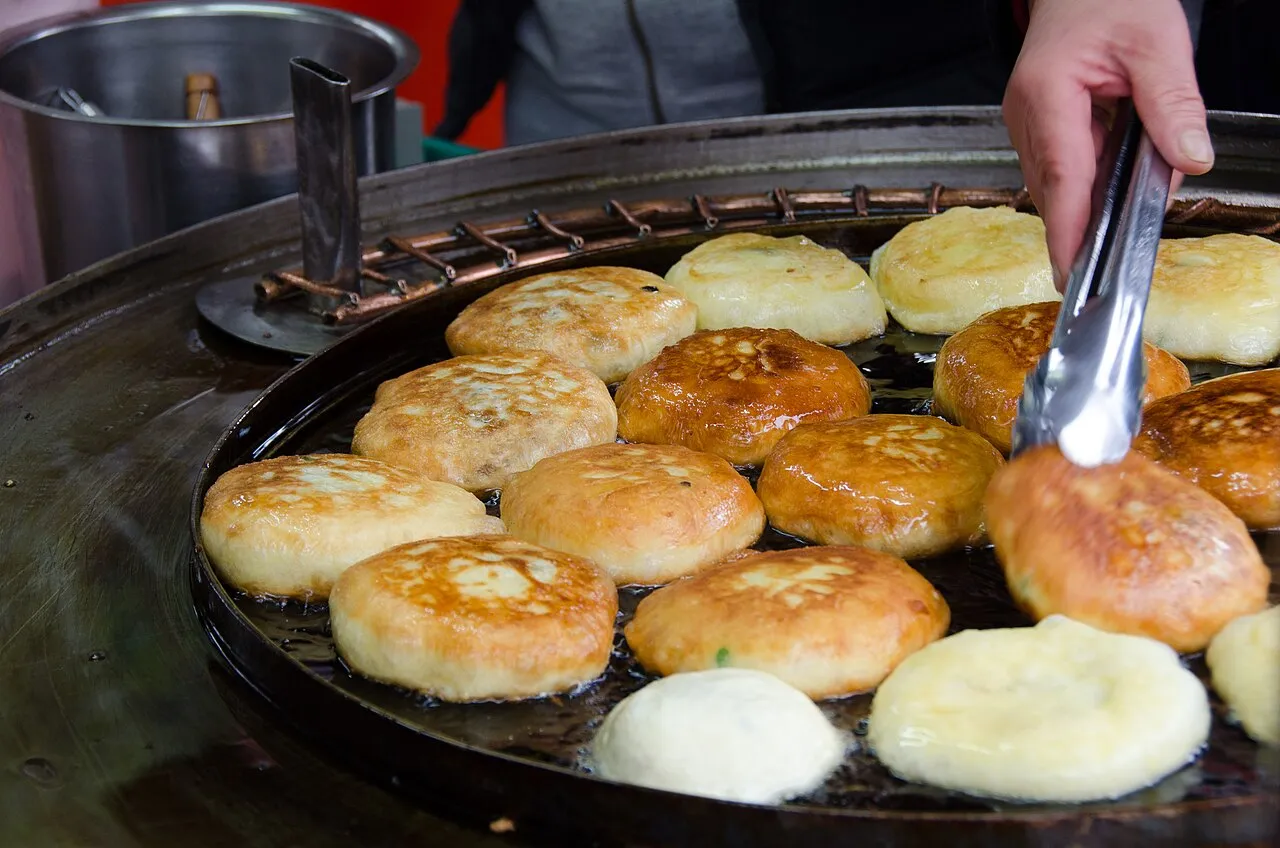
Hotteok is a round, chewy pancake filled with brown sugar syrup, cinnamon and chopped nuts or seeds, then pressed flat and fried on a griddle. It’s thought to have come to Korea with Chinese merchants in the late 19th century and is now one of the most loved winter snacks in the country. The filling becomes molten, so vendors usually fold it into a paper cup. Hold it upright, bite a small hole, and let the steam escape before taking a big bite.
In Busan, look for ssiat hotteok (seed hotteok): after frying, the pancake is split open and stuffed with sunflower and pumpkin seeds. It’s a classic at BIFF Square in Nampo-dong; see our Busan food guide.
Where can I find winter street food in Seoul?
| Area | Best for | Getting there | Watch out |
|---|---|---|---|
| Myeongdong | The widest choice, open late | Myeongdong station (Line 4) | Tourist prices; compare a few stalls |
| Namdaemun Market | Hotteok and traditional snacks | Hoehyeon station (Line 4) | Many stalls close early evening |
| Gwangjang Market | Hot food under one roof — warm on cold days | Jongno 5-ga station (Line 1) | Very busy at lunchtime |
| Insadong | Hotteok and traditional sweets | Anguk station (Line 3) | Queues at weekends |
| Subway exits and university areas | Bungeoppang carts and sweet potatoes | Anywhere in the city | Carts move and have no fixed hours |
For more on the two big night-food streets, see Myeongdong street food and Gwangjang Market food guide.
How much does Korean street food cost?
Winter snacks are among the cheapest things to eat in Korea. Bungeoppang is usually sold for well under 1,000 KRW (about $0.75) a piece or a little more in bundles, while hotteok, egg bread and eomuk skewers typically cost one to a few thousand won each. A paper bag of roasted sweet potatoes or chestnuts costs a few thousand won depending on size. Prices are higher in tourist hotspots such as Myeongdong. Stalls show prices on handwritten signs; if there’s no sign, point and ask “eolmayeyo?” (how much is it?).
How do I order and pay?
- Point to what you want and show the number with your fingers; most vendors understand.
- Carry small notes (1,000 and 5,000 KRW) and coins; some stalls take cards or bank transfers, but cash is safest.
- Eat next to the stall or while walking; there are rarely seats.
- Keep your paper cup and skewers — vendors usually have a bin. Public bins are scarce in Seoul.
- Convenience stores sell hoppang, hot drinks and roasted sweet potatoes all day; see our convenience store guide.
When is street-food season?
Most winter-only stalls appear in November, once evenings get cold, and stay until about February or early March. Myeongdong and the markets serve street food all year, but bungeoppang carts and drum-oven sweet potatoes are true winter signs. Evenings are the liveliest time; on very cold or snowy days, some carts close early. Wrap up warmly — see Seoul in winter for what to wear.
Can vegetarians and people with allergies eat it?
Many sweet snacks are vegetarian: red bean bungeoppang, hotteok, sweet potatoes and chestnuts. Hotteok and some bungeoppang may contain nuts or seeds, and batters usually contain wheat, milk and egg. Eomuk is made from fish, and its broth often uses anchovy or kelp. If you have a serious allergy, show a translated note to the vendor. See vegetarian food in Seoul for more help.
Notes for families
Children usually love custard bungeoppang and mini versions. Hotteok filling is very hot, so cut it open and let it cool first. Markets are crowded and some streets are narrow, so a compact pushchair is easier than a large one.
Nearby on Korea Bestie
- Myeongdong street food — the busiest food street
- Gwangjang Market food — bindaetteok and more
- Seoul in winter — weather and what to wear
- Korean convenience stores — hoppang and hot drinks
How much will this trip cost?
Pick your group, nights, hotel type and food style — get a realistic budget range in seconds.
FAQ
What is the most popular Korean winter street food?
Bungeoppang and hotteok are the classic pair, followed by roasted sweet potatoes and fish-cake skewers.
Is bungeoppang the same as taiyaki?
They’re closely related. Bungeoppang came from Japanese taiyaki but is usually thinner and crisper, sold from street carts.
When can I find bungeoppang in Korea?
Mostly from November to February, when the weather is cold.
Do street food stalls in Korea take cards?
Many do now, but cash in small notes is still the safest option.
Free: Seoul in 3 Days planner (PDF)
A 4-page printable plan with timings, closed days, Korean names to show taxi drivers, a budget and rainy-day swaps. Enter your email and we’ll send it, plus occasional new Korea guides (unsubscribe anytime).
Sources: Wikipedia – Bungeo-ppang · Wikipedia – Hotteok · Wikipedia – Gyeranppang · Visit Korea – official tourism site
Photos: photos from Wikimedia Commons, credited in each caption
RELATED POSTS
View all

Lotte World Tickets (2026): Prices, Foreigner Discounts and After-4pm Entry
October 26, 2026 | by Korea Bestie
Seoul Subway Single Journey Ticket (2026): How to Buy One and Get Your 500 Won Back
October 22, 2026 | by Korea Bestie
Seoul on a Rainy Day (2026): An Indoor Route With Map — National Museum, Yongsan and The Hyundai Seoul
November 1, 2026 | by Korea Bestie