


National Museum of Korea: Free Entry, Opening Hours and What to See (Our Visit)
November 22, 2026 | by Korea Bestie
Updated 26 November 2026 · By the Korea Bestie team
The National Museum of Korea in Yongsan is the biggest museum in the country, and the permanent galleries are free. We spent a summer Sunday afternoon there, and it is the place we would now send anyone who has one rainy day in Seoul, or who wants to understand what they are looking at in the palaces. Here is what to see, how long it takes, and the practical details checked against the museum’s own site.
Our visit: a Sunday afternoon at the end of August, roughly 2 pm to 3:30 pm — prehistory, the Silla gold room and the world culture galleries. There were plenty of families in the galleries that day.
Last checked: 20 November 2026. Hours, closures and fees are from the museum’s official English visitor page.
🇰🇷 Checked against Korean official sources · 20 November 2026
⚡ Quick answer · key facts
- Admission free for the permanent galleries and the Children’s Museum; special exhibitions are ticketed.
- Hours Mon, Tue, Thu, Fri, Sun 9:30 am–5:30 pm; Wed and Sat until 9 pm. Last entry 30 minutes before closing.
- Closed 1 January, Seollal day and Chuseok day; galleries also close on the first Monday of March, June, September and December (next: 7 December 2026).
- Getting there Ichon Station (Line 4 / Gyeongui-Jungang Line), Exit 2, then 150 m toward Yongsan Family Park.
- Time needed 2–3 hours for highlights; a full day if you read everything.
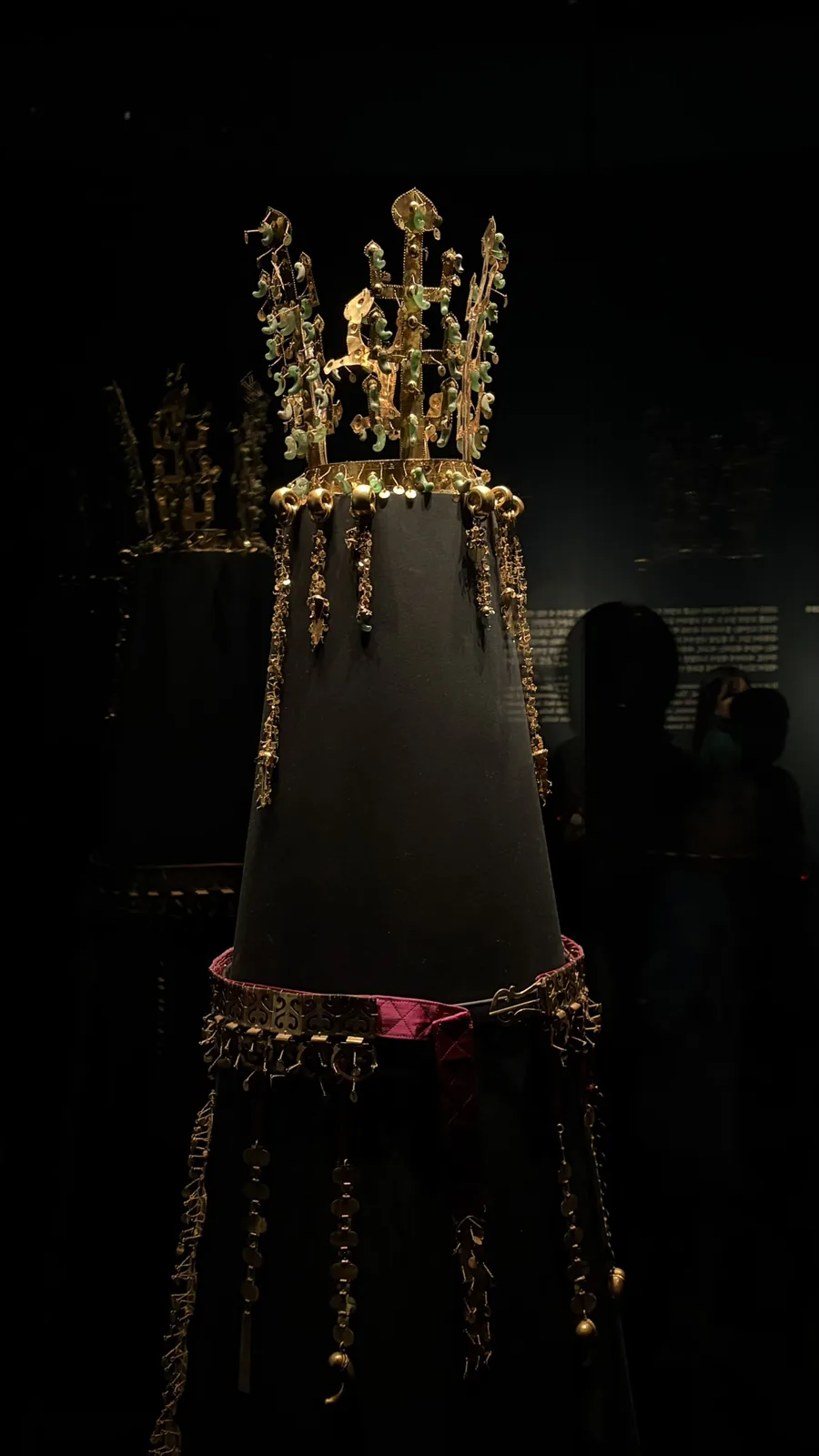
Table of contents
What we saw: three rooms worth your time
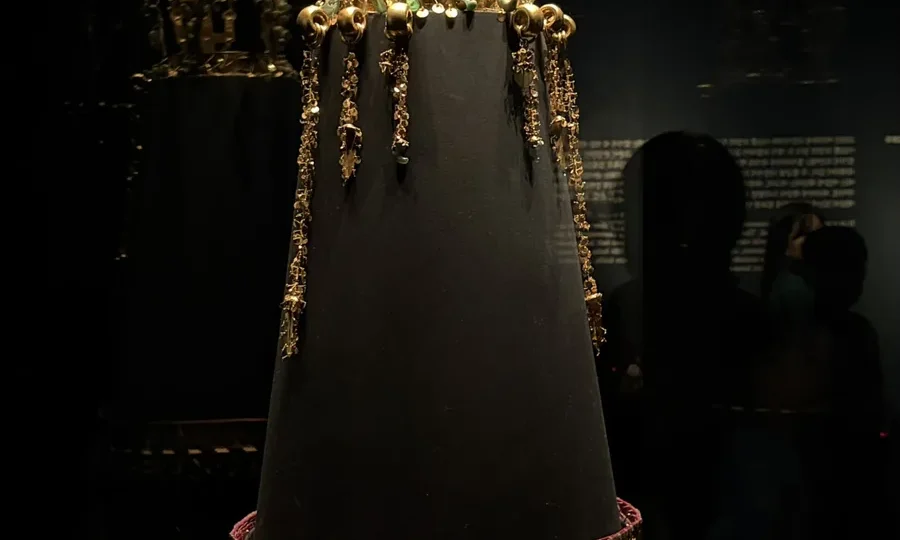
The Silla gold. The photo above is the room most people come for: a Silla gold crown, lit in a dark gallery so the gold leaves and hanging jade “comma” beads glow. Silla was the kingdom based in Gyeongju, and its crowns are among the most famous objects in Korea. The thin gold sheets and dangling ornaments make it look far more delicate in person than in textbook photos.
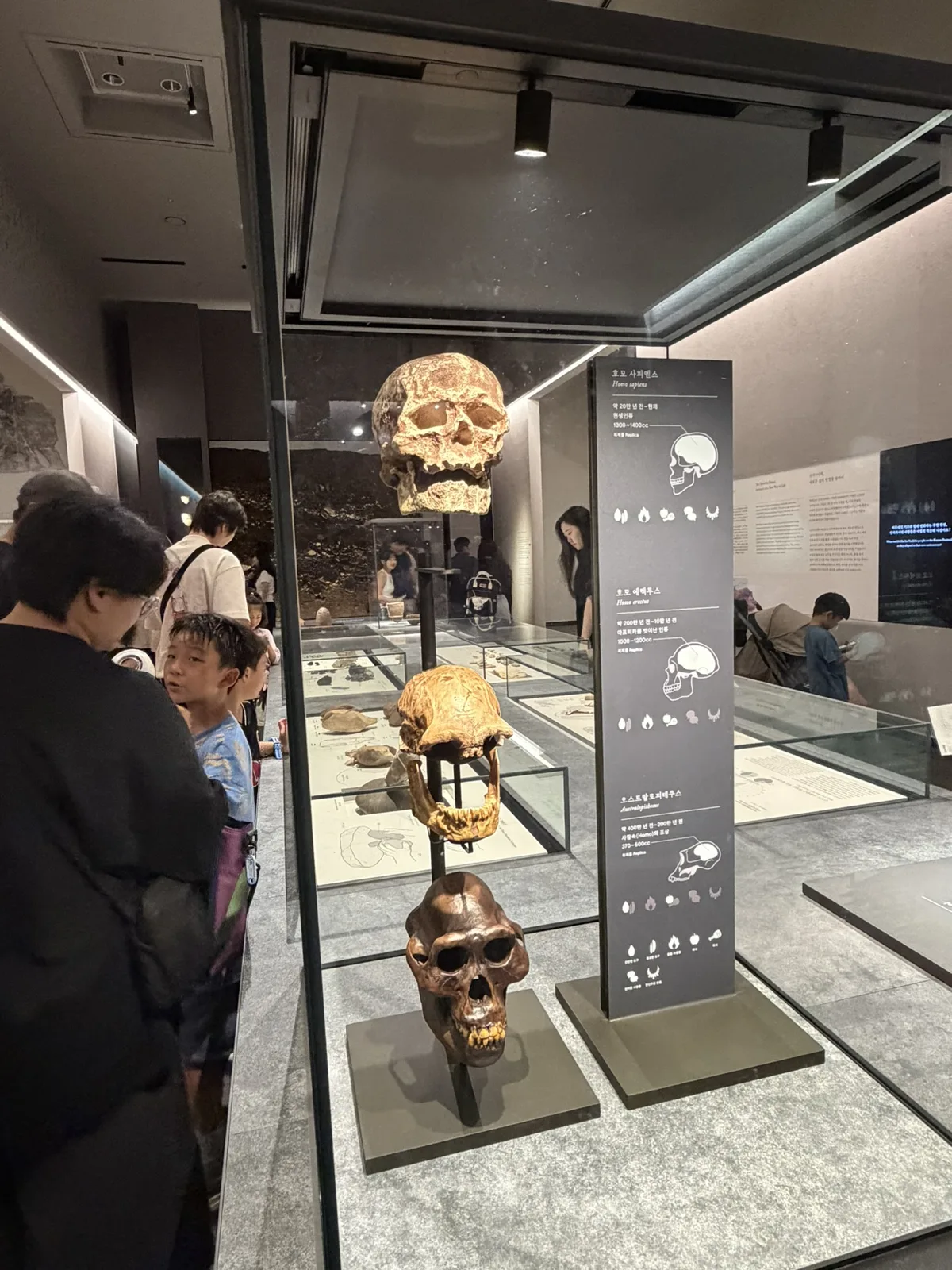
Prehistory. On the first floor the story starts long before Korea existed, with casts of early human skulls lined up in a glass case so you can see how faces changed. There were children gathered around this case when we visited — a good room if you are travelling with kids.
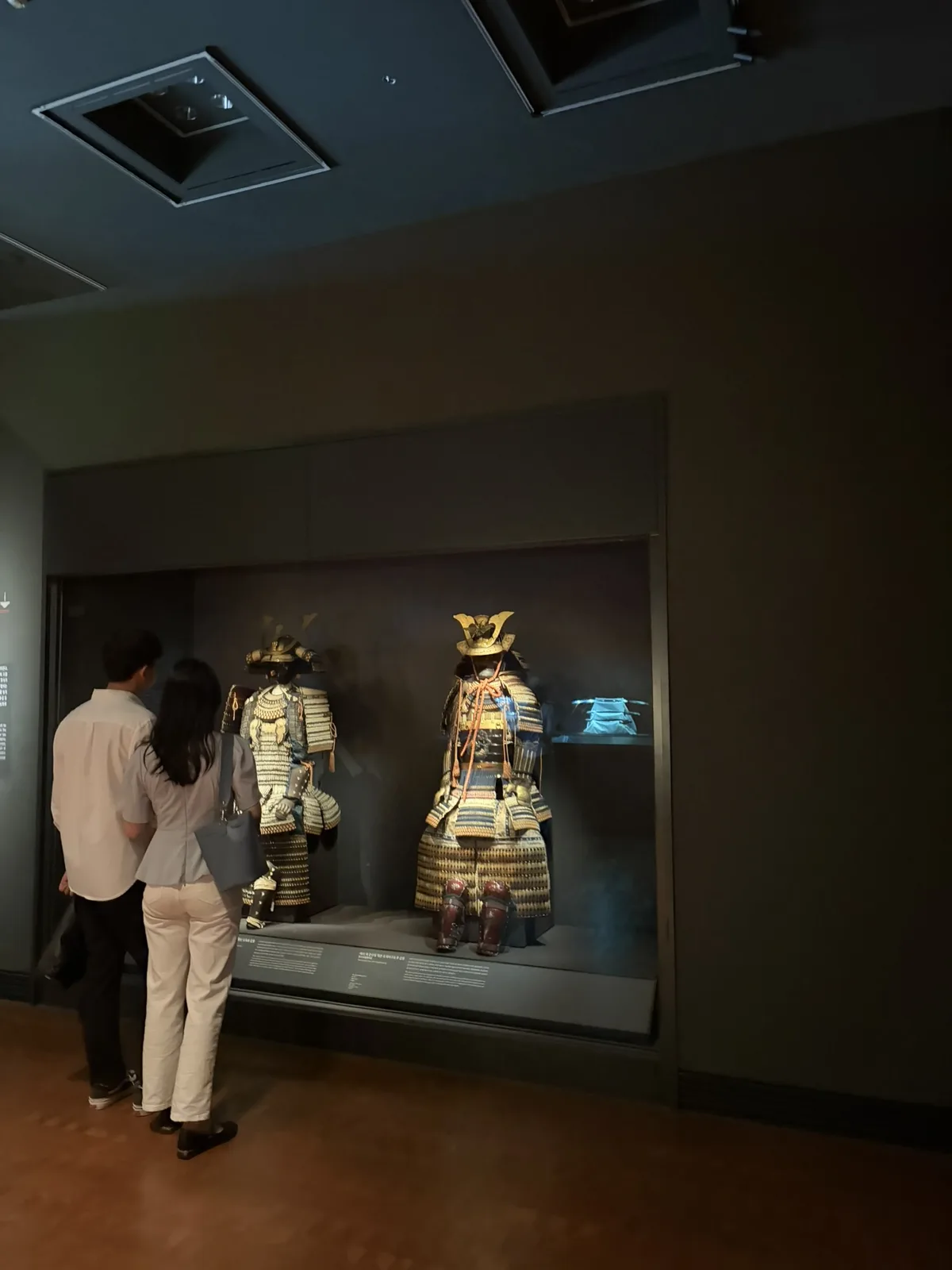
World culture. Upstairs, the world culture galleries hold collections from other parts of Asia. We spent a long time in front of two suits of Japanese samurai armour, in a darkened room that makes the lacquer and silk cords stand out.
Beyond these, most visitors head for the Room of Quiet Contemplation on the second floor, where two pensive bodhisattva statues sit alone in a softly lit space, and the ten-storey stone pagoda from Gyeongcheonsa Temple standing in the main hall. Both are free and on the permanent route.
How to plan your visit
| If you have… | See this | Skip |
|---|---|---|
| 1 hour | Silla gold room, Room of Quiet Contemplation, the pagoda in the main hall | Everything upstairs |
| 2–3 hours | Add prehistory, Goryeo celadon and the calligraphy/painting galleries | Special exhibition unless it really interests you |
| Half a day | Add world culture and a special exhibition; coffee in the museum café | — |
| Evening (Wed/Sat) | Open until 9 pm — quieter after dinner time; the outdoor grounds stay open until 10 pm | — |
Photography without flash is allowed in the permanent galleries (we took all the photos here on a phone), but check the signs in special exhibitions.
Getting there and what’s nearby
Take Line 4 or the Gyeongui-Jungang Line to Ichon Station. An underground walkway called the Museum Nadeulgil connects the station toward the museum (open 7 am–11 pm), and there is an elevator in the direction of Exits 1 and 2. From Exit 2 it is about 150 m on foot toward Yongsan Family Park.
The museum is close to the Ichon Hangang Park, so in good weather you can walk down to the river afterwards — see our Han River parks guide. On a wet day, pair it with the ideas in our Seoul rainy-day route. And if the museum gets you interested in the dynasties behind the objects, the palaces make more sense afterwards: start with Gyeongbokgung.
Our tips
- Start with the gold, then go up. The famous rooms are on the first and second floors; tired legs make the third floor feel long.
- Go on Wednesday or Saturday evening if your days are full — you get the same free galleries with fewer school groups.
- Check the closure Mondays. The first Monday of December (7 December 2026) closes the galleries even though the grounds stay open.
- Admission may change in future. Korean media reported in 2026 that the government is considering reservations and possibly fees from 2027; for now the permanent galleries are free.
Keep planning
- Seoul rainy-day route — indoor ideas for a wet day
- Gyeongbokgung Palace guide — tickets, guard ceremony and hanbok
- Han River parks guide — Ichon and the other riverside parks
🧮 Plan it: Korea Travel Prices · Korea Travel Budget Calculator
FAQ
Is the National Museum of Korea free?
Yes. The permanent galleries and the Children’s Museum are free; only some special exhibitions charge admission.
What are the National Museum of Korea opening hours?
9:30 am to 5:30 pm on Monday, Tuesday, Thursday, Friday and Sunday, and 9:30 am to 9 pm on Wednesday and Saturday. Last admission is 30 minutes before closing.
How do I get to the National Museum of Korea?
Take Line 4 or the Gyeongui-Jungang Line to Ichon Station, use Exit 2 and walk about 150 m toward Yongsan Family Park.
How long do you need at the National Museum of Korea?
Two to three hours covers the highlights: the Silla gold, the Room of Quiet Contemplation and the main hall pagoda.
Is the museum closed on Mondays?
No, it opens most Mondays. It closes on 1 January, Seollal and Chuseok days, and the galleries close on the first Monday of March, June, September and December.
Free: Seoul in 3 Days planner (PDF)
A 4-page printable plan with timings, closed days, Korean names to show taxi drivers, a budget and rainy-day swaps. Enter your email and we’ll send it, plus occasional new Korea guides (unsubscribe anytime).
Sources: National Museum of Korea – Visitor information · National Museum of Korea – By subway · The Korea Times – admission debate (2026)
Photos: all photos by Korea Bestie (our own visit)
RELATED POSTS
View all


Seoul Taxi Overcharging (2026): How to Avoid Taxi Scams and Report a Driver
October 26, 2026 | by Korea Bestie

Lotte World Christmas Market 2026: Jamsil Dates, Tickets, Hours and Seokchon Lake Lights
November 2, 2026 | by Korea Bestie
How to Ride the Seoul Subway (2026): Fares, T-money, Transfers, Last Trains and Apps
October 16, 2026 | by Korea Bestie