


Korean BBQ in Seoul (2026): How to Order, Which Cuts to Choose and Table Etiquette
October 30, 2026 | by Korea Bestie
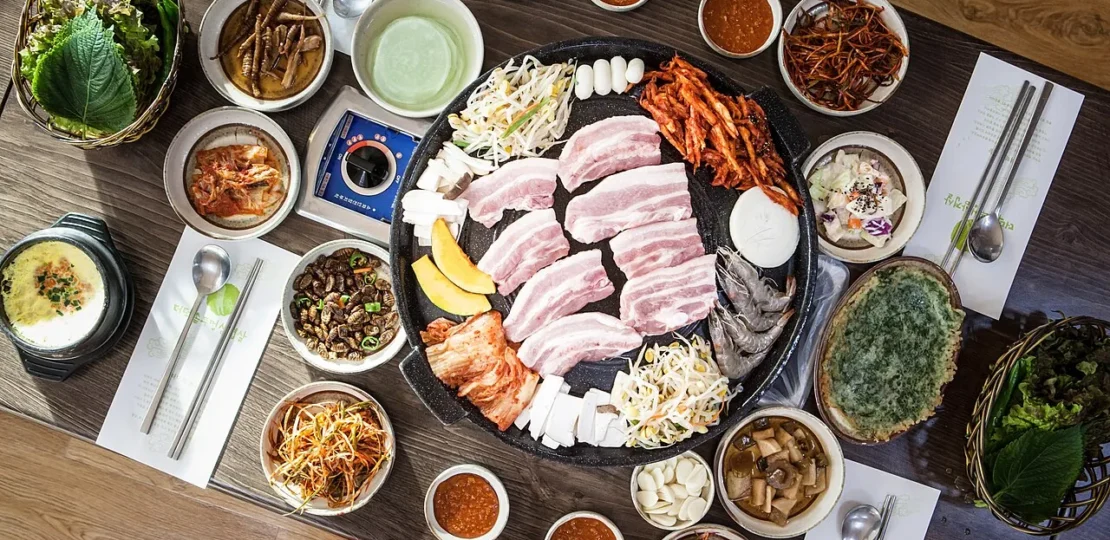
Sitting around a grill with a sizzling pile of pork belly is one of the best meals you’ll have in Korea, and also one of the most confusing the first time: menus in Korean, a two-serving minimum, a dozen side dishes and staff who sometimes take the tongs out of your hands. This guide explains how Korean BBQ (고기구이) works in Seoul, from ordering to the last spoon of fried rice.
Last checked: October 2026. Prices vary by area and restaurant. Dollar figures use about 1,330 KRW = 1 USD (October 2026).
Quick answer
- Order: most BBQ restaurants ask for at least two servings (2인분) of meat to start, even for one person.
- Classic cuts: samgyeopsal (pork belly), moksal (pork neck), galbi (marinated ribs) and, for beef, chadolbagi (thin brisket).
- Price: pork usually costs roughly 15,000–20,000 KRW per serving in central Seoul; beef costs much more.
- How to eat: wrap meat in lettuce with garlic, sauce and kimchi (ssam), in one bite.
- Finish with: fried rice in the pan, cold noodles (naengmyeon) or a bubbling doenjang stew.
On this page
- How does Korean BBQ work?
- Which cuts should I order?
- How do I eat Korean BBQ?
- What do I order after the meat?
- What are the table manners?
- Useful Korean phrases
- Where should I eat Korean BBQ in Seoul?
- What kinds of Korean BBQ restaurants are there?
- Is Korean BBQ easy for families and people with dietary needs?
- FAQ
First time in Korea? Start here: our step-by-step guide from landing to your first day.
How does Korean BBQ work?
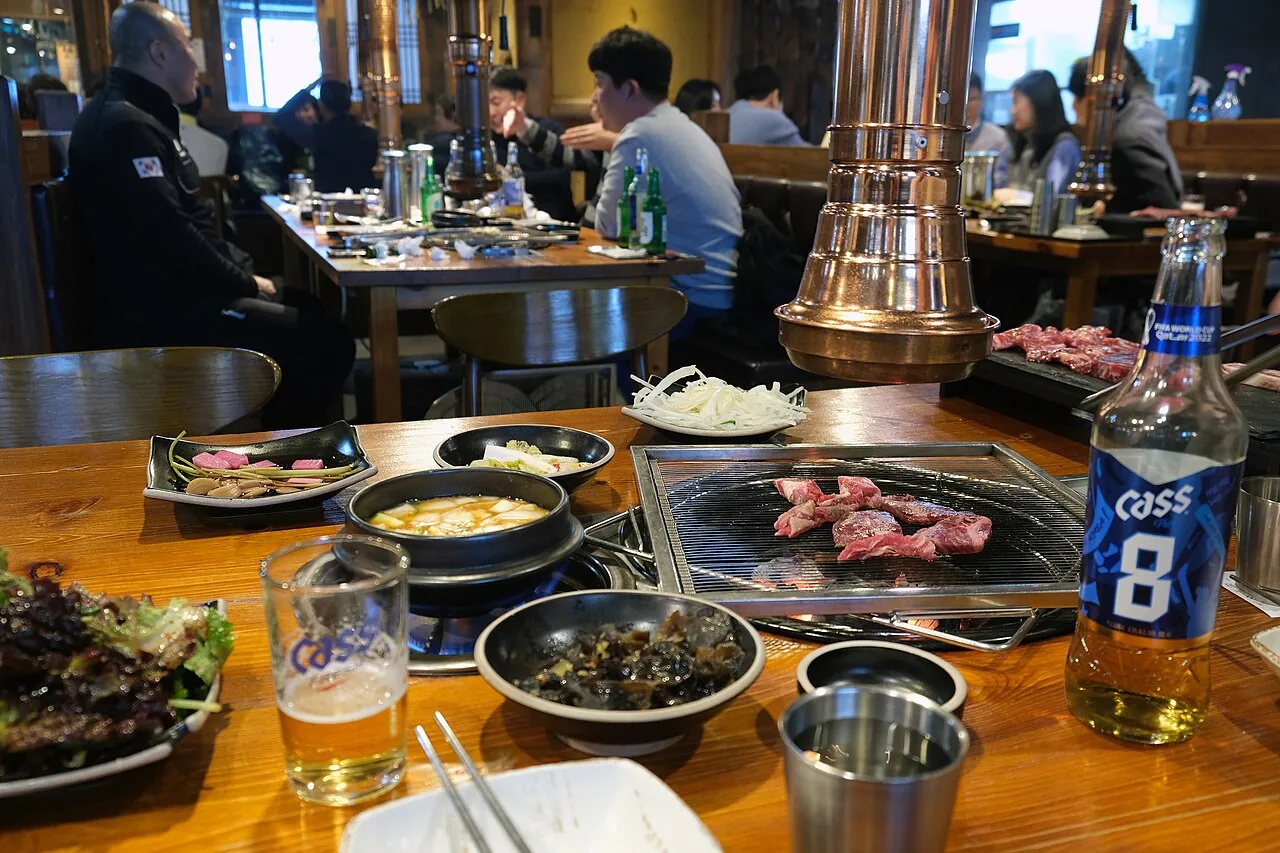
- Sit down and you’ll get water, cutlery (spoon and chopsticks in a drawer under the table or in a box) and often an apron. Hang your coat on the chair or put it in the seat bin to keep the smell off.
- Order the meat by serving (인분, inbun). Most places want at least two servings to start.
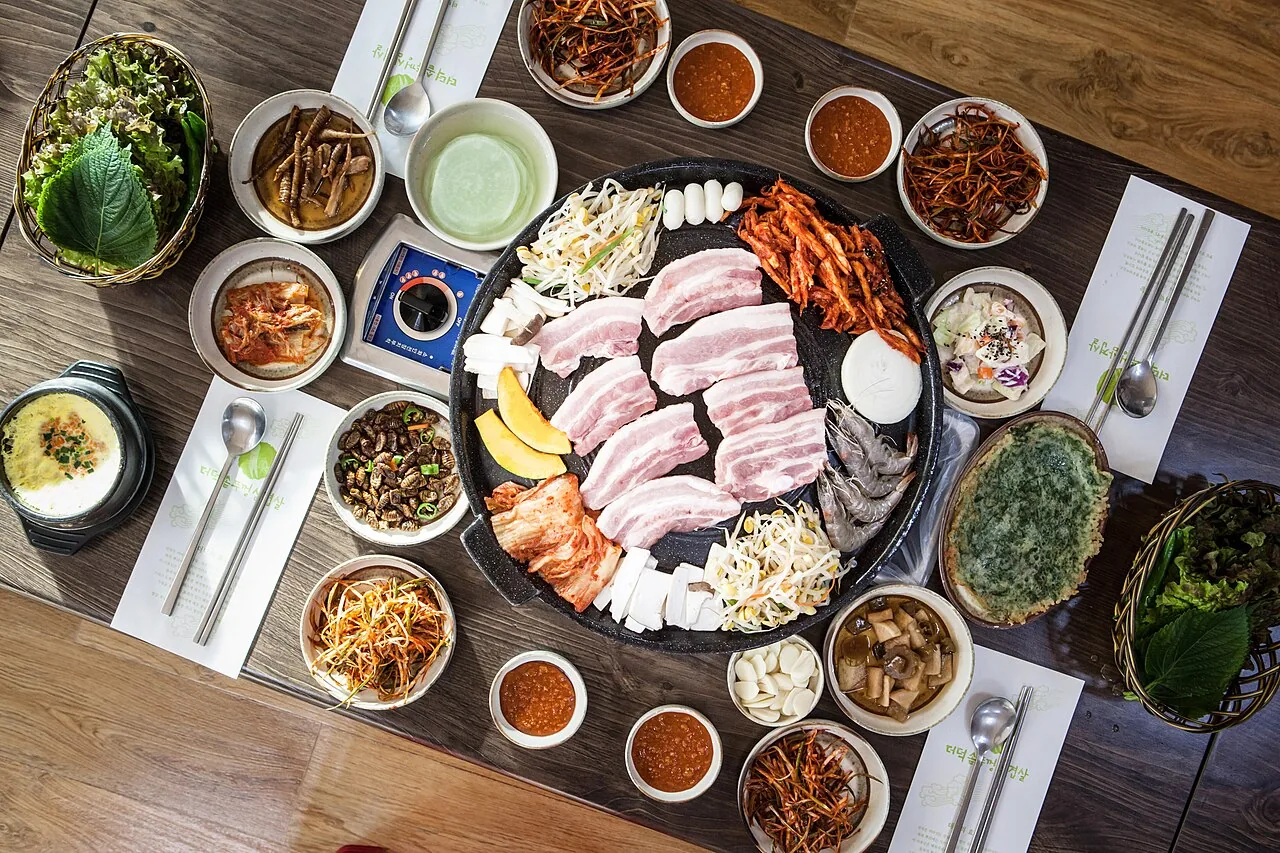
- Side dishes (banchan) arrive: kimchi, lettuce and perilla leaves, sliced garlic and chili, dipping sauces and more. They’re free and usually refillable; many restaurants have a self-serve bar for refills.
- The grill is lit and the meat goes on. In many places staff grill and cut it for you; in others it’s your job.
- Add more meat or a finishing dish as you go, and pay at the counter by the door when you leave. No tip.
Which cuts should I order?
| Cut | Korean | What it is |
|---|---|---|
| Samgyeopsal | 삼겹살 | pork belly in thick slices, the classic |
| Moksal | 목살 | pork neck/shoulder, leaner and meaty |
| Hangjeongsal | 항정살 | pork jowl, small, rich and slightly crunchy |
| Dwaeji galbi | 돼지갈비 | marinated pork ribs, sweet and garlicky |
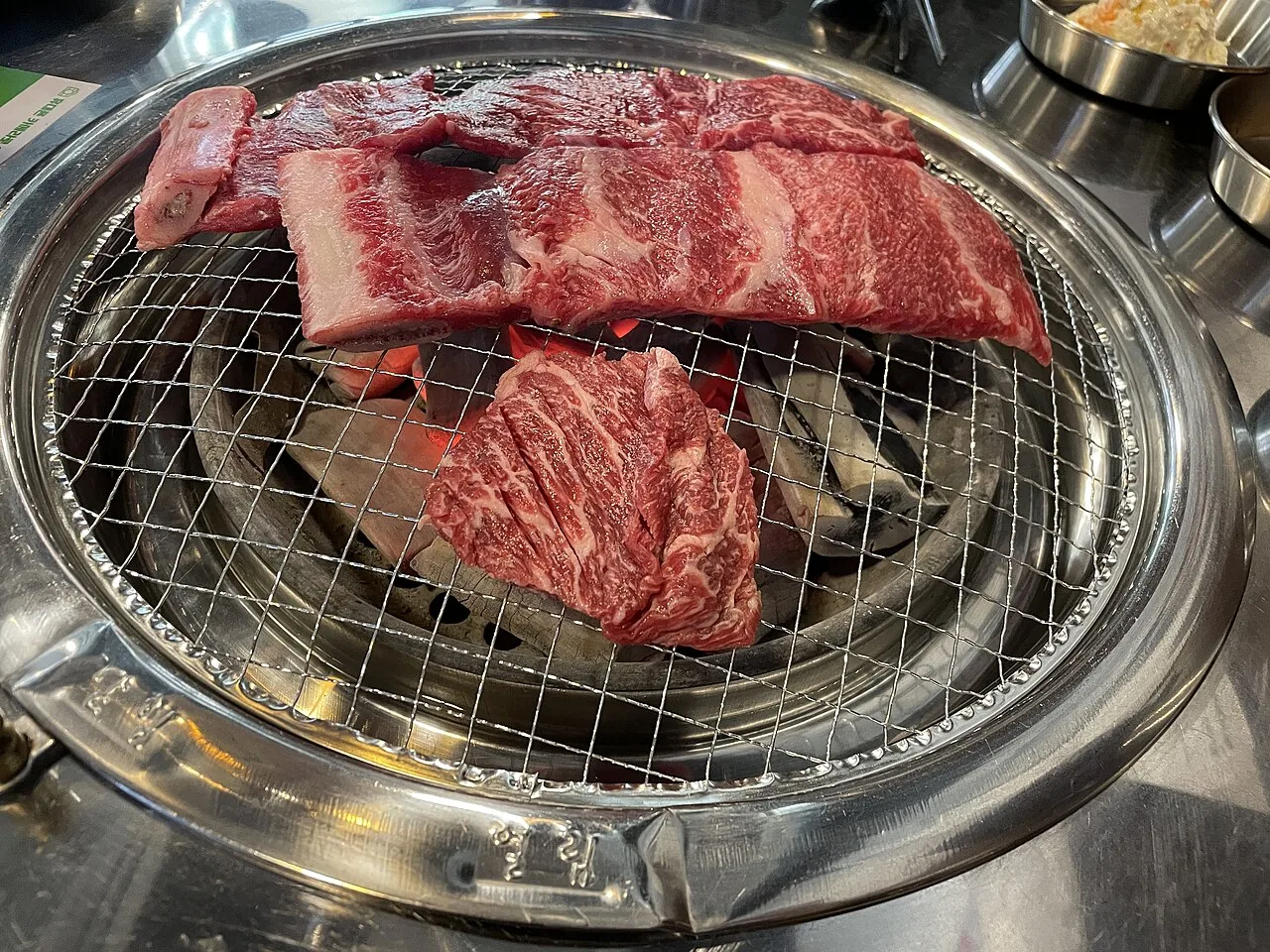
| So galbi | 소갈비 | beef short ribs, plain or marinated; pricey |
| Chadolbagi | 차돌박이 | paper-thin beef brisket that cooks in seconds |
| Deungsim | 등심 | beef sirloin |
A good first order for two people: two servings of samgyeopsal, then one of moksal or galbi if you’re still hungry.
How do I eat Korean BBQ?
- Ssam (wrap): take a lettuce or perilla leaf, add a piece of meat, a dab of ssamjang (spicy bean paste), garlic and kimchi, fold it and eat it in one bite.
- Grill the extras: put kimchi, garlic and mushrooms on the grill next to the meat; they soak up the fat.
- Dipping: sesame oil with salt and pepper is for plain pork; ssamjang for wraps.
- Scissors are normal for cutting meat at the table.
What do I order after the meat?
- Bokkeumbap (볶음밥): fried rice made in the grill pan with the leftovers, at many pork places.
- Naengmyeon (냉면): cold buckwheat noodles, a classic after galbi.
- Doenjang jjigae (된장찌개): soybean-paste stew with rice.
- Drinks: soju and beer are standard; many people mix them as “somaek”.
What are the table manners?
- Let staff help. If a server takes over the grill, it’s service, not a criticism.
- Pour for others, not yourself, and hold your glass with two hands when an older person pours for you.
- Don’t stick chopsticks upright in rice.
- Solo diners: some places don’t serve one person because of the two-serving minimum; look for signs saying “1인 가능” (one person OK) or choose places with set menus.
Useful Korean phrases
- 삼겹살 2인분 주세요 (samgyeopsal i-inbun juseyo): “Two servings of pork belly, please.”
- 여기요! (yeogiyo): “Excuse me!” to call staff; many tables also have a call button.
- 상추 더 주세요 (sangchu deo juseyo): “More lettuce, please.”
- 계산할게요 (gyesanhalgeyo): “I’d like to pay.”
Where should I eat Korean BBQ in Seoul?
You’ll find BBQ restaurants in every neighborhood. Office districts and university areas have the best value, especially at dinner. Look for places full of Korean diners. Our neighborhood food guides list options near where you’re staying: Hongdae restaurants, Myeongdong restaurants and Itaewon restaurants. Muslim travelers can find halal-certified Korean BBQ around Itaewon; see halal food in Itaewon.
What kinds of Korean BBQ restaurants are there?
- Pork specialists (삼겹살집): the most common and best value, often with charcoal or gas grills.
- Galbi houses (갈비집): marinated pork or beef ribs, usually a step more upmarket.
- Beef restaurants (한우): Korean hanwoo beef, excellent and expensive; often ordered by weight.
- All-you-can-eat (무한리필): fixed price, time limit, mixed quality; good for big appetites and students.
- Set menus for one: some newer places serve a single-person tray, a good option if you’re traveling solo.
Is Korean BBQ easy for families and people with dietary needs?
Kids usually love it, but keep small children away from the hot grill. Many older restaurants have floor seating or low stools, so ask for a table with chairs if you need one. Vegetarians will struggle at BBQ places beyond rice, side dishes and stews made without meat broth; say “고기 빼 주세요” (no meat, please) and check what’s in the stew.
Nearby on Korea Bestie
- Hongdae restaurants — BBQ near Hongdae
- Myeongdong restaurants — where to eat in Myeongdong
- Halal food in Itaewon — halal Korean BBQ options
- Kimchi-making class in Seoul — learn to make the side dish
How much will this trip cost?
Pick your group, nights, hotel type and food style — get a realistic budget range in seconds.
FAQ
Can one person eat Korean BBQ alone?
Sometimes. Many places require two servings, so you’d pay for both. Look for “1인 가능” signs or solo-friendly set menus.
Do Korean BBQ restaurants take cards?
Almost all do.
Is Korean BBQ spicy?
The meat usually isn’t; the spice comes from kimchi, chili and sauces, which you add yourself.
Will my clothes smell?
Yes, a little. Use the seat bins or plastic covers for coats, and some restaurants offer fabric spray by the door.
Free: Seoul in 3 Days planner (PDF)
A 4-page printable plan with timings, closed days, Korean names to show taxi drivers, a budget and rainy-day swaps. Enter your email and we’ll send it, plus occasional new Korea guides (unsubscribe anytime).
Sources: VisitKorea – Korean food guides · Wikipedia – Korean barbecue
Photos: 이동원 / Wikimedia Commons, CC0 · Jo Hanshin / Wikimedia Commons, CC0 · kallerna / Wikimedia Commons, CC BY-SA 4.0
RELATED POSTS
View all

Best Myeongdong Restaurants (2026): 5 Classic Places Locals Still Queue For
October 21, 2026 | by Korea Bestie

Seoul Bus Guide (2026): How to Pay, Fares and What If Your Card Is Declined
October 25, 2026 | by Korea Bestie

Namsan at Night (2026): Cable Car, N Seoul Tower and a Walk Down to Haebangchon — Route With Map
November 3, 2026 | by Korea Bestie