


Kimchi Making Class in Seoul (2026): English Classes, Museum Kimchikan and Kimjang Season
October 17, 2026 | by Korea Bestie
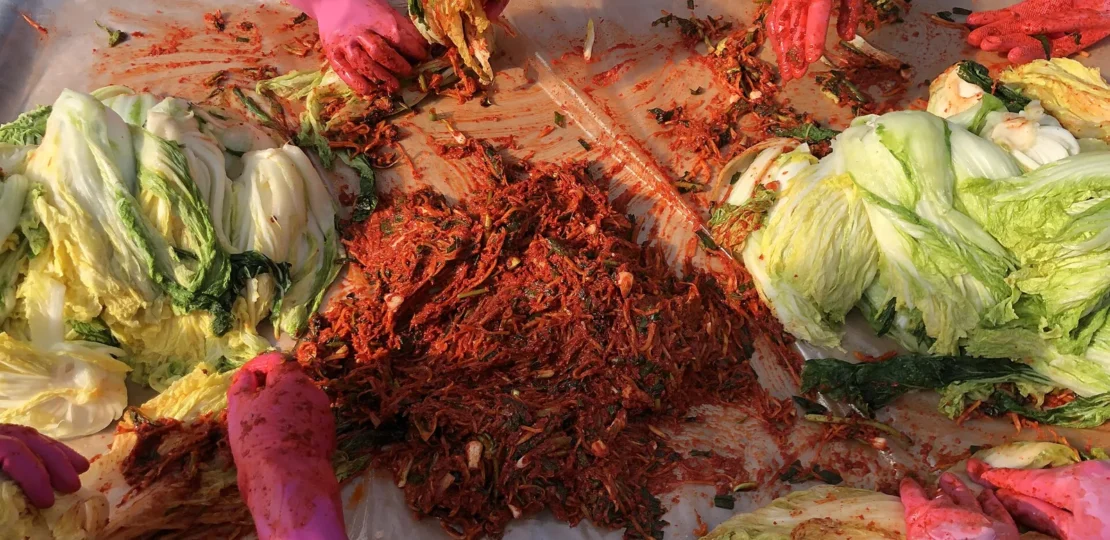
A kimchi making class in Seoul is one of the easiest hands-on things to add to your trip: two to three hours, an apron and rubber gloves, and a container of kimchi you made yourself at the end. Most classes for visitors run in English. This guide covers the three main ways to do it (a small-group cooking class, Museum Kimchikan (뮤지엄김치간) in Insadong, and the November kimjang (김장) season), what each costs, and how to get your kimchi home without losing it at airport security.
This guide contains affiliate links. If you book through them, we may earn a small commission at no extra cost to you. Affiliate disclosure.
Last checked: October 2026. Dollar figures use about 1,330 KRW = 1 USD (October 2026). Class prices and schedules change often, so confirm on the booking page.
First time in Korea? Start here: our step-by-step guide from landing to your first day.
Kimchi classes in Seoul at a glance
| Option | Price (approx.) | Time | English? | Best for |
|---|---|---|---|---|
| Small-group cooking class (Klook, GetYourGuide, local studios) | $55–95 per person (about 75,000–130,000 KRW) | 2–3 hours | Yes, usually | Solo travelers, couples, friends: book online and just show up |
| Museum Kimchikan, Insadong | Admission 5,000 KRW (~$4); kimchi programs priced separately | 60–90-minute programs plus museum visit | Programs for foreign visitors exist; confirm the language when booking | History plus a short hands-on session; groups of 4 or more |
| Kimjang festivals (November) | Often free to enter | A few hours | Varies year to year | Seeing kimjang at scale; public hands-on spots are not guaranteed |
Why November is kimchi season (kimjang)

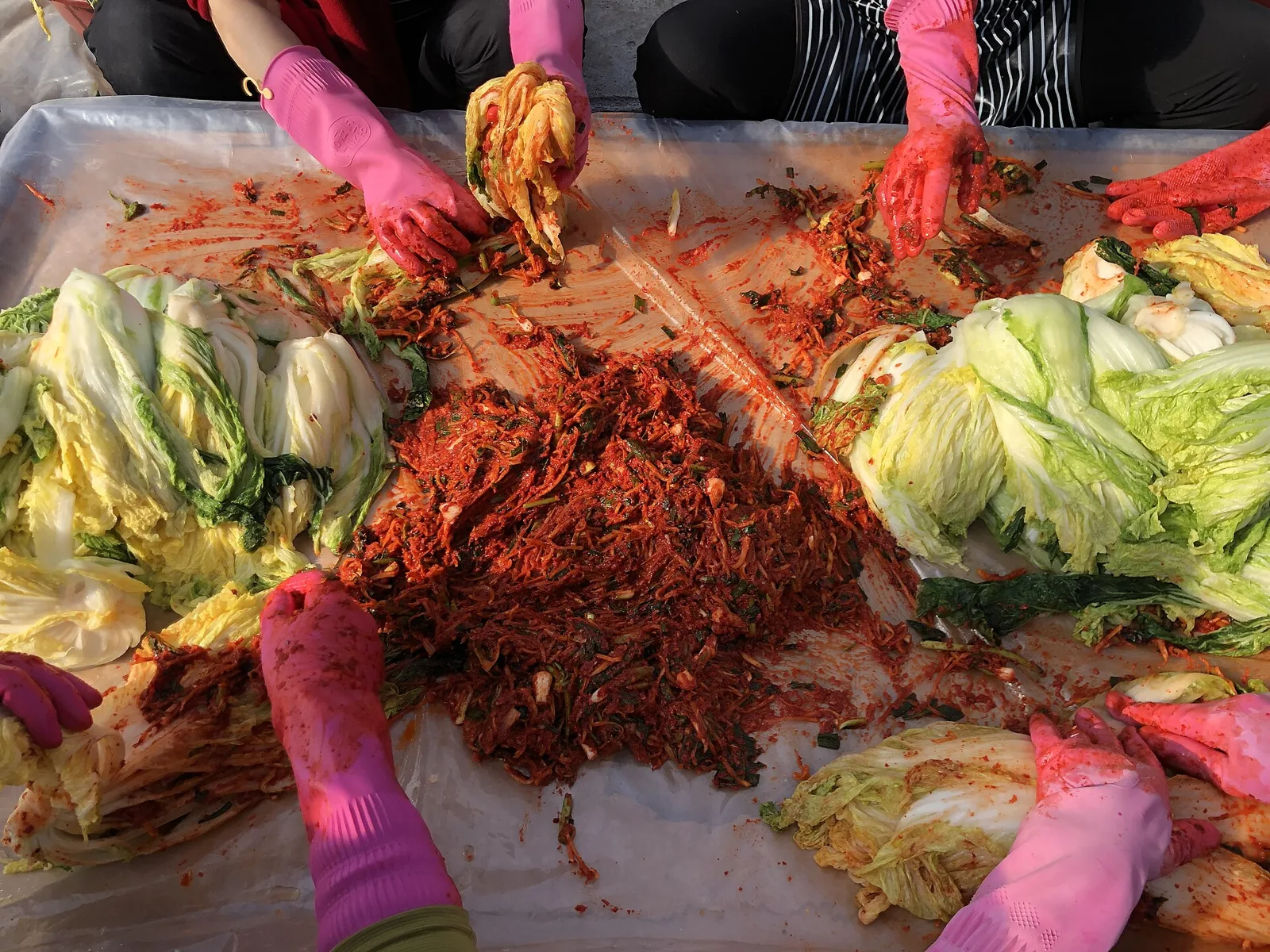
Kimjang (김장) is the yearly tradition of making a large batch of kimchi to last through winter. In Seoul it usually happens from late November to early December, when napa cabbage is at its best and the weather is cold enough for slow fermentation. Families and neighbors gather, salt dozens of cabbages, and share the work and the kimchi. UNESCO added “Kimjang, making and sharing kimchi” to its intangible cultural heritage list in 2013.
- Kimchi Day is November 22. Korea made it an official day in 2020, and you’ll see events, discounts and pop-ups around that date.
- Classes run all year, but in November many teach the full kimjang-style whole-cabbage kimchi (baechu-kimchi, 배추김치) instead of quicker cut kimchi.
- November in Seoul is cold, around 3–12°C (37–54°F). See Korea weather by month for what to pack.
Option 1: English kimchi cooking classes
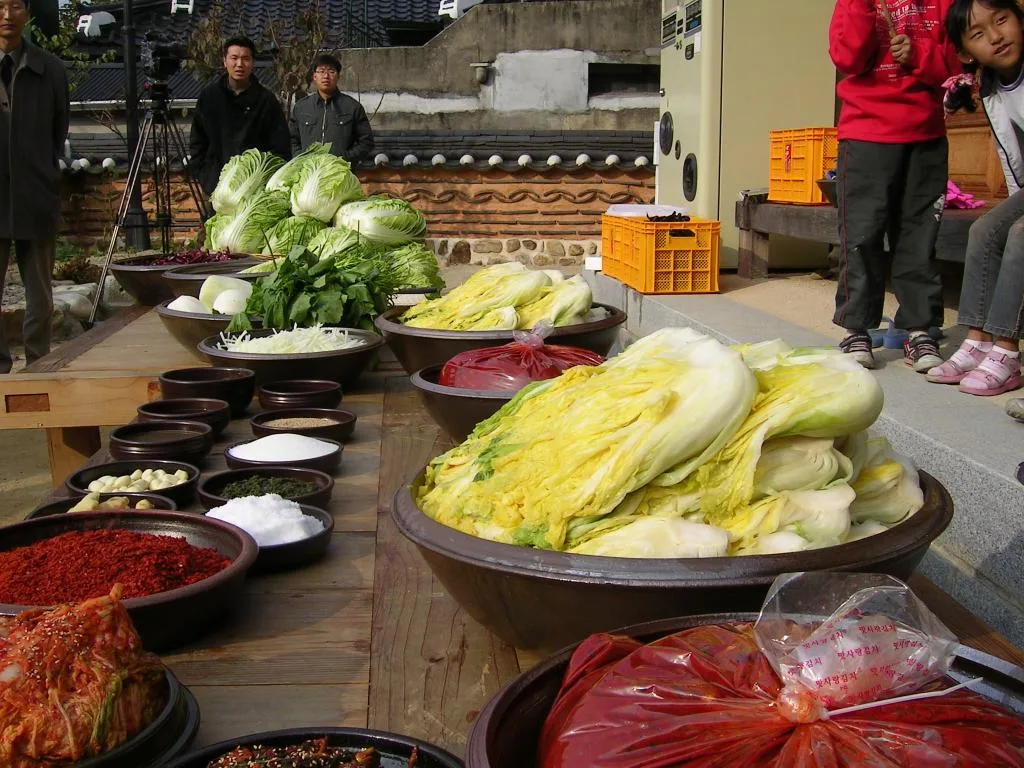
For most visitors, this is the easiest choice. You book a time slot online, meet the host at a studio or a traditional hanok house, and make kimchi from start to finish with a small group. Most classes we found in Seoul have these things in common (October 2026 listings):
- Length: 2 to 3 hours.
- Group size: usually 6 to 10 people, so you get real hands-on time.
- Price: roughly $55–95 per person. Classes with a full meal, makgeolli (rice wine) pairing or a hanbok photo cost more.
- Location: many are around Gyeongbokgung Palace, Insadong and Bukchon Hanok Village, which makes them easy to pair with a palace morning. Others are in a host’s home, often in Mapo-gu (the Hongdae area).
- What you make: usually cabbage kimchi, sometimes also radish kimchi (kkakdugi, 깍두기) or a quick cucumber kimchi, plus a kimchi pancake (kimchi-jeon) or fried rice to eat on the spot.
- Take-home: most give you a sealed container of your own kimchi. Ask how big it is before your flight day (see flying home with kimchi below).
Which kind of class to pick
- Kimchi-only class: the best choice if kimchi is the whole point. Shorter, cheaper and focused on technique.
- Home-cooking class with kimchi: you also make dishes like dumplings or noodles. Better if you want a full Korean lunch.
- Kimchi tasting with drinks: a few classes pair several kinds of kimchi with makgeolli. These are adults only.
- Hanok setting: the most photogenic. Expect floor seating and a step or two at the entrance.
Book ahead (Klook / GetYourGuide)
- Compare kimchi classes in Seoul on Klook: English-guided small-group classes, many with a take-home jar. Check the meeting point and what you make before you book.
- Compare Seoul cooking classes on GetYourGuide: kimchi-focused classes plus home-cooking and makgeolli-pairing options.
Option 2: Museum Kimchikan in Insadong

Museum Kimchikan (뮤지엄김치간) is a kimchi museum run by the Korean food company Pulmuone. It sits on the 4th to 6th floors of the Insadong Maru building in the middle of Insadong-gil, the pedestrian street. The exhibits cover the history and science of kimchi, regional styles and the four seasons of kimchi, and there’s a tasting room on the top floor.
- Hours: Tuesday to Sunday, 10:00–18:00 (last entry 17:30). Closed Mondays, January 1, December 25, and during the Lunar New Year and Chuseok holidays.
- Admission: adults (19+) 5,000 KRW (~$4), ages 8–18 3,000 KRW, ages 3–7 2,000 KRW. Under 36 months free.
- Kimchi programs for foreign visitors (paid; details as announced when the museum expanded them in 2024):
- Kimchi Basic (about 60 minutes): one kind of kimchi plus a kimchi pancake tasting and a recipe card. Cabbage kimchi in March–May and December; radish kimchi (kkakdugi) from June to November.
- Kimchi Master (about 90 minutes): two kinds of kimchi (the seasonal one plus cabbage or radish kimchi) and kimchi dishes to taste.
- Both are open to individual visitors booking as a party of 4 or more, Wednesday to Friday at 10:20 and 14:10 (2024 schedule). The “It’s Kimchi” programs are for organized groups of 15 or more.
- Booking: reserve in advance on the museum’s Programs & Reservation page, by phone (+82-2-2088-8531), by email (museum@pulmuone.com) or on KakaoTalk (“Museum Kimchikan”). We couldn’t confirm 2026 program prices online, so check them when you book.
- Kimchi Day: in past years the museum has offered free admission on November 22. Check the museum’s notices for 2026.
Traveling solo or as a couple? The museum’s hands-on programs are built around groups, so a small-group cooking class (Option 1) is usually easier. You can still visit the museum on your own, and it only takes about an hour.
Map — Museum Kimchikan: Google Maps · Naver Map (Naver Map is still the most reliable app for walking, bus and subway directions in Korea)
Getting there: Anguk Station (Line 3), Exit 6, then about a 5-minute walk. Gyeongbokgung and Bukchon are both within walking distance.
Option 3: Kimjang festivals in November
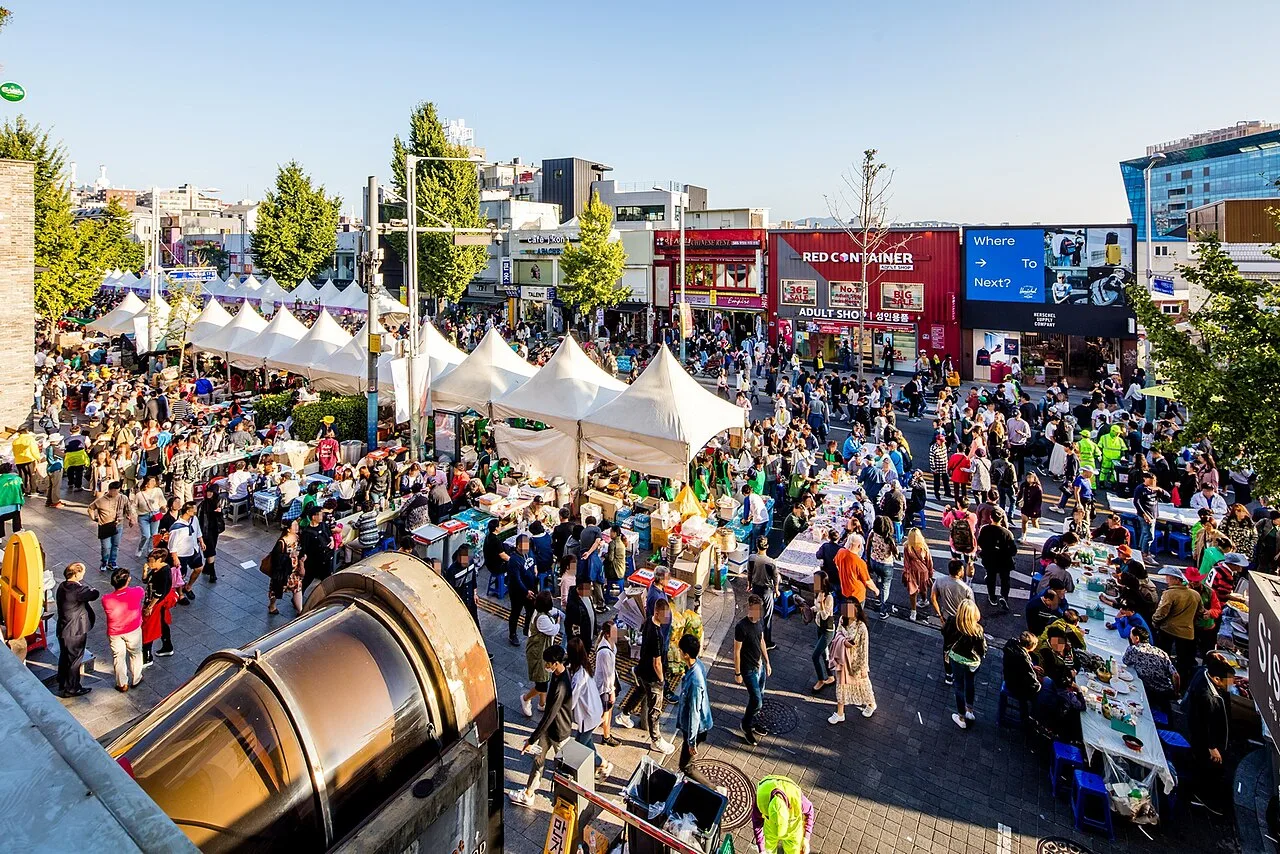
Seoul used to hold a big Seoul Kimjang Culture Festival (서울김장문화제) on Seoul Plaza in early November (for example November 2–4, 2018), with thousands of people making kimchi together and a kimjang corner for foreign visitors run in English. It ran through at least 2019 but hasn’t returned in that form since. In 2025, Seoul co-hosted the Korea Kimjang Festival (대한민국 김장대축제) at the aT Center in Yangjae-dong on November 22 (Kimchi Day). It had a kimchi culture exhibit, a kimchi market and discounted kimjang ingredients. The city said there would be no public kimchi-making session because of space limits.
- 2026 dates: not announced when we checked (October 17, 2026). If the 2025 pattern repeats, look for an event around November 22. Search “kimjang festival 2026” or check the Seoul city news site in early November.
- Outside Seoul: towns across Korea hold their own kimjang festivals in November. Most are aimed at locals, so English help is limited.
- Bottom line: a festival is great for seeing kimjang and shopping, but if making kimchi yourself is the goal, book a class.
What happens in a kimchi class
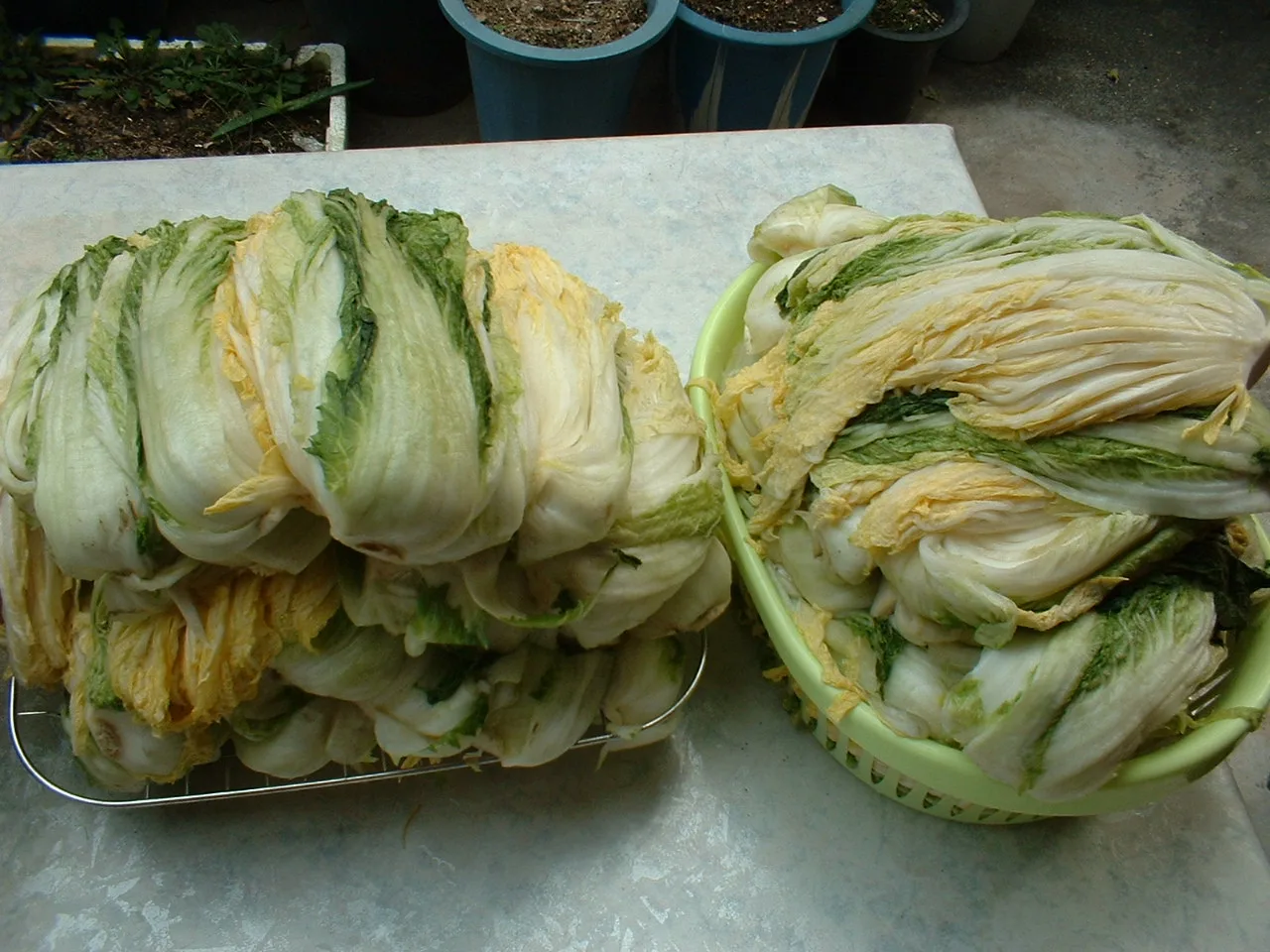
- Salted cabbage is ready. Salting and rinsing takes many hours, so the host has usually done it the day before. Some classes let you try salting one piece.
- You make the filling (yangnyeom, 양념). Chili flakes (gochugaru), garlic, ginger, radish, green onion, fish sauce or salted shrimp, and a sticky rice paste. This is where you learn the ratios.
- You rub the filling between every leaf, fold the cabbage and pack it tightly into a container.
- You taste. Fresh kimchi (geotjeori, 겉절이) is crunchy and sweet. Most classes then serve a dish made with older, fermented kimchi so you can compare.
- You take it home with tips on fermenting it: a day or two at room temperature, then the fridge.
Tips for choosing and booking
- Book 3–7 days ahead in November, especially for weekends. Classes are small and fill up during kimjang season.
- Check the meeting point on a map before you book. Some “Seoul” classes are a long subway ride from where you’re staying. Use Naver Map for directions.
- Vegetarian or vegan? Traditional kimchi uses fish sauce and salted shrimp. Many classes can make a vegan version if you ask when you book.
- Allergies: seafood (shrimp, anchovy), wheat (in some pastes) and sesame are common. Tell the host in advance.
- Wear dark clothes. Aprons and gloves are provided, but chili stains are hard to wash out.
- Kids: most classes welcome children with an adult. Drinks-pairing classes are adults only.
- Read the cancellation rules. Many online classes allow free cancellation up to 24 hours before, but some don’t.
- Payment: online bookings are prepaid by card. If you book directly with a museum or studio, they may want card payment on site. See money in Korea.
Flying home with your kimchi
Airport security in Korea treats kimchi as a liquid because it sits in its own brine. Incheon Airport took about 10.7 tons of kimchi out of carry-on bags in 2024 alone.
- Carry-on: only in containers of 100 ml or less, all inside one clear 1-liter resealable bag together with your other liquids. A class-sized jar won’t pass.
- Checked bag: no volume limit for kimchi. Seal the container, double-bag it in zip bags, and wrap it in clothes. Fermenting kimchi gives off gas, so leave a little space and don’t fill the lid to the brim.
- Customs at home: declare food when you arrive. Rules differ by country (Australia and New Zealand are especially strict), so check your own country’s customs site.
- Easier option: supermarkets and airport shops sell vacuum-packed kimchi made for travel. Put it in your checked bag too. For more gift ideas, see what to buy at Olive Young and our Korea packing list.
Accessibility: strollers and wheelchairs
- Hanok classes often mean a raised doorway step, a courtyard with uneven stone and floor seating. Ask the host about chairs and steps before you book.
- Studio classes in modern buildings are usually easier, but small buildings may have stairs and no elevator. Check the listing or message the host.
- Museum Kimchikan is on upper floors of a building on Insadong-gil, which is a flat pedestrian street. Call ahead to check elevator access with a stroller or wheelchair.
Make a day of it
A morning class near Gyeongbokgung pairs well with an afternoon at the palace and a walk up to Bukchon. Museum Kimchikan is right in Insadong, so you can browse tea shops and craft stores on the same street. Still hungry later? Our Express Bus Terminal restaurant guide covers places to eat around the terminal, an easy ride on Line 3 from Anguk.
More Seoul on Korea Bestie
- Gyeongbokgung Palace guide — tickets, guard changing and hanbok
- Bukchon Hanok Village guide — a short walk from Insadong
- Korea weather by month — what November feels like
- Korea packing list — including what goes in checked bags
- What to buy at Olive Young — easy gifts to bring home
- Express Bus Terminal restaurants — where to eat after
FAQ
How much is a kimchi making class in Seoul?
Most English small-group classes cost about $55–95 per person (about 75,000–130,000 KRW) for 2–3 hours, often with a meal and a take-home container.
Are kimchi classes in Seoul taught in English?
Classes sold on Klook and GetYourGuide are generally English-guided. Museum Kimchikan runs programs for foreign visitors; confirm the language when you book.
When is kimjang season in Korea?
Usually late November to early December. Kimchi Day is November 22.
Is there a kimchi festival in Seoul in 2026?
Not announced as of October 17, 2026. In 2025, Seoul co-hosted a kimjang festival at the aT Center on November 22, without a public kimchi-making session.
Can I take kimchi on a plane from Korea?
In your carry-on, only in containers of 100 ml or less inside a 1-liter bag. Larger amounts must go in your checked bag, well sealed.
Sources: Museum Kimchikan – visit info (hours, admission) · Museum Kimchikan – programs and reservation · Seoul Media Hub – K-food museums in Seoul (Feb 2026) · Seoul Media Hub – Kimchi Day at Museum Kimchikan (Nov 2024) · eToday – Museum Kimchikan expands programs for foreign visitors (2024) · Seoul Metropolitan Government – 2025 Korea Kimjang Festival notice · Seoul Media Hub – Seoul Kimjang Culture Festival (2018) · Korea Herald – liquid rules for kimchi in carry-on bags · UNESCO – Kimjang, making and sharing kimchi
Photos: Anattadairy / Wikimedia Commons, CC0 · Manju Shakya / Wikimedia Commons, CC BY-SA 4.0 · gwangju kimchi (Flickr) / Wikimedia Commons, CC BY-SA 2.0 · Joseph Steinberg (Flickr) / Wikimedia Commons, CC BY-SA 2.0 · Caroline Knox (Flickr) / Wikimedia Commons, CC BY-SA 3.0
RELATED POSTS
View all

Halloween in Seoul (2026): Itaewon, Hongdae, Road Closures and Safety Tips
October 24, 2026 | by Korea Bestie

Lotte World Tickets (2026): Prices, Foreigner Discounts and After-4pm Entry
October 26, 2026 | by Korea Bestie

Seoul Taxi Overcharging (2026): How to Avoid Taxi Scams and Report a Driver
October 26, 2026 | by Korea Bestie