


What to Eat in Busan: 8 Local Foods and Where to Try Them (Busan Food Guide 2026)
October 20, 2026 | by Korea Bestie
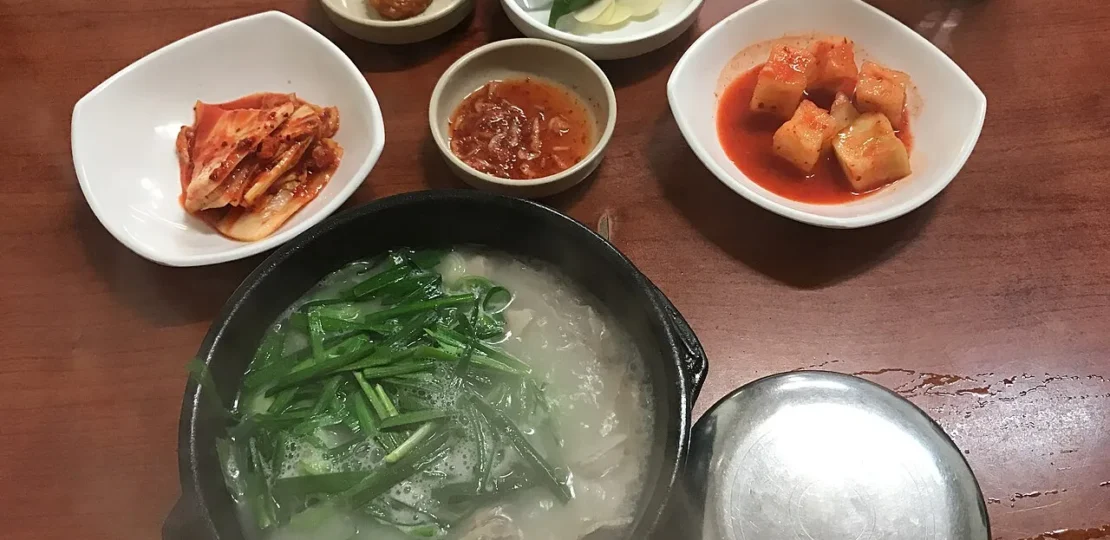
Wondering what to eat in Busan? Korea’s big port city has its own food, quite different from Seoul’s. It grew out of the Korean War, when refugees crowded into Busan and made do with cheap pork bones, wheat flour from aid shipments and whatever the fishing boats brought in. The result is a short list of dishes locals are fiercely proud of: milky pork soup, chewy cold wheat noodles, fish cakes, and seed-stuffed pancakes from a market stall. This Busan food guide explains what each one is, how to order it, and where to try it, from a 1946 soup house to Jagalchi’s fish market.
On this page
- Busan food at a glance
- 1. Dwaeji gukbap (돼지국밥): Busan pork and rice soup
- 2. Milmyeon (밀면): Busan’s cold wheat noodles
- 3. Ssiat hotteok (씨앗호떡) at BIFF Square
- 4. Busan eomuk (어묵): fish cakes
- 5. Raw fish and seafood at Jagalchi Fish Market
- 6. Gukje Market (국제시장) food alley
- 7. Bupyeong Kkangtong Night Market (부평깡통시장)
- 8. More Busan dishes worth ordering
- Good to know for foreign visitors
- A one-day Busan food route
- Accessibility: strollers and wheelchairs
- FAQ
Last checked: October 2026. Dollar figures use about 1,330 KRW = 1 USD (October 2026). Hours are as listed by the places or by guides in 2026; check Naver Map on the day.
First time in Korea? Start here: our step-by-step guide from landing to your first day.
This guide contains affiliate links. If you book through them, we may earn a small commission at no extra cost to you. Affiliate disclosure.
Busan food at a glance
| Dish | What it is | Where to try it |
|---|---|---|
| Dwaeji gukbap (돼지국밥) | Pork bone soup with rice | Seomyeon’s gukbap alley, near Busan Station |
| Milmyeon (밀면) | Cold wheat noodles | Choryang, opposite Busan Station |
| Ssiat hotteok (씨앗호떡) | Fried pancake stuffed with seeds and sugar | BIFF Square, Nampo-dong |
| Eomuk (어묵) | Busan fish cake | Samjin Eomuk in Yeongdo; markets everywhere |
| Hoe (회) and grilled seafood | Raw fish, shellfish, grilled eel | Jagalchi Fish Market |
| Bibim dangmyeon and market snacks | Spicy glass noodles, stuffed tofu pockets | Gukje Market food alley |
| Night market street food | Everything on a stick | Bupyeong Kkangtong Night Market |
Most of these are in two areas: Seomyeon (서면), the downtown hub where Lines 1 and 2 meet, and the old port area of Nampo-dong (남포동) and Jagalchi on Line 1, where the markets are. Nampo also pairs well with Gamcheon Culture Village, a short bus or taxi ride uphill.
1. Dwaeji gukbap (돼지국밥): Busan pork and rice soup
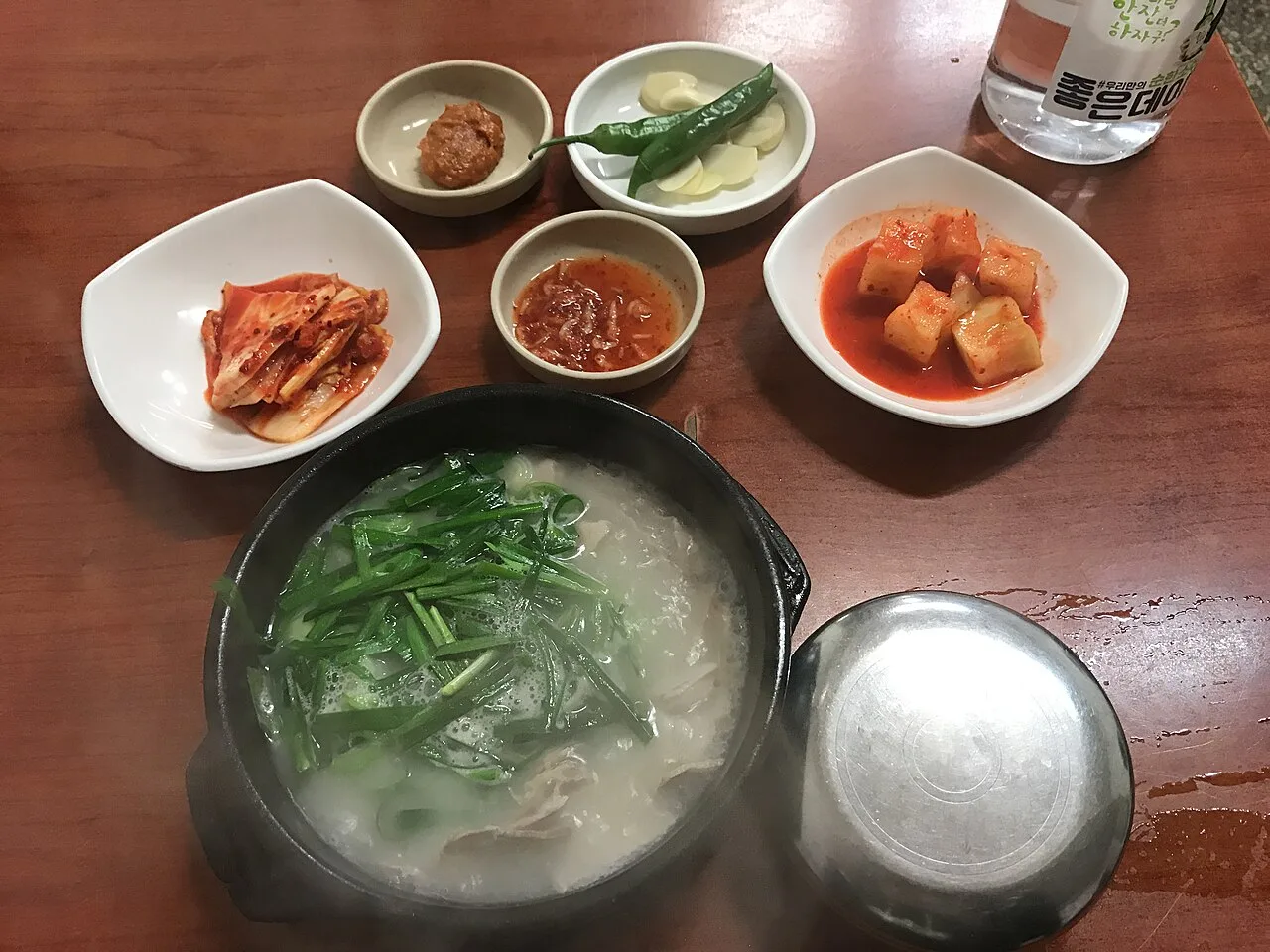
If you only eat one thing in Busan, make it this. Dwaeji gukbap is pork bones simmered for hours into a cloudy, mild broth, served with slices of boiled pork and a bowl of rice. It arrives barely seasoned on purpose: you season it yourself at the table with saeujeot (salted tiny shrimp, for salt), dadaegi (red pepper paste), and buchu (seasoned chives), then tip the rice in. Kimchi, raw onion, green chilli and ssamjang come on the side. A bowl is a filling, cheap meal, and many gukbap houses open early and stay open late.
- Ordering tip: “dwaeji gukbap” is the standard bowl. “Sundae gukbap” adds blood sausage, and “suyuk baekban” serves the meat on a plate with the soup and rice separately.
- Where: the stretch near Seomyeon Station is packed with pork soup restaurants, locally called the gukbap alley (서면 돼지국밥 골목). If you aren’t sure which one to pick, choose the busiest.
Songjeong 3-dae Gukbap (송정3대국밥), Seomyeon
One of the best-known names on the Seomyeon gukbap street, in business since 1946 and run by the same family for three generations. It’s known for a pale, clean-tasting broth. Some listings say it’s open around the clock; check Naver Map before a late-night visit.
Map — Songjeong 3-dae Gukbap: Google Maps · Naver Map (Naver Map is still the most reliable app for walking, bus and subway directions in Korea)
2. Milmyeon (밀면): Busan’s cold wheat noodles
Milmyeon is Busan’s answer to naengmyeon. During the war, refugees from the North couldn’t get buckwheat, so they made their cold noodles with wheat flour from aid supplies. The noodles are chewier and softer than naengmyeon, served in an icy, slightly sweet and tangy broth (mul milmyeon, 물밀면) or tossed in a spicy red sauce (bibim milmyeon, 비빔밀면). Staff will cut the noodles with scissors if you ask, and a side of steamed dumplings (mandu) is the classic pairing. It’s at its best on a hot day, but locals eat it all year.

Choryang Milmyeon (초량밀면), opposite Busan Station
The most convenient place to try milmyeon if you’re arriving by KTX: it’s across the main road from Busan Station. It’s popular and the line moves fast. Listed hours (September 2026): 10 am–9:30 pm, last order 9 pm, open daily.
Map — Choryang Milmyeon: Google Maps · Naver Map (Naver Map is still the most reliable app for walking, bus and subway directions in Korea)
Staying in the east? Gaya Milmyeon (가야밀면) is another long-running milmyeon name, with its original shop in the Gaya area and a well-known branch in Haeundae (해운대가야밀면). Search the Korean name on Naver Map for the nearest one.
3. Ssiat hotteok (씨앗호떡) at BIFF Square
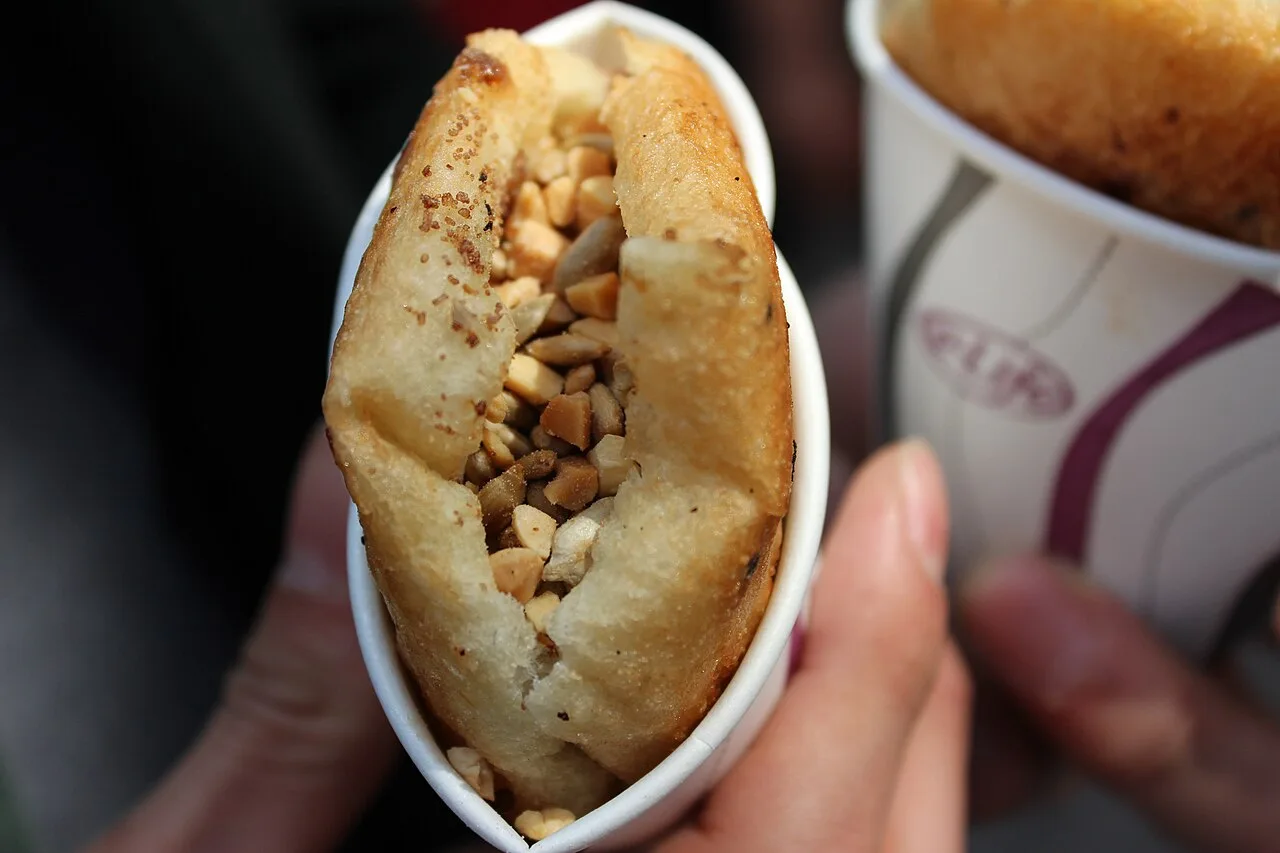
Hotteok is a sweet pancake you’ll find all over Korea, but the Busan version is fried, split open and stuffed with a crunchy mix of sunflower seeds, pumpkin seeds and nuts on top of the melted brown sugar and cinnamon filling. It started in Nampo-dong, and the stalls at BIFF Square (BIFF광장), the street named after the Busan International Film Festival, are where everyone goes. Look for the stall with the longest queue, and hold the paper cup upright: the syrup inside is very hot. It’s a cheap snack; bring small cash.
Map — BIFF Square: Google Maps · Naver Map (Naver Map is still the most reliable app for walking, bus and subway directions in Korea)
4. Busan eomuk (어묵): fish cakes
Busan’s fish cakes are famous across Korea, and “Busan eomuk” is a brand in itself in Korean supermarkets. You’ll see them in two forms: skewers simmering in broth at street stalls and market counters (help yourself, then tell the vendor how many you ate), and fancy bakery-style shops where fish cakes come stuffed with cheese, sausage, vegetables or shrimp. The broth from the street stalls is usually free to sip from a paper cup.
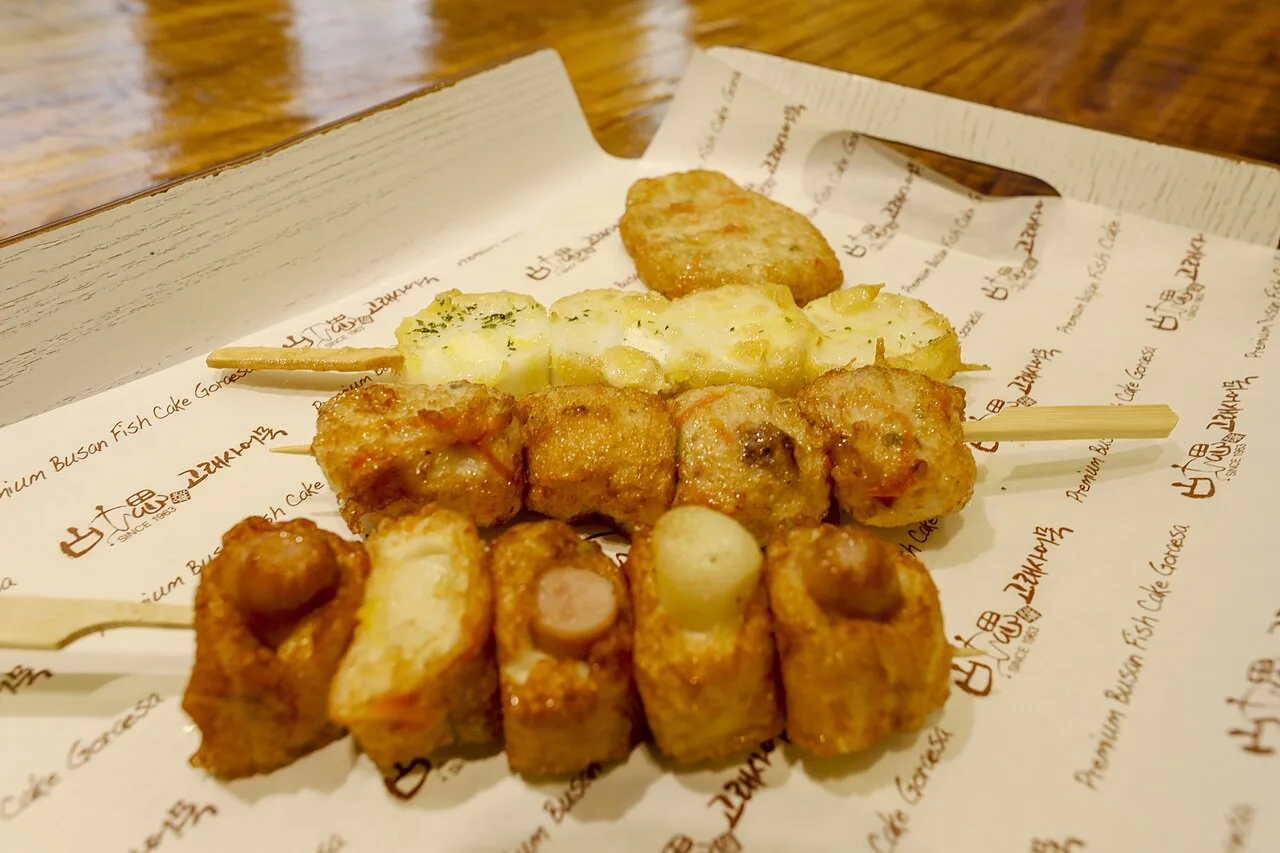
Samjin Eomuk (삼진어묵), Yeongdo main store
Samjin, founded in 1953, is Busan’s oldest fish cake maker, and its flagship store in Yeongdo sits at the original factory site. Downstairs is a large bakery-style shop where you pick fish cakes off the shelves with tongs; there’s also a small history exhibit, and fish cake making classes can be booked. Listed hours are around 9 am–7 pm daily (some listings say 8 pm). It’s across the bridge from Nampo-dong, so it combines well with a Jagalchi and Nampo day.
Map — Samjin Eomuk Yeongdo: Google Maps · Naver Map (Naver Map is still the most reliable app for walking, bus and subway directions in Korea)
5. Raw fish and seafood at Jagalchi Fish Market
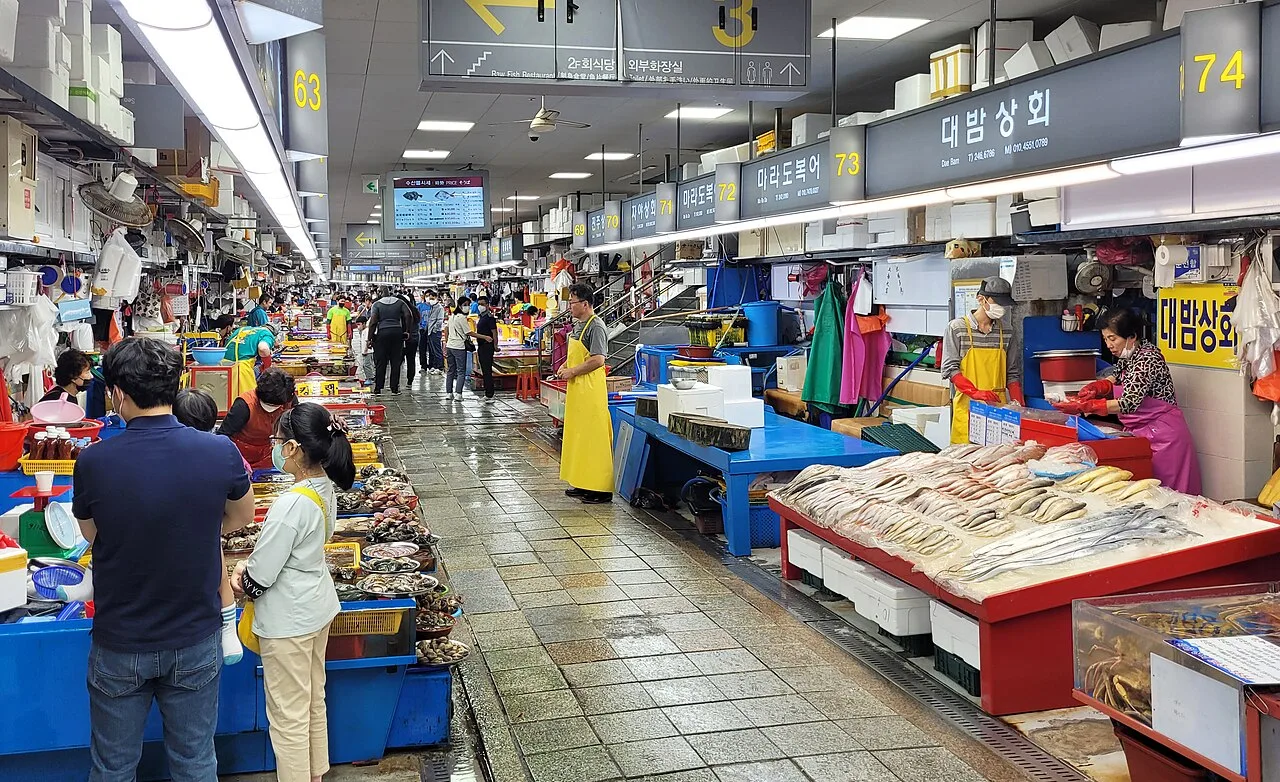
Jagalchi Fish Market (자갈치시장) is Korea’s biggest seafood market, on the waterfront next to Nampo-dong. The ground floor of the main building is a maze of tanks with live fish, octopus, crabs and shellfish. The way it works: you choose seafood downstairs, pay by weight, and take it (or have it sent) upstairs to the second-floor restaurants, which prepare it as hoe (raw slices), grill or steam it, and add side dishes and a spicy fish stew (maeuntang) for a per-person table charge. Outside, along the street, older vendors sell grilled fish and eel at small stalls.
- Hours: roughly 5 am–10 pm; the upstairs restaurants open later in the morning. The market is closed on the 1st and 3rd Tuesday of each month.
- Prices: seafood is sold by weight and prices change daily with the catch. Ask the price before they net anything, and agree on what’s included upstairs. If you’d rather not bargain, a guided market tour (below) takes the guesswork out.
- Getting there: Jagalchi Station (Line 1); the market is a few minutes’ walk toward the water.
Map — Jagalchi Fish Market: Google Maps · Naver Map (Naver Map is still the most reliable app for walking, bus and subway directions in Korea)
6. Gukje Market (국제시장) food alley
Across the main road from Jagalchi, Gukje Market is a huge, old-fashioned market of covered lanes selling everything from kitchenware to second-hand clothes; it’s also the setting of the 2014 film Ode to My Father. Find the food alley (먹자골목) and look for bibim dangmyeon (비빔당면), glass noodles tossed with vegetables, fish cake and a spicy sauce, eaten on a plastic stool, and yubu jumeoni (유부주머니), little fried tofu pockets stuffed with glass noodles and vegetables, served in broth. Both are Nampo-dong specialties and cost very little.
Map — Gukje Market: Google Maps · Naver Map (Naver Map is still the most reliable app for walking, bus and subway directions in Korea)
7. Bupyeong Kkangtong Night Market (부평깡통시장)
A few minutes’ walk from Gukje Market, Bupyeong Kkangtong Market got its name (“tin can market”) from the canned goods from US army bases sold here after the war. By day it’s a regular market; in the evening, from about 7:30 pm, a lane fills with food carts for the night market: tteokbokki, grilled skewers, fried dumplings, Korean-style crepes and plenty of international stalls. It’s a good place to graze for dinner. Night market hours vary by season and stall, so check before you go.
Map — Bupyeong Kkangtong Market: Google Maps · Naver Map (Naver Map is still the most reliable app for walking, bus and subway directions in Korea)
Rather eat with a guide? (Klook)
- Compare Busan food tours on Klook: market walks through Jagalchi, Gukje and Bupyeong Kkangtong with an English-speaking guide and several tastings. Check what’s included (number of dishes, drinks) and the meeting point before you book.
8. More Busan dishes worth ordering
- Dongnae pajeon (동래파전): a thick green-onion pancake with seafood, named after the Dongnae area in the north of the city.
- Nakgopsae (낙곱새): a spicy hotpot of octopus (nakji), beef tripe (gopchang) and shrimp (saeu), cooked at your table. Good with rice and a group.
- Kkomjangeo gui (꼼장어구이): grilled hagfish, often called “eel,” usually spicy and cooked over charcoal, a classic with soju around Jagalchi.
- Bakery stops: Busan’s fish cake bakeries and big café-bakeries make easy souvenir stops.
Good to know for foreign visitors
- Payment: restaurants and most shops take cards; market stalls and street food carts often prefer cash. See our money in Korea guide.
- Ordering: many places have kiosks or tablet menus with an English button. In small soup houses, the menu may be on the wall in Korean only; pointing at the dish name in this guide works.
- Solo diners: gukbap, milmyeon and market food are all fine for one. Hotpots like nakgopsae usually need two portions.
- Vegetarian: difficult. Gukbap and milmyeon broths are meat-based, and fish cakes are fish. Ask “고기 빼 주세요” (gogi ppae juseyo, “no meat, please”), but expect broths to still contain meat or anchovy.
- Halal: Busan has a few halal restaurants and a mosque near Namsan-dong; check Naver Map for “halal” and current reviews.
- Waiting: famous spots can have a short queue at lunch. Most turn tables quickly.
A one-day Busan food route
- Breakfast — dwaeji gukbap in Seomyeon.
- Late morning — Line 1 to Jagalchi: walk through the fish market.
- Lunch — raw fish or grilled seafood upstairs at Jagalchi, or bibim dangmyeon in the Gukje Market food alley.
- Afternoon — ssiat hotteok at BIFF Square, then a taxi or bus to Gamcheon Culture Village, or across the bridge to Samjin Eomuk.
- Evening — Bupyeong Kkangtong Night Market for street food.
- Next day, on your way out — milmyeon at Choryang before your KTX from Busan Station.
Want to fit this into a longer plan? See our Busan itinerary, and our where to stay in Busan guide if you’d like to sleep near the markets in Nampo.
Accessibility: strollers and wheelchairs
- Jagalchi’s main building has elevators to the restaurant floor, but the ground floor aisles are wet and slippery. Wear shoes with grip.
- Gukje and Bupyeong Kkangtong markets have narrow, crowded lanes, especially in the evening. Strollers are manageable on weekday afternoons.
- Many small soup and noodle shops have a step at the door and tight seating; larger places in Seomyeon are easier.
More Busan guides on Korea Bestie
- Busan itinerary — 3 days in Busan, with 2- and 4-day versions
- Haeundae Beach guide — Sky Capsule, Beach Train and The Bay 101
- Gamcheon Culture Village — pair it with a Nampo food day
- Where to stay in Busan — Haeundae, Seomyeon, Nampo and more
- Busan transportation guide — subway, buses, taxis and the airport
- Seoul to Busan by KTX — getting here from Seoul
How much will this trip cost?
Pick your group, nights, hotel type and food style — get a realistic budget range in seconds.
FAQ
What food is Busan famous for?
Dwaeji gukbap (pork and rice soup), milmyeon (cold wheat noodles), fish cakes, ssiat hotteok and fresh seafood from Jagalchi Fish Market.
Where is the best area for food in Busan?
Nampo-dong and Jagalchi for markets and street food, Seomyeon for pork soup and late-night eating, and Haeundae for seafood and cafés by the beach.
Is Jagalchi Fish Market open every day?
No. It’s closed on the 1st and 3rd Tuesday of each month. Otherwise it’s open from early morning until about 10 pm.
How does eating at Jagalchi work?
Choose and pay for seafood by weight on the ground floor, then eat it upstairs, where restaurants prepare it for a per-person table charge. Agree on prices first.
When is the Bupyeong Kkangtong Night Market open?
Every evening from about 7:30 pm until late, though hours shift by season and by stall.
Sources: K-Trip Tips (Korea Tourism Organization data) – Choryang Milmyeon · Polle – Songjeong 3-dae Gukbap · Stars and Stripes Korea – Songjeong Samdae Gukbap · Siksin – Busan fish cake shops (Samjin Eomuk) · Arrival Guides – Samjin Amook main branch · Korea To Do – Jagalchi Fish Market · The Soul of Seoul – Inside Jagalchi Fish Market · Bupyeong Kkangtong Market listing · Trazy – Ssiat hotteok
Photos: chomjong / Wikimedia Commons, CC BY 2.0 · Mobius6 / Wikimedia Commons, CC BY-SA 4.0 · seul5167 / Wikimedia Commons, CC0 · bryan… / Wikimedia Commons, CC BY-SA 2.0 · Bernard Gagnon / Wikimedia Commons, CC0
RELATED POSTS
View all


Best Hongdae Restaurants (2026): 7 Places to Eat in Hongdae and Yeonnam
October 20, 2026 | by Korea Bestie
Seoul to Busan by KTX (2026): Tickets, New Fares, Seoul vs Suseo Station and Korail Pass
October 16, 2026 | by Korea Bestie
Busan in Winter (2026–27): Weather, Light Festivals and What to Do December to February
October 28, 2026 | by Korea Bestie