


Busan Transportation Guide 2026: Gimhae Airport to the City, Subway, Buses, Taxis and Busan Station to Haeundae
October 20, 2026 | by Korea Bestie
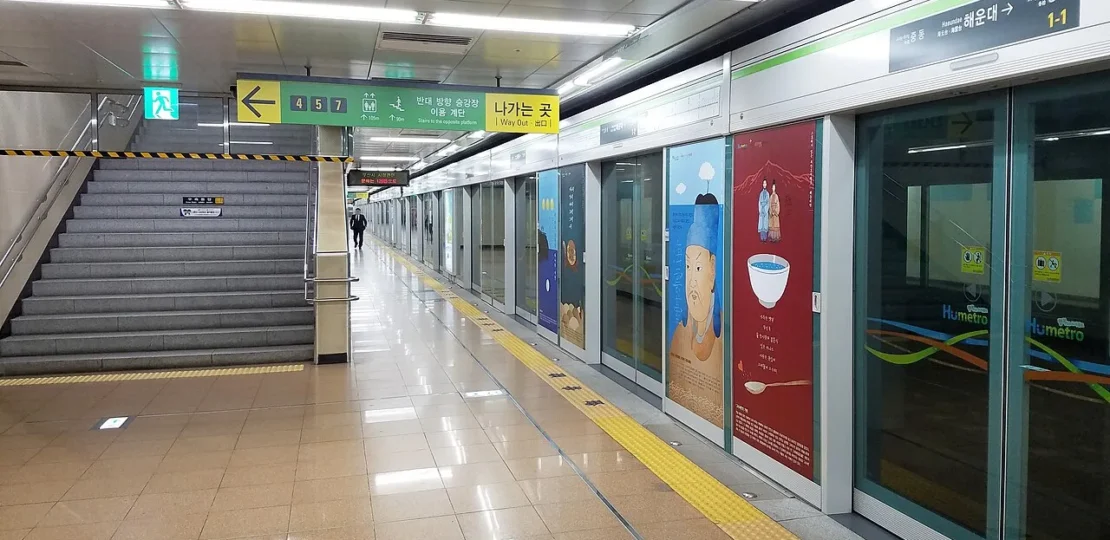
Busan transportation is easier than it looks on the map. The city is long and hilly, wrapped around mountains and the sea, so the main sights are spread out: Busan Station and the old port in the west, Seomyeon in the middle, Haeundae in the east. But a cheap, clean subway connects all of them, the same T-money card you used in Seoul works on everything, and taxis are reasonably priced. More visitors are working this out every year: Busan counted about 3.4 million foreign tourists from January to August 2026 (Herald Corp). This guide covers getting from Gimhae Airport into the city, how the subway, buses and taxis work, fares, and the trip everyone asks about: Busan Station to Haeundae.
Last checked: October 2026. Dollar figures use about 1,330 KRW = 1 USD (October 2026). Fares are adult fares with a transit card unless noted.

First time in Korea? Start here: our step-by-step guide from landing to your first day.
This guide contains affiliate links. If you book through them, we may earn a small commission at no extra cost to you. Affiliate disclosure.
Busan transportation: quick answers
| Transit card | T-money (from Seoul) works on Busan subway, light rail and buses. Tap in and out on the subway. |
|---|---|
| Subway fare | 1,600 KRW (~$1.20) for a short trip, 1,800 KRW (~$1.35) for a longer one (adult, transit card) |
| City bus fare | 1,550 KRW (~$1.17) by card; seat (express-style) buses 2,100 KRW (~$1.58) |
| Taxi | Base fare 4,800 KRW (~$3.61) for the first 2 km; Kakao T works in Busan |
| Airport → Haeundae | Light rail + Line 2 (cheapest), airport limousine bus (no transfer), or taxi |
| Busan Station → Haeundae | Line 1 to Seomyeon, then Line 2: roughly 50–60 minutes |
The Busan transportation card: just use T-money
You don’t need a special Busan card. A T-money card bought in Seoul (or at a Busan convenience store) works on the Busan subway, the Busan–Gimhae light rail, city buses and the Donghae Line commuter train, and you can pay most taxis with it too. Top it up with cash at subway machines or convenience stores. Some prepaid travel cards, such as WOWPASS, also include a T-money function (our money in Korea guide compares them).
- Transfers: with a card, transfers between the subway and buses within 30 minutes of getting off are discounted or free. Since September 19, 2025, transfers across the Busan, Gimhae and Yangsan area (including the airport light rail) are free as well. Tap out when you leave each bus or train so the transfer counts.
- Single tickets: if you don’t have a card, subway ticket machines sell single-journey tickets (with an English menu), but they cost more and don’t give you the transfer discounts.
Gimhae Airport to the city
Gimhae International Airport (김해국제공항, PUS) is west of central Busan, across the Nakdong River. Domestic and international terminals are next to each other. You have three main options.
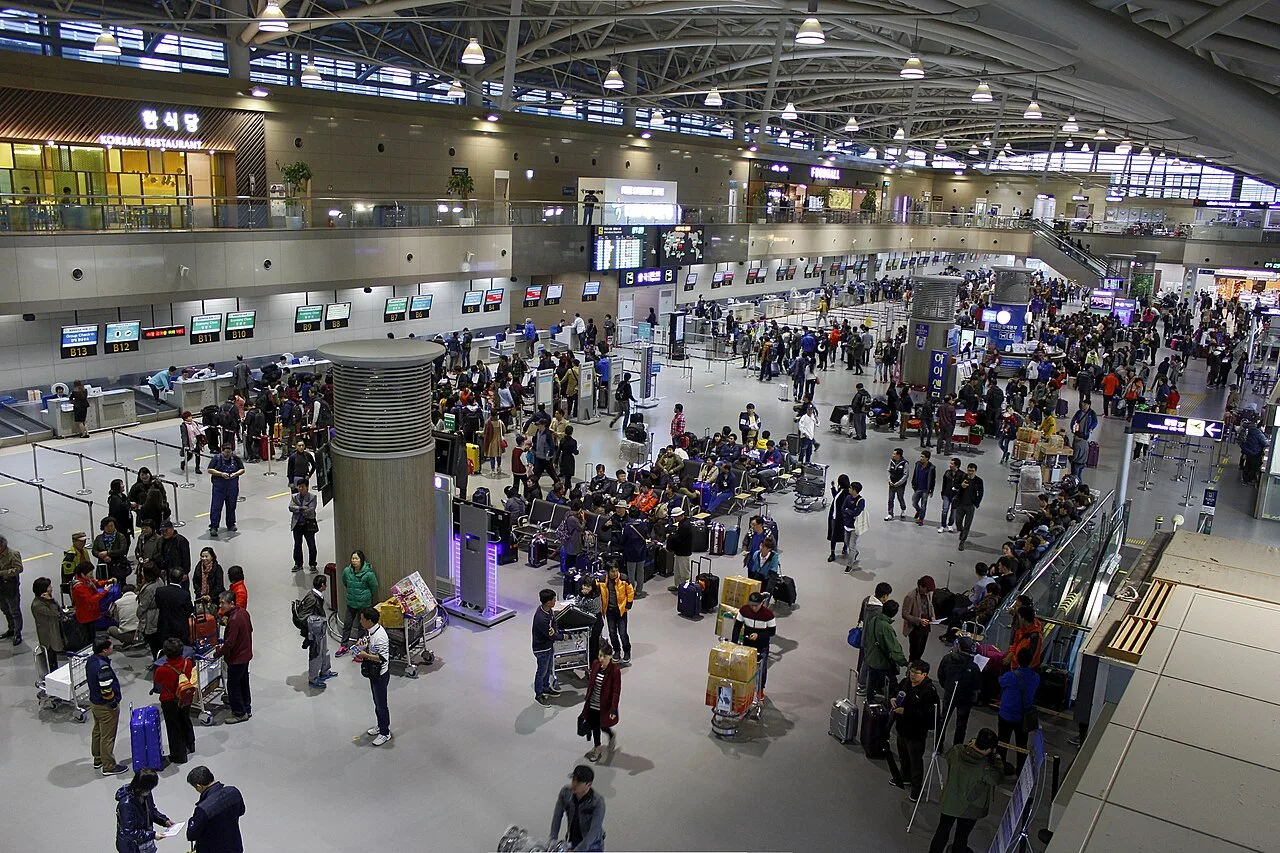
1. Light rail + subway (cheapest)
The Busan–Gimhae Light Rail (부산김해경전철) stops at Airport Station (공항역), a short covered walk from the terminals. Take it toward Sasang (사상) and change there to Busan Metro Line 2, or change at Daejeo (대저) for Line 3.
- To Seomyeon: light rail to Sasang, then Line 2 east to Seomyeon (서면).
- To Busan Station or Nampo: as above to Seomyeon, then Line 1 toward Dadaepo (다대포해수욕장).
- To Haeundae: light rail to Sasang, then stay on Line 2 all the way east to Haeundae (해운대). It’s a long ride with one transfer; plan on well over an hour door to door.
- Cost: with a transit card, a couple of thousand won in total thanks to the free transfer.
- Good to know: Sasang is a big station with stairs; there are elevators, but follow the signs. Trains are compact, so travel light at rush hour.
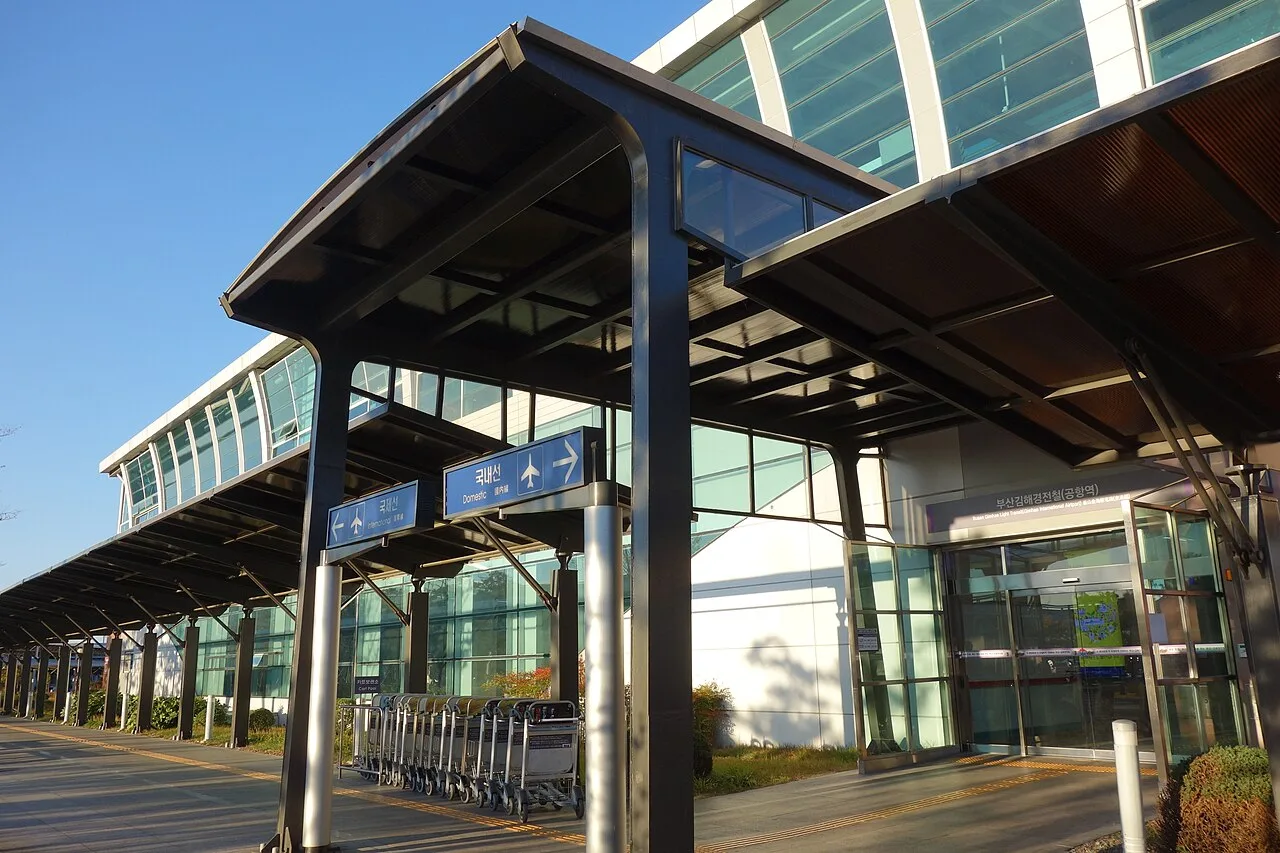
2. Airport limousine bus (no transfers)
The airport limousine buses restarted on July 31, 2025 with a new operator, and the routes were reorganized on January 5, 2026:
- Limousine 1 (Haeundae / Gijang): runs to Haeundae Beach and on toward Jangsan, with a new stop at the Osiria tourist complex (Lotte World Adventure Busan area) since January 2026.
- Limousine 2 (Seomyeon / Bujeon): the adult fare was cut to 6,000 KRW (~$4.51) in January 2026.
We couldn’t confirm the current Haeundae fare from an official source, so check it at the ticket desk in the arrivals hall. This is the easiest option with big suitcases, but journey times depend heavily on traffic.
3. Taxi
Taxis wait outside arrivals. They’re the simplest choice late at night or with children and luggage. Use Kakao T to see an estimated fare before you book, or take a metered taxi from the rank. Expect Haeundae to be the most expensive of the main areas, since it’s on the opposite side of the city.
Book ahead (Klook)
- Visit Busan Pass on Klook: a 24- or 48-hour attraction pass. It covers entry to a list of sights (the list changes, so check that the places you want are on it), not unlimited subway rides, so you still need a transit card.
- Gimhae Airport private transfers on Klook: worth it for families or late arrivals with heavy bags. Compare the car size and luggage allowance before you book.
How the Busan subway works
Busan Metro is easy for first-timers: signs and announcements are in Korean and English, stations have numbers, and platforms have screen doors. The lines you’ll actually use:
| Line | Useful stops for visitors |
|---|---|
| Line 1 (orange) | Busan Station (부산역), Nampo (남포) for BIFF Square, Jagalchi (자갈치), Seomyeon (서면), Dongnae (동래), Beomeosa (범어사) |
| Line 2 (green) | Sasang (airport light rail), Seomyeon, Gwangan (광안) for Gwangalli Beach, Centum City (센텀시티), Dongbaek (동백), Haeundae (해운대) |
| Line 3 (brown) | Suyeong (수영), Yeonsan-dong (연산), Daejeo (airport light rail transfer) |
| Line 4 (blue) | Mostly residential northeast Busan |
| Donghae Line (Korail commuter) | Bexco (벡스코), Sinhaeundae (신해운대), Songjeong (송정), Osiria (오시리아), Gijang (기장) |
| Busan–Gimhae Light Rail | Airport (공항), Sasang, Daejeo |
- Fares: 1,600 KRW for the first fare zone and 1,800 KRW for longer trips (adult, transit card), unchanged since May 2024.
- Hours: trains run from early morning until around midnight; the last trains vary by line and station, so check in Naver Map if you’re out late.
- Transfer stations: Seomyeon (Lines 1 and 2) is the big one and is busy; follow the colored signs. Yeonsan-dong (Lines 1 and 3), Suyeong (Lines 2 and 3) and Deokcheon (Lines 2 and 3) are the others.
- Exits matter: Busan stations can have a dozen exits. Check the exit number for your hotel or sight before you leave the platform.
Map — Seomyeon Station: Google Maps · Naver Map (Naver Map is still the most reliable app for walking, bus and subway directions in Korea)
Busan Station to Haeundae
This is the trip almost every KTX arrival makes. Haeundae is not on Line 1, so you’ll need one transfer:
- At Busan Station (부산역), follow signs to Line 1 and take a train toward Nopo (노포).
- Get off at Seomyeon (서면), about 15 minutes away, and change to Line 2 toward Jangsan (장산).
- Ride to Haeundae (해운대) and take Exit 3 or 5 for the beach.
- Time: roughly 50–60 minutes in total, including the transfer.
- Cost: one subway fare (1,800 KRW by card).
- By bus: several direct buses run from the Busan Station area to Haeundae, including seat buses that use the expressway. Naver Map shows the current route numbers and times; it’s a good option outside rush hour if you’d rather not change trains with luggage.
- By taxi: the easiest with luggage; time and price depend mostly on traffic. The taxi rank is in front of the station.
Coming from Seoul? Our Seoul to Busan KTX guide covers tickets and the new 2026 fares. For what to do once you arrive, see our Haeundae Beach guide.
Map — Haeundae Station: Google Maps · Naver Map (Naver Map is still the most reliable app for walking, bus and subway directions in Korea)
Busan city buses
Buses fill the gaps the subway doesn’t reach, like Gamcheon Culture Village on its hillside, Taejongdae, or the coast north of Haeundae. Tap your card when you get on and again when you get off (for transfers), and press the stop button before your stop. City buses cost 1,550 KRW by card (1,700 KRW in cash), and seat buses 2,100 KRW.

- Finding the right bus: use Naver Map or KakaoMap. Both show live bus arrival times, and the route numbers are the same as on the bus.
- Hills: village buses (마을버스, small green buses) climb the steep neighborhoods, such as the road up to Gamcheon from Toseong Station.
- Busan City Tour Bus: a hop-on, hop-off sightseeing bus runs several loops from Busan Station. Check routes and prices before you go.
Taxis in Busan
- Fares: the base fare for a regular taxi has been 4,800 KRW for the first 2 km since 2023. A fare rise was under discussion in 2026, so the meter may show more by the time you visit. There’s a late-night surcharge.
- Apps: Kakao T works in Busan and shows an estimate before you confirm. You can register a foreign card or pay the driver directly. Our Korea travel apps guide explains how to set it up.
- Paying: most taxis take cards and T-money as well as cash.
- Addresses: show the driver the Korean name or address. Every Korea Bestie place guide has a “Show this to your taxi driver” box for exactly this.
- Hills: taxis are worth it for steep places like Gamcheon, Huinnyeoul Culture Village or Dalmaji Hill, especially with children.
Tips for getting around Busan
- Base yourself near a subway line. Haeundae, Seomyeon and Busan Station / Nampo are all on Lines 1 or 2. See where to stay in Busan.
- Allow time. Busan is long: west to east (Busan Station to Haeundae) takes about an hour by subway, so group sights by area. Our Busan itinerary does this for you.
- Data: you’ll lean on Naver Map all day, so get an eSIM or SIM before you arrive (see eSIM vs SIM card in Korea).
- Luggage: many subway stations have coin lockers, and hotels usually hold bags. At Busan Station, it’s simplest to drop bags at your hotel and come back for the sights.
Accessibility: strollers and wheelchairs
- Most Busan Metro stations have elevators between street, concourse and platform, though sometimes only at one or two exits. Check the station map at the gates.
- Screen doors on platforms make boarding safer, and there are priority seats in every car.
- City buses are a mix of low-floor and older high-step models. Low-floor buses are marked on Naver Map and KakaoMap.
- For wheelchair users, a taxi or a booked transfer from the airport is often the least stressful option.
More Busan guides on Korea Bestie
- Busan itinerary — 3 days in Busan, with 2- and 4-day versions
- Where to stay in Busan — which neighborhood suits your trip
- Haeundae Beach guide — Sky Capsule, Beach Train and Dongbaek Island
- Busan food guide — what to eat and where
- Gamcheon Culture Village — how to get up the hill
- Seoul to Busan by KTX — tickets, fares and stations
- T-money card guide — the one card for Seoul and Busan
FAQ
Does T-money work in Busan?
Yes. The same card works on the Busan subway, the airport light rail, city buses and most taxis.
What’s the best way from Gimhae Airport to Haeundae?
The light rail to Sasang plus Line 2 is the cheapest. The airport limousine bus avoids transfers if you have big bags. A taxi is fastest late at night.
How long does it take from Busan Station to Haeundae?
About 50–60 minutes by subway (Line 1, then Line 2 at Seomyeon).
How much is the Busan subway?
1,600 KRW for shorter trips and 1,800 KRW for longer ones with a transit card (adult, as of October 2026).
Is Busan easy to get around without speaking Korean?
Yes. Subway signs and announcements are in English, and Naver Map works in English. Keep Korean names handy for taxis.
Sources: Kyunghyang Shinmun – Busan subway fares from May 2024 · Newsis – Yangsan line to use Busan fare system (Jul 2026) · EZL – Busan bus and subway fares · KNN – Busan bus fare rise (Oct 2023) · Busan–Gimhae–Yangsan free transfers from Sep 19, 2025 · Seoul Shinmun – regional transfer fees removed (Sep 2025) · Gimhae Airport limousine reorganization (Jan 2026) · Financial News – Busan taxi base fare 4,800 KRW (2023) · Herald Corp – 3.43 million foreign tourists in Busan through August 2026
Photos: LERK / Wikimedia Commons, CC BY-SA 4.0 · Minseong Kim / Wikimedia Commons, CC BY-SA 4.0 · Asacyan / Wikimedia Commons, CC BY-SA 3.0 · Sgroey / Wikimedia Commons, CC BY-SA 4.0
RELATED POSTS
View all

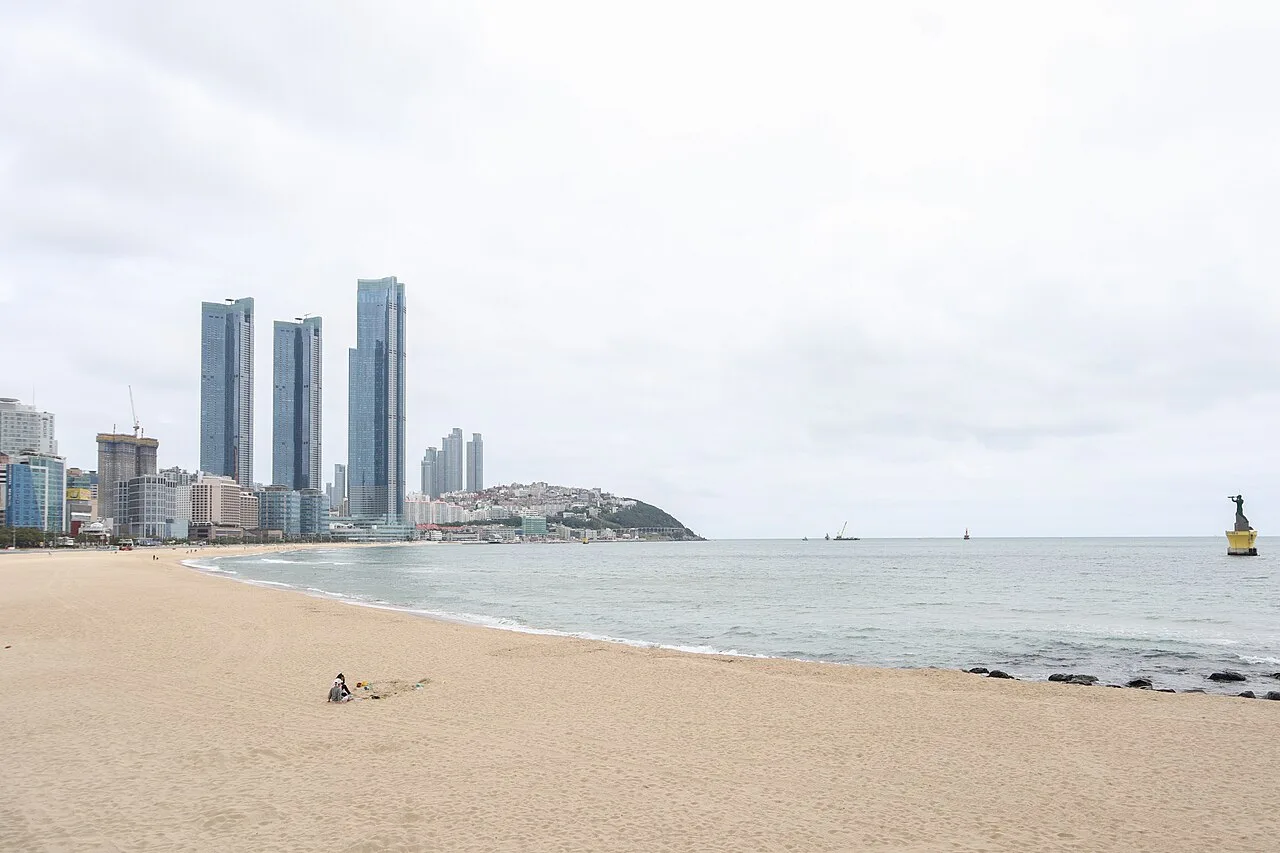
Haeundae Beach Guide 2026: Blue Line Park Sky Capsule, Beach Train, Dongbaek Island and The Bay 101
October 20, 2026 | by Korea Bestie
Busan Itinerary: 3 Days in Busan for First-Timers (Plus 2- and 4-Day Versions)
October 19, 2026 | by Korea Bestie
Incheon Airport to Seoul (2026): AREX Train vs Limousine Bus vs Taxi, Prices and Times
October 15, 2026 | by Korea Bestie