

Seoul Bus Guide (2026): How to Pay, Fares and What If Your Card Is Declined
October 25, 2026 | by Korea Bestie
Seoul’s city buses are cheap, frequent and reach the places the subway misses, but paying for them trips up a lot of visitors. This week a string of viral posts in Korea described foreign passengers boarding after their cards showed “insufficient balance”, and Korean media are now calling for clearer fare guidance in English and other languages. This guide explains how paying on a Seoul bus actually works in 2026, what each bus color costs, and what to do if the reader beeps at you, so you never end up in that awkward moment at the front of the bus.
This guide contains affiliate links. If you book through them, we may earn a small commission at no extra cost to you. Affiliate disclosure.
Last checked: October 25, 2026. Fares below are the adult transit-card fares most guides still list in 2026; check the reader display if a fare looks different. Dollar figures use about 1,330 KRW = 1 USD (October 2026).
Quick answer
- How to pay: tap a T-money (or similar) transit card on the reader by the front door when you board, and again by the back door when you get off.
- Fares: about 1,500 KRW (~$1.13) on blue and green buses, 1,200 KRW (~$0.90) on small village buses, 2,500 KRW (~$1.88) on late-night N buses, 3,000 KRW (~$2.26) on red express buses.
- Cash: many Seoul routes no longer take cash at all. Carry a topped-up card.
- Card declined? you can’t top up on the bus. Step off and recharge at a convenience store or subway machine; skipping the fare can cost 30 times the fare in a surcharge.
- Foreign bank cards: you can’t tap a Visa or Mastercard on Seoul buses yet; T-money plans to add this in 2027.

First time in Korea? Start here: our step-by-step guide from landing to your first day.
Why is everyone talking about Seoul bus fares right now?
Around October 19–22, 2026, posts on Korean social media described foreign passengers walking onto city buses in Seoul and other cities after their cards showed an insufficient balance, with drivers unable to explain the problem in a shared language. The Korea Herald, Seoul Economic Daily and The Asia Business Daily all picked up the story. Most of the accounts are single social-media posts and haven’t been verified, and many people pointed out that the real problem is a lack of clear English instructions on buses.
The practical lesson for travelers is simple: a Seoul bus has no way to sell you a ticket or top up your card. If you understand that before you board, you’ll never get stuck.
How do I pay on a Seoul bus?
- Get a transit card first. A T-money card (or a WOWPASS or Climate Card, which work the same way at the reader) from any convenience store or subway machine. See our T-money card guide.
- Load enough money. 10,000–20,000 KRW covers several days of normal sightseeing.
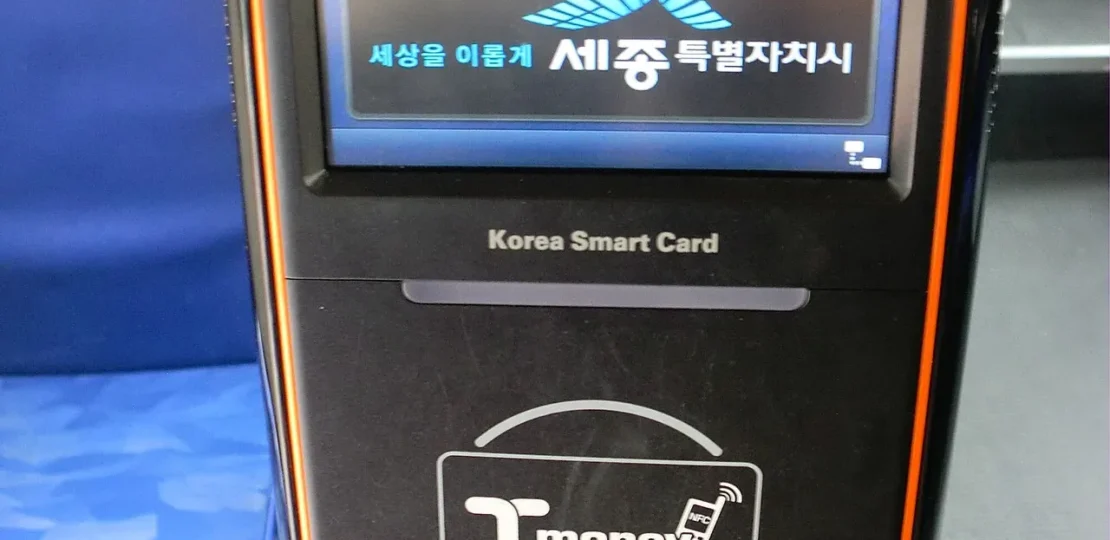
- Board through the front door and tap your card on the reader next to the driver. Listen for one short beep and check the screen shows the fare.
- Press a red stop button before your stop. Major stops are announced in English as well as Korean.
- Tap again on the reader by the back door as you get off. This is what makes your next transfer cheap or free.
The easiest rule: one card per person.
How much does a Seoul bus cost?
Buses are color-coded by type. Adult fares with a transit card:
| Bus | What it does | Adult card fare |
|---|---|---|
| Blue (trunk) | Long routes along main roads between districts | 1,500 KRW (~$1.13) |
| Green (branch) | Shorter routes linking neighborhoods to subway stations | 1,500 KRW (~$1.13) |
| Green village bus (마을버스) | Small buses up hills and into residential areas | 1,200 KRW (~$0.90) |
| N late-night bus | Main routes after midnight, when the subway has stopped | 2,500 KRW (~$1.88) |
| Red (express) | Express buses between Seoul and surrounding cities | 3,000 KRW (~$2.26) |
Teenagers and children pay less on blue and green buses (around 900 and 550 KRW). These are the fares set in August 2023; Seoul raised the subway base fare to 1,550 KRW in 2025, so if a bus reader shows a slightly different number, trust the reader. Airport limousine buses are a separate system with their own fares; see Incheon Airport to Seoul.
How do free transfers work?
Seoul charges by trip, not by vehicle. If you tap off one bus or subway and tap onto the next within 30 minutes (60 minutes between 9 p.m. and 7 a.m.), the next leg counts as part of the same journey. You pay only a small extra charge if the total distance is long, and you can chain up to four transfers.
- Always tap off. Forget to tap the back-door reader and your next ride is charged as a brand-new trip.
- The same route number doesn’t count. Getting off a 7016 and back onto another 7016 is a new fare.
- Transfers only work with a card, never with cash.
Can I pay cash on a Seoul bus?
Don’t count on it. Seoul has been converting more and more routes to cashless buses, which carry a sign by the door and have no cash box at all. Where cash is still accepted, you lose the transfer discount. Treat a topped-up card as essential, the same way you’d treat a subway ticket.
What if the reader says “insufficient balance”?
The reader will beep differently and show a message in Korean, usually 잔액이 부족합니다 (“balance is insufficient”), and the driver may say “janaek” (balance). Here’s what to do:
- Don’t walk to the back. Stay by the driver or step back off the bus. The bus can’t top up your card, and riding without paying is fare evasion under Seoul’s bus terms: if caught, you owe the fare plus a surcharge of 30 times the fare, and deliberate cases can be fined under Korea’s Minor Offenses Act.
- If a friend has enough balance, ask the driver to let them pay for you. Say “du myeong” (two people) and point at both of you; some drivers will set the reader for two riders, others will say no.
- On a cashless bus, Seoul’s official guidance is that riders without a working card can pay afterward by bank transfer using the payment notice posted on the bus, or with a mobile transit card. In practice this needs a Korean bank account or app, so for most visitors it’s simpler to get off at the next stop and top up.
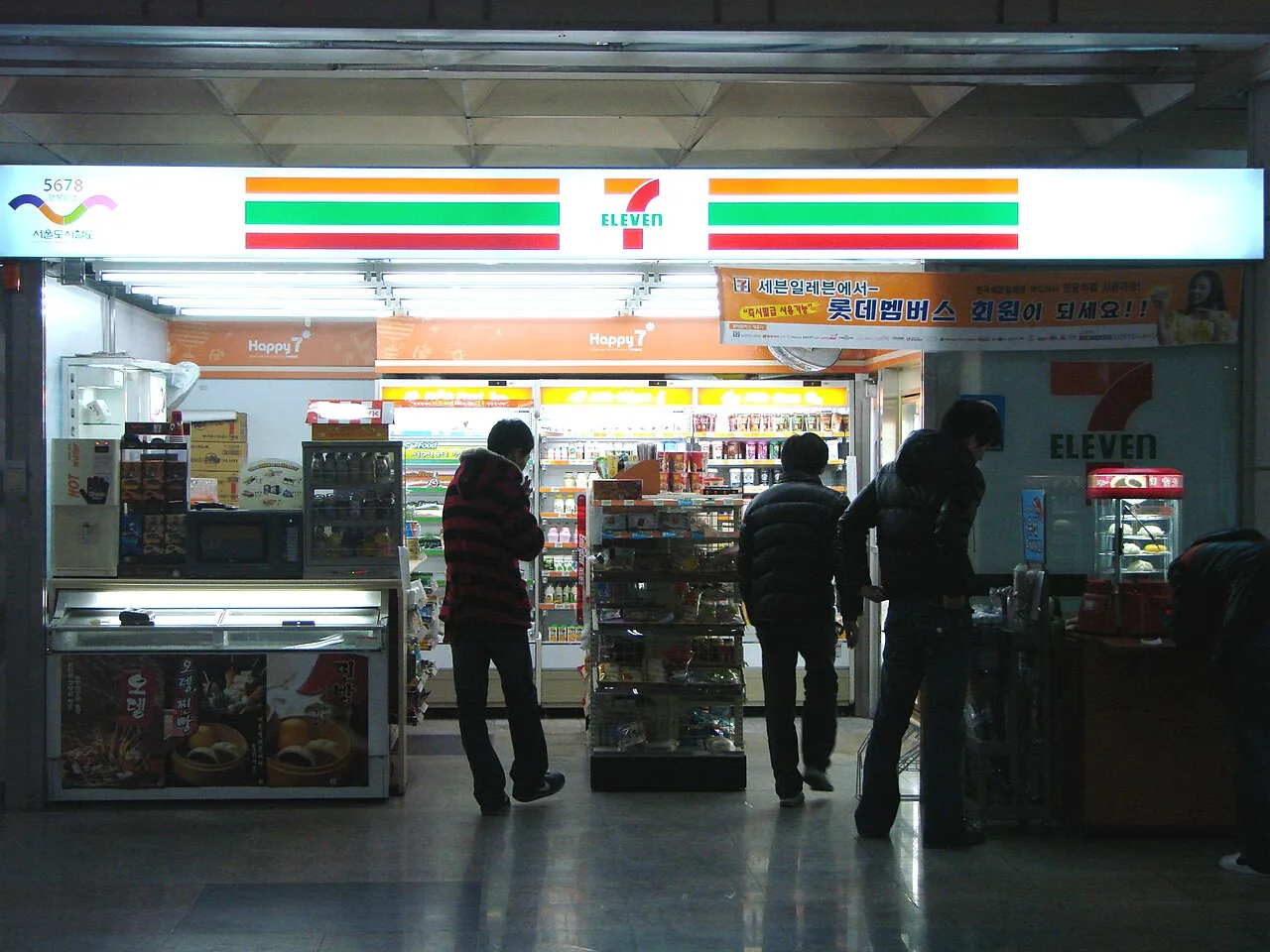
- Top up at the nearest convenience store (CU, GS25, 7-Eleven, emart24: hand over your card and cash and say “chung-jeon“, recharge) or a subway station machine. See how to top up a T-money card.
Most “declined” moments happen at the end of a trip, when a card that had just enough for the subway drops below a bus fare. Check your balance on the subway gate screen and top up whenever it falls below about 5,000 KRW.
Can I tap my own Visa or Mastercard on the bus?
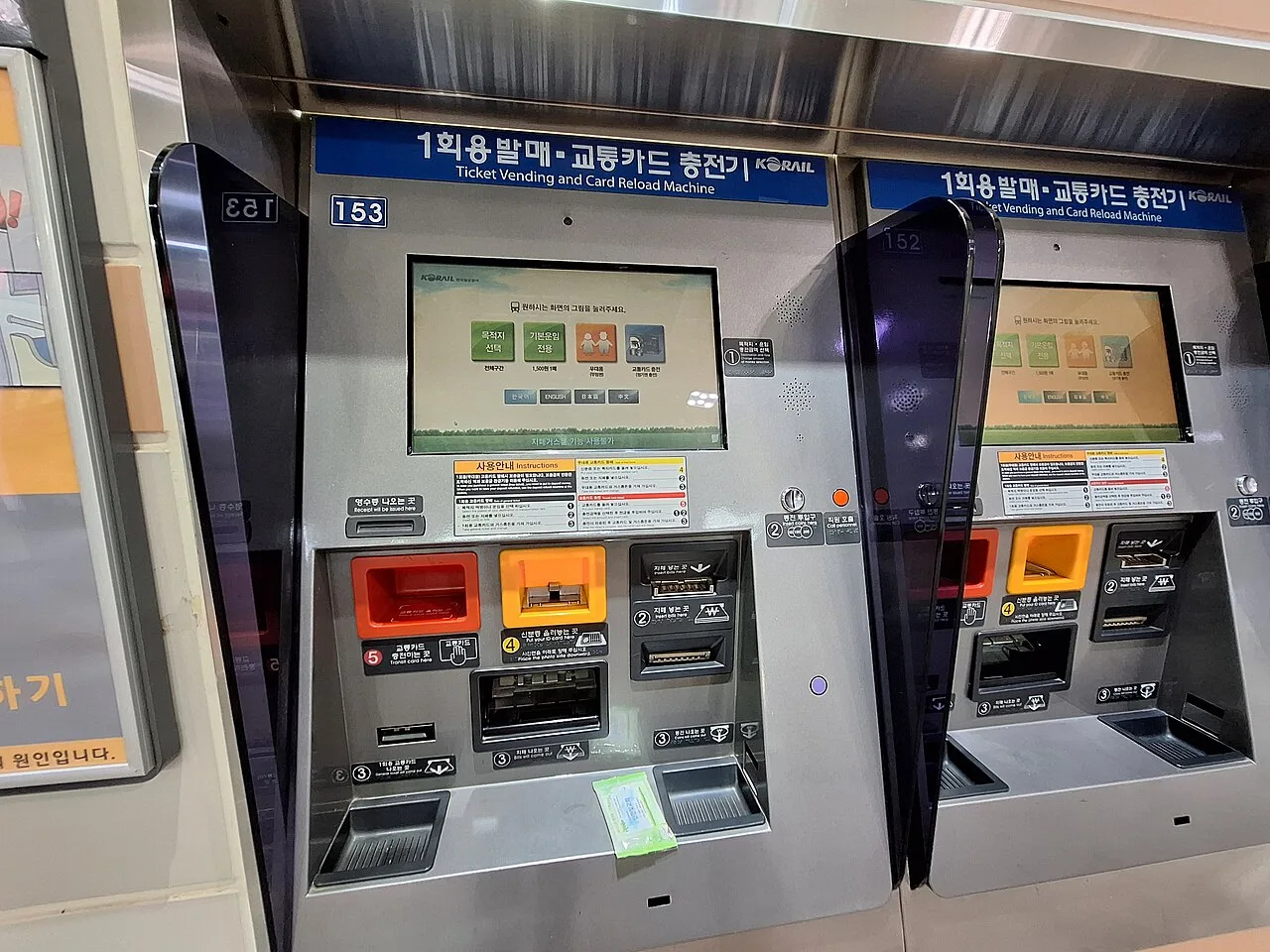
Not yet. Unlike London or New York, Seoul buses don’t accept contactless bank cards from abroad in 2026. Tmoney has signed an agreement with Visa, Mastercard and other card networks to build this, with testing through the end of 2026 and a planned launch on Seoul city buses in 2027. What has changed: since March 2026 many subway ticket machines accept overseas cards for buying single tickets and short-term Climate Cards, so you can at least get a fare card without cash.
Which card should I get for buses?
- T-money: the standard choice, sold at convenience stores and stations; you top it up with cash. Klook sells T-money cards for pickup at Incheon Airport if you want one ready on arrival.
- WOWPASS: a prepaid card for foreigners that also works as a transit card; see money in Korea.
- Climate Card short-term pass (기후동행카드): unlimited rides on the Seoul subway and Seoul city buses for a set number of days (the 1-day pass costs 5,000 KRW, ~$3.76). Good value if you ride a lot; red express buses to other cities aren’t included. Details in our Seoul subway guide.
Tips for riding Seoul buses
- Use Naver Map for bus routes and real-time arrivals; it shows the stop name, the direction and how many minutes away each bus is. See how to use Naver Map in English.
- Check the side of the road. Many central bus stops sit on islands in the middle of the road, and the same route stops on opposite sides for each direction.
- Big luggage: city buses have no luggage racks. With a large suitcase, take the subway, a limousine bus or a taxi instead.
- After midnight: N buses run along the main routes; otherwise use a taxi.
Are Seoul buses accessible?
Many blue and green routes now use low-floor buses with a ramp at the middle door, marked with a wheelchair symbol. Village buses and older vehicles have steps. If you use a wheelchair or a large stroller, the subway (with elevators at most stations) is usually more reliable; check station exits in Naver Map before you go.
Getting around Seoul
- T-money card guide — where to buy, fares and refunds
- How to top up a T-money card — machines and convenience stores step by step
- How to ride the Seoul subway — fares, transfers and last trains
- Money in Korea — WOWPASS, foreign cards and cash
FAQ
Do I need to tap my card when I get off a Seoul bus?
Yes. Tapping off is what gives you the free or discounted transfer to your next bus or subway. Without it, your next ride is charged as a new trip.
Can I top up my T-money card on the bus?
No. Bus readers only deduct fares. Top up before you board at a convenience store or subway machine.
What happens if I ride without paying?
Under Seoul’s city bus terms, fare evasion means paying the missed fare plus a surcharge of 30 times the fare, and deliberate cases can also be fined. If your card is declined, step off and top up.
When can I use my foreign credit card on Seoul buses?
Tmoney plans to launch foreign contactless card payments on Seoul city buses in 2027. Until then, use a T-money card, WOWPASS or Climate Card.
Sources: The Korea Herald – posts on skipped bus fares spur calls for multilingual guidance (Oct 2026) · Seoul Economic Daily (Oct 22, 2026) · The Asia Business Daily (Oct 22, 2026) · The Korea Herald – foreign cards to work on Seoul buses from 2027 · Seoul Metropolitan Government – open-loop payments · Seoul Metropolitan Government – cashless bus guidance · Hankuk-in – Seoul transport fares · Unpackorea – Seoul bus and subway fares 2026 · Seoul Tourism Guide – Seoul bus guide
Photos: hyolee2 / Wikimedia Commons, CC BY-SA 3.0 · 바리반디 at Korean Wikipedia / Wikimedia Commons, CC BY-SA 2.0 kr · LandAndTree / Wikimedia Commons, CC BY 4.0
RELATED POSTS
View all

Hotels Near Seoul Station (2026): 8 Picks by Budget for AREX and KTX Travelers
October 22, 2026 | by Korea Bestie
Seoul to Busan by KTX (2026): Tickets, New Fares, Seoul vs Suseo Station and Korail Pass
October 16, 2026 | by Korea Bestie
Seoul Christmas Market 2026: Gwanghwamun Dates, Christmas Lights and Where to Go
October 18, 2026 | by Korea Bestie