


DMZ Tour from Seoul (2026): Is the JSA Open, What It Costs and How to Choose a Tour
October 17, 2026 | by Korea Bestie
Updated 27 November 2026 · By the Korea Bestie team
A DMZ tour from Seoul is one of the most popular day trips in Korea, and one of the most confusing to book. Listings promise “the JSA”, “the Third Tunnel” and “North Korea views”, but what’s actually open changes with the security situation. This guide covers what you can visit in October 2026, whether you can go without a tour company, what it costs, and how to choose a tour that won’t disappoint.
Last checked: October 2026. DMZ sites can close at short notice for military or security reasons. Treat everything here as “check before booking”.
🇰🇷 Checked against Korean official sources · October 2026
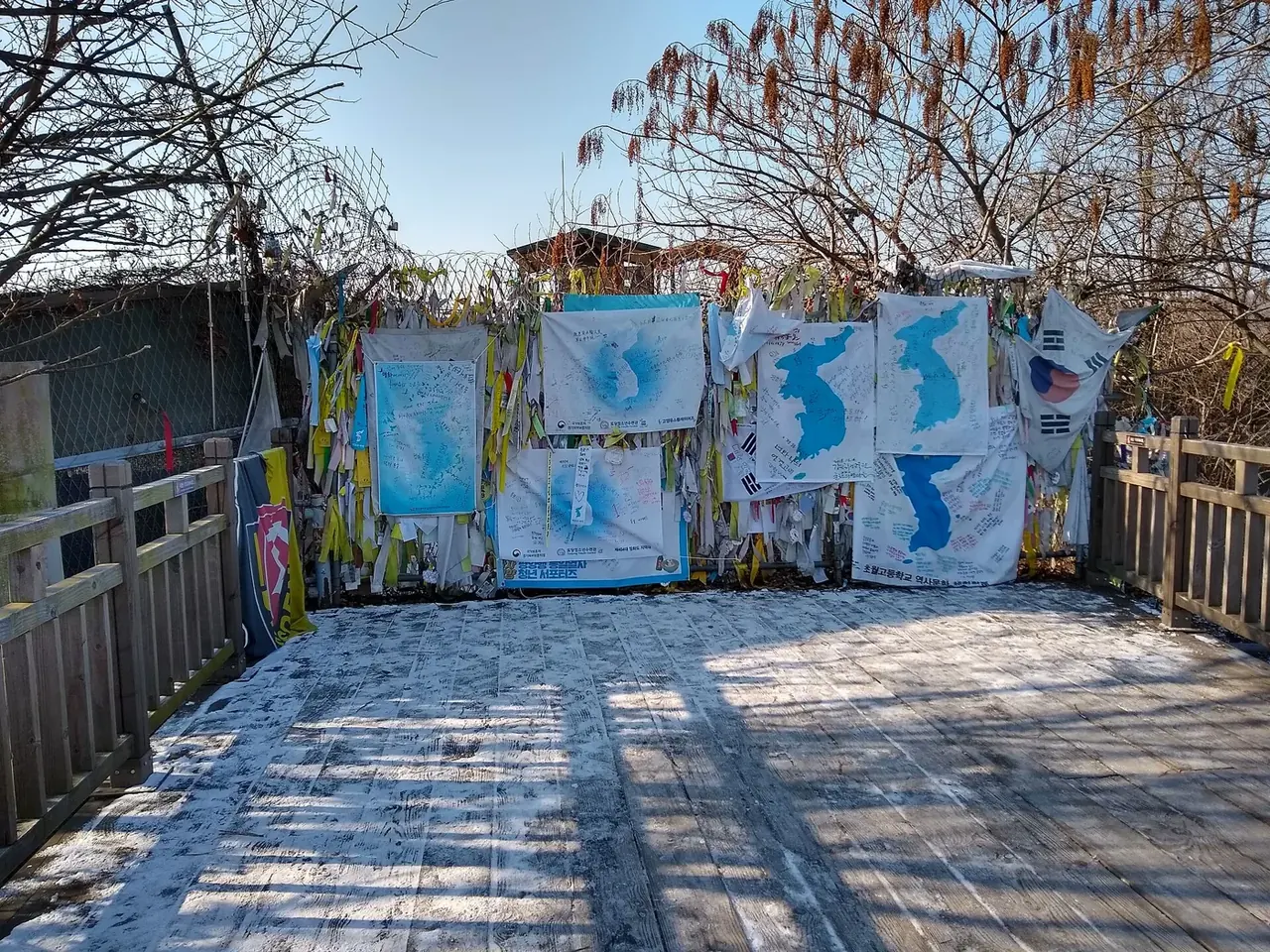
Table of contents
On this page
- The short answer
- Is the JSA (Panmunjom) open in 2026?
- Can you visit the DMZ without a tour?
- The main stops
- DMZ tour cost
- How to choose a DMZ tour
- Passport, photos and rules
- Accessibility
- FAQ
The short answer
| What’s open (usually) | Imjingak Park, the Third Infiltration Tunnel, Dora Observatory and the Unification Village area in Paju, on the Paju “DMZ Peace Tour” course |
| JSA / Panmunjom | Civilian tours suspended since July 2023. We found no official reopening for foreign tourists as of October 2026. Check before booking. |
| Closed days | Mondays, weekday public holidays, and Seollal and Chuseok days. Also closed at short notice for military or security reasons, or bad weather. |
| Distance from Seoul | Imjingak is about 1 to 1.5 hours north of central Seoul by road |
| Official Paju ticket | 12,200 KRW (~$9) with the tunnel monorail, 9,200 KRW (~$7) walking (adults) |
| Tour from Seoul | Roughly $40–60 for a group half-day tour with hotel-area pickup; $200+ for private tours |
| Must bring | Your physical passport. Copies and photos aren’t accepted. |
Is the JSA (Panmunjom) open in 2026?
The Joint Security Area at Panmunjom (판문점), with the blue huts straddling the border, is what most people picture when they think “DMZ tour”. Here’s the honest situation:
- Civilian JSA visits stopped on July 18, 2023, after a US soldier on a tour ran across the border into North Korea. Limited “special tours” restarted for Korean citizens later that year, and they have been paused again around sensitive events since. Visits were halted around US President Trump’s visit to Korea in late 2025, for example.
- The Ministry of Unification’s Panmunjom tour program is for South Korean nationals only. Its official booking page states that foreigners and groups cannot apply (tours on Tuesdays, Wednesdays, Fridays and Saturdays, booked a month ahead).
- Some English-language sites in 2026 say JSA tours for foreigners are “partly reopened”. We couldn’t confirm that from any official source. One 2026 review found that some “DMZ + JSA” listings actually visit a JSA-themed museum, not the real JSA.
Our advice: if a tour advertises the JSA, ask the operator in writing, before you pay, whether it enters the actual Joint Security Area, what happens if UN Command cancels, and whether you get a full refund. Expect the JSA to stay off the table for most visitors, and plan around the sites below.
Can you visit the DMZ without a tour?
Partly. You can’t drive or walk into the Civilian Control Zone on your own. But you don’t strictly need a tour company either:
- Get to Imjingak (임진각) yourself. It’s outside the restricted zone and free to visit. Take the Gyeongui–Jungang Line from Seoul Station to Munsan Station (about an hour, around 2,350 KRW, ~$1.70, with a T-money card). Then take a taxi (about 15 minutes, roughly 9,700 KRW, ~$7) or the infrequent local bus 058B to Imjingak.
- Buy the official Paju “DMZ Peace Tour” ticket at the Imjingak ticket booth (on-site ticketing runs 09:00–14:30) or online on the Paju DMZ reservation site. A shuttle bus takes you on the official course, about 3 hours: Imjingak → Third Tunnel → Dora Observatory → Unification Village → back to Imjingak.
The catches: the Paju booking site’s English service is still “in preparation”, the shuttle comes without a guide (groups bring their own), only part of each bus’s seats can be booked online, and popular weekend departures sell out. Paju also caps daily visitors at 3,000. If you like doing things yourself and read a little Korean, or use a translation app (see our essential Korea travel apps), it’s by far the cheapest option. Everyone else is better off with a guided tour from Seoul. The guide is what turns concrete tunnels and fences into a story.
Map — Imjingak: Google Maps · Naver Map (Naver Map is still the most reliable app for walking, bus and subway directions in Korea)
The main stops on a DMZ tour
Imjingak Park and Freedom Bridge

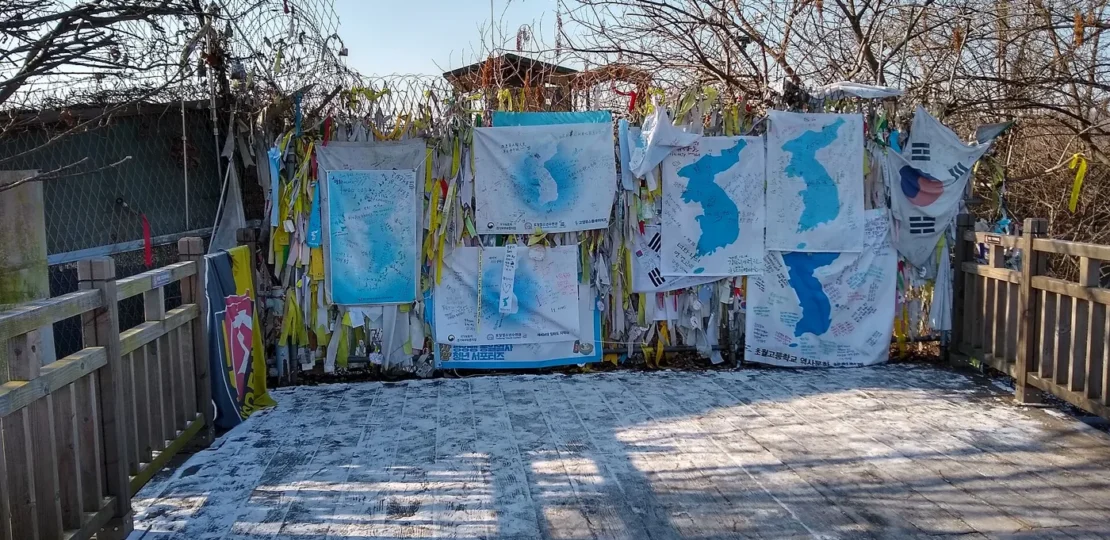
Imjingak is a park on the Imjin River just south of the Civilian Control Zone. It’s where most tours start. You’ll see Freedom Bridge, the walkway prisoners of war used to return in 1953, with its fence covered in ribbons and messages, plus a bombed steam locomotive and the Peace Bell. Imjingak also has the Paju Imjingak Peace Gondola across the river, which some tours add.
The Third Infiltration Tunnel (제3땅굴)
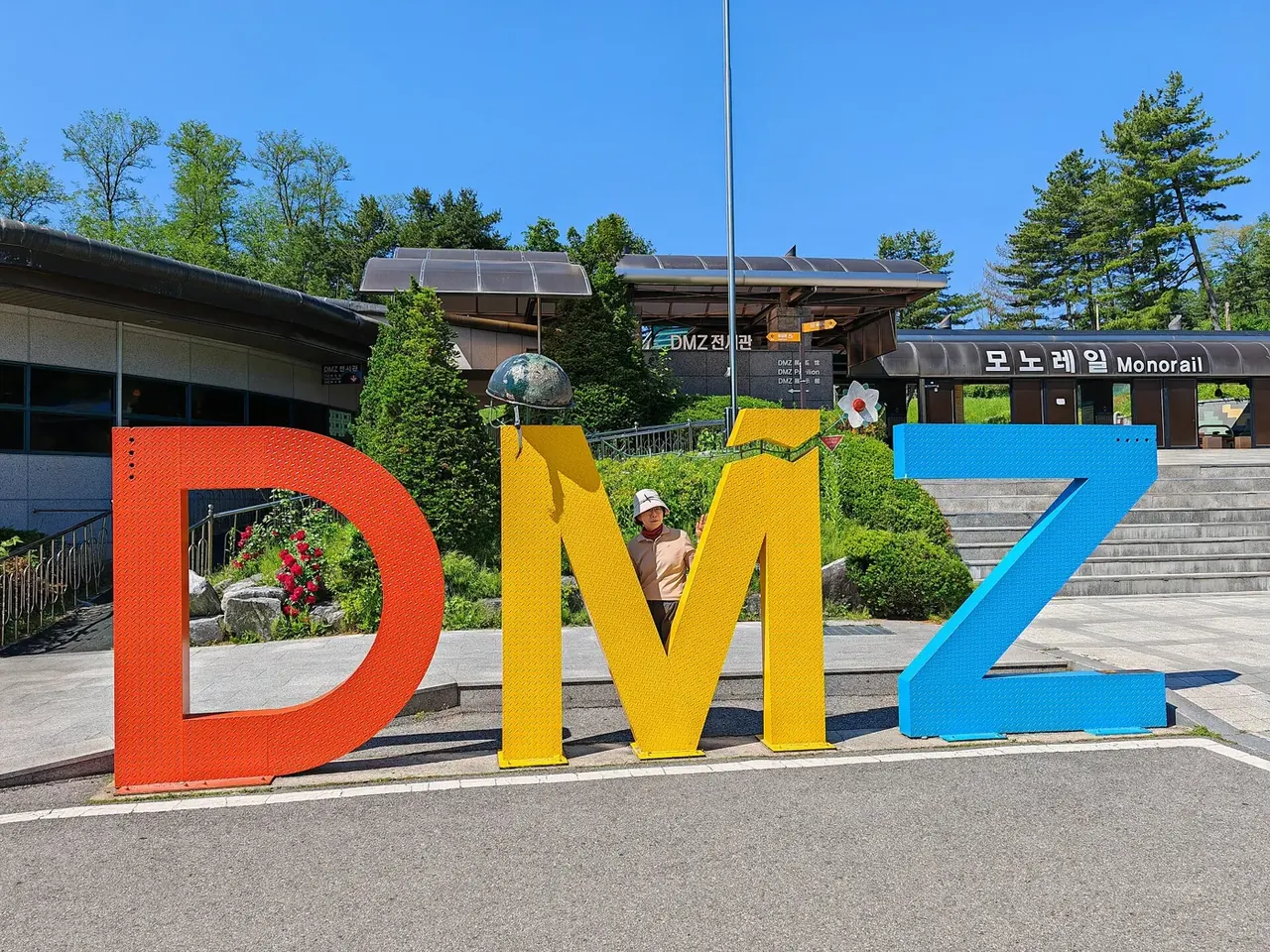
Discovered in 1978, this is one of the tunnels North Korea dug under the DMZ toward the South. The tunnel is about 1,635 meters long, and roughly 2 meters high and 2 meters wide. Visitors go down a steep access shaft to reach it, then walk a stretch of the original tunnel to a blocked barrier near the border line.
- Monorail or walking. The monorail ticket rides you down and back up. On the walking option you walk the steep incline both ways. Going down is easy, but the walk back up is a real workout. If the monorail breaks down, everyone walks.
- Paju posted a notice in September 2026 that a shuttle elevator at the tunnel resumed service from September 29, with an extra charge. Ask at the booth what the current options are.
- Helmets are provided. The tunnel is low, and tall visitors will be bending. No photos inside, and you’ll be asked to leave bags and phones in lockers.
- People with heart or blood pressure problems, breathing difficulties, or who have been drinking may be refused entry to the tunnel.
Dora Observatory (도라전망대)
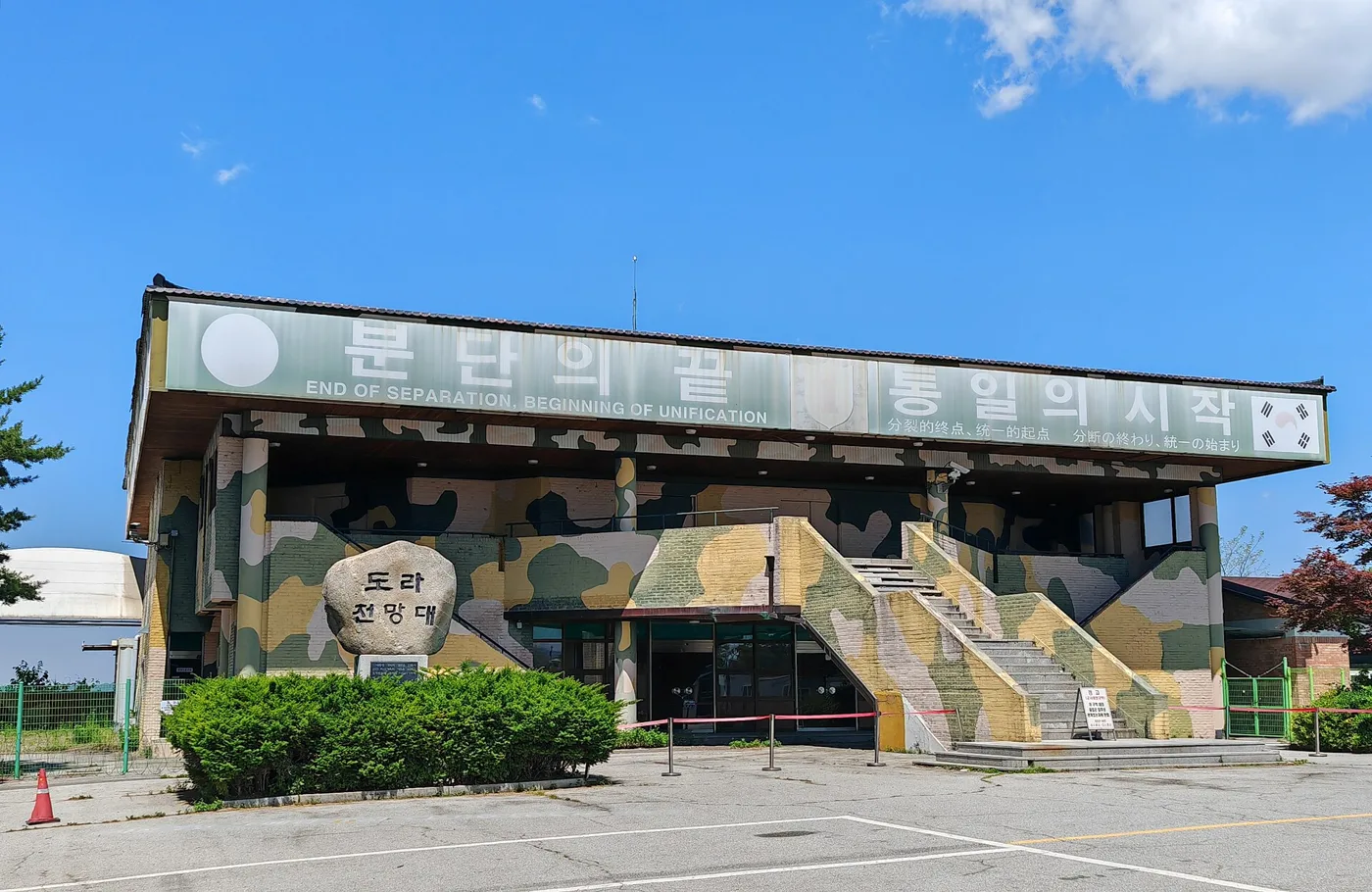
From Dora Observatory you look across the DMZ into North Korea. On a clear day you can make out the North’s “propaganda village” of Kijong-dong, a huge flagpole, and the outskirts of Kaesong. Binoculars are installed. The view depends heavily on the weather: haze can turn it into a grey blur, which is another reason to pick clear autumn days (see Korea weather by month).
The observatory is the stop most likely to close on short notice. It shut for about a day in October 2024 when North Korea blew up border roads, and tour guests have reported the military cancelling the tunnel and observatory on the morning of the tour. Good operators then swap in an alternative, such as Odusan Unification Observatory or the gondola.
Dorasan Station and Unification Village

Dorasan Station (도라산역) is the northernmost station on the line toward Pyongyang. It’s a big, nearly empty modern station with a sign pointing “To Pyongyang”. Some tours stop here, and Korail runs special tourist trains toward Dorasan on limited dates (Paju changed the Dorasan shuttle-train link tour in April 2026, so check Korail for the current schedule). The official Paju course passes through Unification Village (통일촌), a farming village inside the Civilian Control Zone, famous for its soybeans.
Other DMZ areas
Paju is where nearly all tours from Seoul go. Other DMZ viewpoints include Odusan Unification Observatory in Paju (outside the restricted zone, easy to visit on your own), Cheorwon in Gangwon-do, and the Goseong Unification Observatory on the east coast. Those make long days from Seoul and are mostly for return visitors. For other easy day trips from Seoul, see our things to do in Gyeonggi-do guide.
DMZ tour cost
Official Paju DMZ Peace Tour prices (individuals, October 2026). These include the facility fee and the shuttle bus:
| Ticket | With monorail | Walking |
|---|---|---|
| Adult | 12,200 KRW (~$9) | 9,200 KRW (~$7) |
| Youth (elementary to high school) | 9,500 KRW (~$7) | 7,000 KRW (~$5) |
| Senior (65+) | 7,700 KRW (~$6) | 6,200 KRW (~$4.66) |
| Children 6 and under (with guardian) | Free | |
Foreigners pay the same as Koreans. There’s no separate foreigner price. Guided tours from Seoul cost more because they include transport and a guide:
- Group half-day tour (about 5–7 hours): roughly $40–60 per adult on Klook, GetYourGuide, Viator and Trip.com, usually including the Paju ticket. Check whether the monorail is included.
- Full-day tour adding a suspension bridge, the gondola or a North Korean defector Q&A: typically more.
- Private tour with a car and guide: from about $200+ for the group. Worth it for families or groups of 3–4.
- Korail DMZ train packages (Seoul Station to Dorasan, with a connecting coach and admissions) have been listed at about 39,600 KRW (~$30), but they run only on limited dates. Check Korail before planning around them.
Prices change often. Compare on the day you book. For card payments and fees, see money in Korea.
How to choose a DMZ tour from Seoul
- Ignore “JSA” in the title unless the operator confirms in writing that the real JSA is open on your date (see above).
- Check exactly which stops are included. The core is Imjingak + Third Tunnel + Dora Observatory. “Panoramic DMZ” tours that skip the tunnel are cheaper but less memorable.
- Ask about the backup plan. What happens if the military closes the tunnel or observatory that day, and is there a partial refund? Monday tours always run a substitute course, because the Paju sites are closed.
- Half-day vs full-day: half-day (morning) is enough for most people. Full-day makes sense if the extras (defector talk, gondola, bridge) interest you.
- Pickup point: most group tours meet at central spots near Myeongdong, City Hall or Hongik University Station, often before 08:00. Choose one near your hotel. Our Myeongdong, Seoul Station and Hongdae luggage storage guides help if it’s your check-out day.
- Passport details deadline: operators must register your passport details in advance (often 24–72 hours before). Book early enough.
- Read recent reviews (the last 1–2 months) for comments about cancelled stops and how the guide handled them.
Passport, photos and rules
- Bring your physical passport. Paju’s official guide says foreigners must show a passport, alien registration card or US military ID. Copies, screenshots and passports past the permitted stay are refused, and without it you’ll be turned away at the checkpoint.
- Photos: Paju’s official guide says photography and video (including drones) are banned on the tour course, and there are no photos inside the tunnel. Follow your guide and the soldiers’ instructions about where, if anywhere, photos are allowed. Don’t photograph military facilities or soldiers.
- Stay with the group and on the designated roads. No alcohol, weapons or fishing gear.
- Dress: the famous dress code (no ripped jeans, sleeveless tops or flip-flops) applied to the JSA. For the Paju course, wear comfortable shoes for the tunnel slope and dress for the weather. It’s colder and windier near the border.
- Kids: minors can enter with an adult guardian. Children 6 and under are free on the Paju ticket.
- Save the Korea emergency numbers (1330 tourist helpline speaks English) before you go.
Accessibility
- The Third Tunnel is the hard part. Even with the monorail, you walk a low, narrow, damp section with uneven ground. It isn’t suitable for wheelchairs or strollers. Some visitors skip the tunnel and wait at the visitor center.
- Imjingak Park is mostly flat and paved, and suitable for strollers and wheelchairs.
- Dora Observatory has steps and slopes from the parking area. Ask your operator about accessible vehicles in advance.
- Munsan Station (Gyeongui–Jungang Line) has elevators if you’re travelling independently.
Nearby on Korea Bestie
- Things to do in Gyeonggi-do — more day trips around Seoul
- T-money card guide — for the train to Munsan
- Seoul Station luggage storage — where the Gyeongui–Jungang Line starts
- Myeongdong luggage storage — near many tour pickup points
- N Seoul Tower guide — an easy evening after a morning DMZ tour
- Gyeongbokgung Palace guide — Korean history before the division
🧮 Plan it: Korea Travel Budget Calculator · Korea Travel Prices
FAQ
Can you visit the DMZ in South Korea?
Yes, on an organized course. In Paju you can either join a guided tour from Seoul or buy the official shuttle ticket at Imjingak with your passport. You can’t enter the restricted zone on your own.
How much does a DMZ tour from Seoul cost?
About $40–60 for a group half-day tour. The official Paju shuttle ticket alone is 12,200 KRW (~$9) with the monorail or 9,200 KRW (~$7) walking, plus your own train/taxi to Imjingak.
Is the JSA tour open in 2026?
As of October 2026 we found no official reopening for foreign tourists. The government program is limited to Korean nationals. Check with the operator before booking anything that mentions the JSA.
How long is a DMZ tour?
Half-day tours take about 5–7 hours including the drive. The Paju shuttle course itself takes about 3 hours.
Is it safe?
Yes. Tours run on fixed routes under military supervision, and closures happen precisely when the situation needs caution.
Can I visit on a Monday?
The Paju sites (Third Tunnel, Dora Observatory) are closed on Mondays and weekday public holidays. Monday tours use alternative stops.
Sources: Paju DMZ Peace Tour – official prices · Paju DMZ Peace Tour – visitor guide · Paju DMZ Peace Tour – schedule · Panmunjom Tour Support Center (Ministry of Unification) · Ministry of Unification – Panmunjom visits · Kyunghyang Shinmun (Oct 2025) · Stars and Stripes (Oct 2024) · Korea Firsthand – DMZ tours 2026 · MileAsia – Seoul to Paju 2026
Photos: Lance Vanlewen / Wikimedia Commons, CC BY-SA 4.0 · Lance Vanlewen / Wikimedia Commons, CC BY-SA 4.0 · Dwxn / Wikimedia Commons, CC BY-SA 4.0 · Dwxn / Wikimedia Commons, CC BY-SA 4.0 · De-Shao Liu (Terry850324) / Wikimedia Commons, CC BY-SA 4.0
RELATED POSTS
View all

Nami Island From Seoul (2026): How to Get There by Train, Bus or Day Tour
October 26, 2026 | by Korea Bestie
Suwon Hwaseong Fortress (2026): Day Trip From Seoul, Tickets, Hours and the Wall Walk
October 27, 2026 | by Korea Bestie
Is the JSA (Panmunjom) Open to Tourists in 2026? Current Status and the Best DMZ Tour Instead
November 4, 2026 | by Korea Bestie