


Seoul Taxi Overcharging (2026): How to Avoid Taxi Scams and Report a Driver
October 26, 2026 | by Korea Bestie

Taxi overcharging is the number-one complaint foreign visitors make about Seoul, and it’s been all over the Korean and international news this past week. The good news: a normal ride across central Seoul costs well under $15, almost every overcharge leaves a paper trail, and a few simple habits (meter on, app booking, receipt in hand) protect you from nearly all of it. Here’s what a fair fare looks like in 2026, the common tricks, and exactly how to report a driver.
Last checked: October 26, 2026, against Seoul city and Incheon Airport fare information and October 2026 news reports. Fares and penalties can change, so check before you go. Dollar figures use about 1,330 KRW = 1 USD (October 2026).
Quick answer
- Fair fare: standard taxis start at 4,800 KRW (~$3.60) for the first 1.6 km, then about 100 KRW per 131 m; most central Seoul rides cost 8,000–20,000 KRW (~$6–15).
- Night rates: +20% from 22:00, +40% from 23:00 to 02:00, +20% from 02:00 to 04:00 in standard Seoul taxis.
- Red flags: no meter running, a fare ‘agreed’ before you leave, a second payment for an app ride you already paid.
- Report it: call 120 (Seoul Dasan Call Center) or 1330 (Korea Travel Hotline), or scan the QR code inside the taxi; keep the receipt and plate number.
- Penalties: since September 4, 2026, a first overcharging offense means a 30-day license suspension for the driver.
On this page
- Why is everyone talking about Seoul taxi scams right now?
- How much should a taxi in Seoul cost?
- What are the most common taxi scams in Korea?
- How do I avoid being overcharged?
- How do I report a taxi driver in Seoul?
- What happens to drivers who overcharge?
- What about airport taxis?
- Accessibility and families
- FAQ

First time in Korea? Start here: our step-by-step guide from landing to your first day.
Why is everyone talking about Seoul taxi scams right now?
In mid-October 2026 a National Assembly member released Seoul city data showing that foreign passengers filed 6,481 complaints about taxi overcharging between 2021 and August 2026, but only 204 of them, about 3%, ended in an administrative penalty. Many cases were closed because the complainant had already left Korea and couldn’t be reached. A few cases made headlines: a Japanese visitor was reportedly charged 480,000 KRW for a ride from Myeongdong to Gimpo Airport after the driver ran without the meter and typed in a fare on arrival, and a Chinese visitor said a driver demanded payment again for a ride already paid in an app.
Keep this in proportion. Seoul has tens of thousands of taxis and millions of foreign riders a year; most trips are honest and cheap. But knowing the rules, and leaving a record, is what turns a complaint into an actual penalty.
How much should a taxi in Seoul cost?
Seoul’s standard taxis (usually orange, white or silver) start at 4,800 KRW, which covers the first 1.6 km, then add about 100 KRW for every 131 m (and a small time charge in slow traffic). That puts most rides between neighborhoods in central Seoul, such as Myeongdong to Hongdae or Insadong, somewhere around 8,000–20,000 KRW by day, depending on traffic.
| Taxi type | Base fare | Good to know |
|---|---|---|
| Standard | 4,800 KRW (first 1.6 km) | Metered; night surcharge 22:00–04:00 |
| Deluxe / jumbo (black, or 9-seat vans) | 7,000 KRW | Higher meter rate; not a scam, just pricier |
| International taxi | Metered in the city, fixed zone fares to and from the airports | Drivers speak English, Japanese or Chinese; book on intltaxi.co.kr or call 1644-2255 |
Night surcharges for standard Seoul taxis: +20% from 22:00 to 23:00, +40% from 23:00 to 02:00 and +20% from 02:00 to 04:00. Expressway tolls are added on top, and rides from Seoul into the farther parts of Gyeonggi-do carry an extra 20%. Airport fares are covered in our Incheon Airport taxi guide.
What are the most common taxi scams in Korea?
- Meter “broken” or never switched on. The driver names a price at the end, often several times the real fare. This is how the 480,000 KRW Gimpo case happened.
- A fixed price before you leave. Outside official airport flat fares and international taxis, a quoted lump sum (especially from drivers approaching you at airports, stations or nightlife streets) is a warning sign.
- Night surcharge charged in daytime, or the out-of-city surcharge switched on for a trip inside Seoul.
- Long detours, especially on airport runs.
- Double payment. You booked and paid through an app, and the driver asks for cash or a card tap again on arrival.
- Unlicensed “call vans” and touts inside airport arrival halls. Incheon Airport itself warns passengers not to accept rides offered inside the terminal.
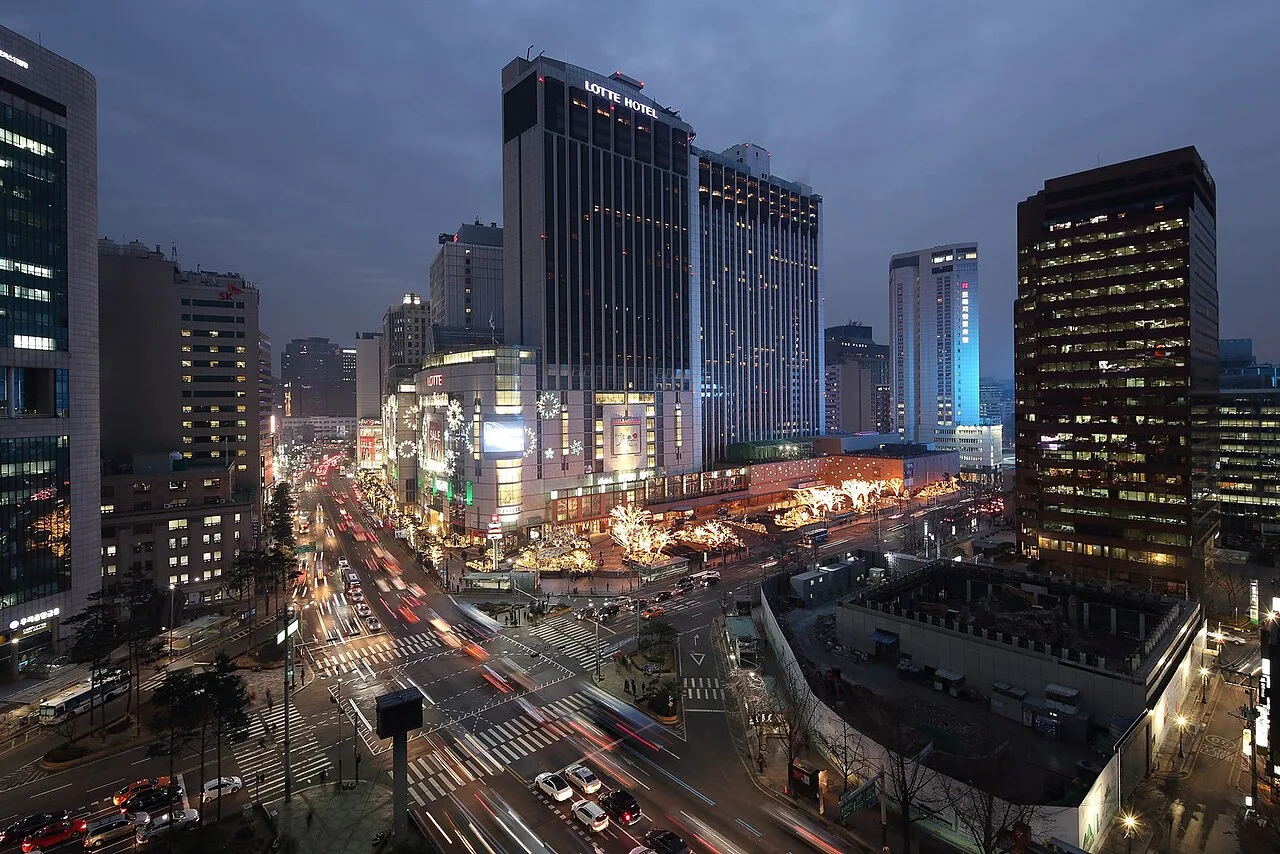
How do I avoid being overcharged?
- Use an app when you can. App rides show the route and an estimated fare up front, and the trip is logged with the driver’s details. Visitors can use K.Ride (Kakao Mobility’s app for foreigners, which takes overseas cards but offers only pricier ride types with a service fee) or Uber, which also works in Seoul. See essential Korea travel apps.
- Check the meter as you set off. It’s usually on the dashboard or the rear-view mirror. If it isn’t running, point at it and say “miteo-gi kyeo juseyo” (미터기 켜 주세요). If the driver refuses, get out at the next safe spot.
- Show your destination in Korean. Copy the Korean name and address from Naver Map and follow the route on your phone; it makes detours obvious.
- Use official taxi stands at airports, stations and hotels, not drivers who approach you.
- Pay by card and ask for a receipt (“yeongsujeung juseyo”, 영수증 주세요). Most taxis take foreign credit cards and T-money; card payments leave a record. Keep some cash as a backup (money in Korea).
- Never pay twice for an app ride. If it was paid in the app, show the screen and say it’s already paid. If the driver insists, take a photo of the plate and report it.
How do I report a taxi driver in Seoul?
Report as soon as you can, ideally before you leave Korea, because investigators often need to contact you. You have three main channels:
- 120 Dasan Call Center: Seoul’s city hotline, with foreign-language help. Dial 120 while you are in Seoul.
- 1330 Korea Travel Hotline: the tourism hotline run by the Korea Tourism Organization, in English and other languages, 24 hours. It can help you file the complaint and interpret.
- QR codes: Seoul has put complaint QR codes inside taxis and at Gimpo and Incheon airports.
Have this ready:
- The car’s plate number (photo of the back of the car or the license card on the dashboard)
- Date, time, pickup and drop-off points
- The receipt or your card statement, plus any app booking screenshots
- Your contact details, including an email that works after you fly home
Seoul has been adding English to taxi receipts (fare, times, whether a surcharge applied and how to complain), but older receipts may be Korean-only. Photograph it either way.
What happens to drivers who overcharge?
Under a revised enforcement rule that took effect on September 4, 2026, a taxi driver caught overcharging gets a 30-day license suspension for a first offense, 60 days for a second and license revocation for a third. Before the change, a first offense brought only a warning. Lawmakers have pointed out that a city reward scheme for reporting overcharging has so far paid out nothing, and are pushing for faster handling of cases from visitors who have already gone home. A refund isn’t guaranteed, but a documented complaint is what makes a penalty possible.

What about airport taxis?
Airport runs are where the biggest overcharges happen, simply because the fares are large. A standard taxi from Incheon Airport to central Seoul usually runs about 55,000–75,000 KRW (~$41–56) including tolls by day. If you want certainty, book an international taxi with a fixed zone fare, or take the train: see Incheon Airport to Seoul. For stand numbers and night rates, read our Incheon Airport taxi guide.
Accessibility and families
Standard sedans fit two large suitcases at most. Groups with lots of luggage or wheelchair users should book a jumbo van or an international taxi in advance. If you need a wheelchair-accessible vehicle, ask your hotel or call 1330 a day ahead for current options, and bring your own child seat if you need one.
More first-timer guides
- Incheon Airport taxi guide — stands, fares and night surcharges
- Essential Korea travel apps — taxi, map and translation apps
- Best map apps for Korea — follow your route in Naver Map
- Korea emergency numbers — police, ambulance and 1330
How much will this trip cost?
Pick your group, nights, hotel type and food style — get a realistic budget range in seconds.
FAQ
Do you tip taxi drivers in Korea?
No. Tipping isn’t expected, and a driver asking for a tip is itself something you can report.
Can I pay for a Seoul taxi with a foreign credit card?
Usually yes. Most taxis have card readers that accept Visa and Mastercard, and many also take T-money. Carry some cash in case the reader fails.
Is it safe to take a taxi in Seoul at night?
Generally yes, and late at night it’s often the only option after the subway stops. Use an app or an official taxi rank, sit in the back, and share your trip with a friend if you’re alone.
Can I still report a driver after I’ve left Korea?
You can try through 1330 or the 120 center, but cases are often closed when the visitor can’t be reached, so file before you fly and leave a reliable email.
Free: Seoul in 3 Days planner (PDF)
A 4-page printable plan with timings, closed days, Korean names to show taxi drivers, a budget and rainy-day swaps. Enter your email and we’ll send it, plus occasional new Korea guides (unsubscribe anytime).
Sources: The Korea Times – overcharge reports top 6,000 (Oct 18, 2026) · The Korea Herald – 6,000 complaints in 5 years · Korea JoongAng Daily – tourist complaints pile up (Oct 21, 2026) · Seoul Metropolitan Government – English receipts and service improvements · Incheon International Airport – taxi information · The Korea Times – Seoul base fare 4,800 won · International Taxi – official site
Photos: Ilya Plekhanov / Wikimedia Commons, CC BY-SA 4.0 · 서울연구원 (The Seoul Institute) / Wikimedia Commons, CC BY 4.0 · Kanchi1979 / Wikimedia Commons, CC BY 2.5
RELATED POSTS
View all

Seoul to Anseong by Bus: Express Bus Times, Fares & Getting to Anseong Farmland
October 15, 2026 | by Korea Bestie
Seoul Station Luggage Storage: Lockers by Exit, T-Luggage Counter & Prices (2026)
October 13, 2026 | by Korea Bestie
T-money Card Guide (2026): Where to Buy, How to Top Up, Subway Fares & Refunds
October 13, 2026 | by Korea Bestie