


Seongsu Restaurants: 7 Places Locals Queue For (and How to Skip the Wait)
October 18, 2026 | by Korea Bestie
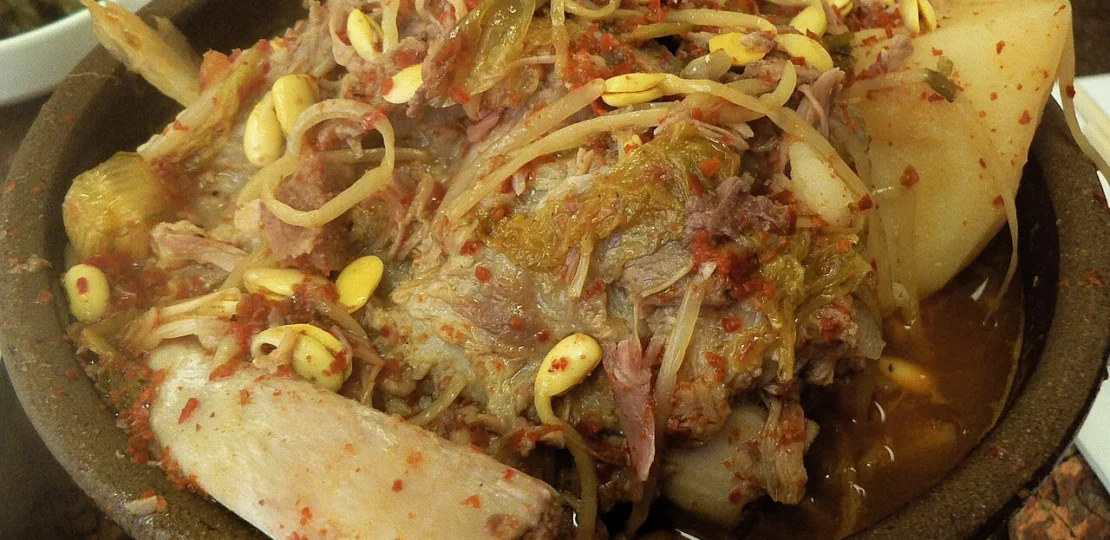
Seongsu-dong (성수동) is famous for cafés and pop-ups, but the Seongsu restaurants worth planning around are older and plainer than the warehouses suggest. Factory workers have eaten here for decades, and several of the places with the longest queues today started as cheap lunch spots for them. This guide covers seven places we checked are still open in 2026: what to order, what it costs, when to go, and how to deal with the waitlists.
This guide contains affiliate links. If you book through them, we may earn a small commission at no extra cost to you. Affiliate disclosure.
Last checked: October 2026. Prices and hours change often, so check Naver Map for today’s hours before you go. Dollar figures use about 1,330 KRW = 1 USD (October 2026).

First time in Korea? Start here: our step-by-step guide from landing to your first day.
New to the area? Our Seongsu-dong guide covers how to get there and the main streets. This page is only about food. For coffee and dessert, see Seongsu cafés.
Seongsu restaurants at a glance
| Restaurant | What to order | Price (Oct 2026) | Good for |
|---|---|---|---|
| Somunnan Seongsu Gamjatang | Pork bone stew | 32,000–49,000 KRW pot (~$23–36) | Late night, groups |
| Neungdong Minari | Minari gomtang (beef soup) | 15,000 KRW (~$11) | Solo lunch, a lighter meal |
| Seongsu Jokbal | Jokbal (braised pork trotters) | 45,000–55,000 KRW (~$34–41) | Dinner with beer, takeout |
| Pork galbi alley | Charcoal-grilled pork ribs | Check the menu board | Classic Korean BBQ night |
| Grandma’s Recipe | Ssambap set (wraps and side dishes) | Check the menu board | A full Korean set meal |
| Nanpo | Kale ssambap with doenjang | Check Catchtable | Modern Korean, a date |
| Zesty Saloon | Shrimp burgers | 9,000–15,000 KRW (~$7–11) | Non-Korean food, kids |
Before you go: waitlists, menus and payment
Most of the popular Seongsu restaurants don’t take bookings for small groups. Instead you join a waitlist, either on a tablet at the door or in an app, and get a message when your table is ready. A few things that help:
- CatchTable Global is the English version of Korea’s main reservation and waitlist app. You can sign up with an email or Google/Apple account instead of a Korean phone number, and it takes foreign cards. Restaurants that use CatchTable for remote waitlists let you join the queue before you arrive.
- Door tablets usually ask for a Korean phone number. If yours is a foreign number, ask the staff (“wei-ting” works); many will add you by hand. A Korean eSIM with a local number makes this easier.
- Everyone needs to be there. Most places won’t seat you until your whole group has arrived.
- Timing beats apps. Weekdays at 11:30 am or around 2–5 pm are the easiest times. Saturday 12–2 pm and 6–8 pm are the worst.
- Menus: many menus are Korean only, often with photos. Papago or Google Translate’s camera mode works well on menu boards.
- Payment: foreign Visa and Mastercard cards work almost everywhere in Seongsu. Some places use a table tablet or kiosk to order. Our money in Korea guide covers cards, WOWPASS and cash.
1. Somunnan Seongsu Gamjatang (소문난성수감자탕): the 24-hour classic
If you only eat one meal in Seongsu, make it this one. Somunnan has served gamjatang (감자탕), a spicy stew of pork neck bones, potato, cabbage and perilla seeds, on Yeonmujang-gil since 1983, and it’s open 24 hours a day, every day. The pot is cooked at your table and is meant for sharing. When you’re nearly done, ask for rice to be fried in the leftover broth (bokkeumbap, 볶음밥).
- Prices (August 2026): pot small 32,000 KRW (~$24), medium 37,000 KRW (~$28), large 49,000 KRW (~$37). A small pot feeds two hungry people. A single bowl (gamja-guk, 감자국) is 12,000 KRW (~$9) and is the easiest option if you’re on your own.
- Waiting: no reservations. There’s a line at almost any hour, including late at night, but tables turn over fast. The annex (별관) next door shortens the wait.
- Menu and payment: the menu is mostly Korean, but there’s a QR code for English, Chinese and Japanese. Cards are accepted.
- Getting there: Seongsu Station (Line 2), Exit 4, then a 3–5 minute walk.
Map — Somunnan Seongsu Gamjatang: Google Maps · Naver Map (Naver Map is still the most reliable app for walking, bus and subway directions in Korea)
2. Neungdong Minari Seongsu (능동미나리 성수): clear beef soup with Korean watercress
Neungdong Minari is a Seoul chain built around minari (미나리), a fresh, slightly peppery Korean water parsley. Its signature is minari gomtang: a clear beef bone soup topped with a big handful of chopped minari, with rice on the side. It’s light, very Korean and an easy introduction for people who don’t like spicy food. The brand was listed in the Michelin Guide Seoul 2025, and the Seongsu branch became even busier after it appeared on Japanese TV.
- Prices (July 2026): minari gomtang 15,000 KRW (~$11); minari sukhoe (blanched minari side) 9,000 KRW; minari and boiled beef hot pot 48,000–85,000 KRW (~$36–64) for groups.
- Hours: daily 11:00 am–11:00 pm.
- Waiting: weekend lunch queues are long; weekday lunch usually moves quickly. Go before noon or after 2 pm.
Map — Neungdong Minari Seongsu: Google Maps · Naver Map (Naver Map is still the most reliable app for walking, bus and subway directions in Korea)
3. Seongsu Jokbal (성수족발): one dish, done for decades
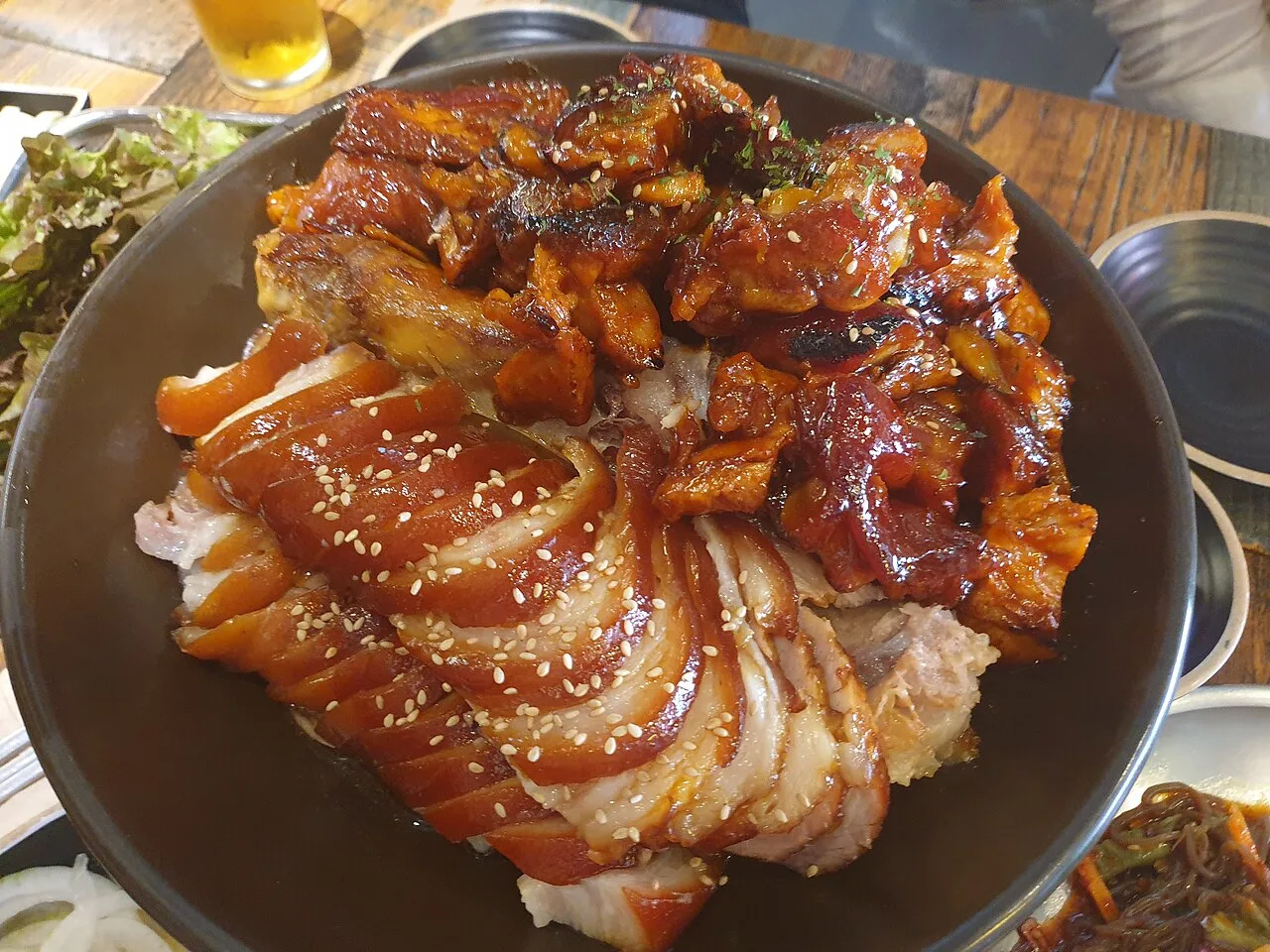
Locals often name Seongsu Jokbal as one of Seoul’s top three jokbal (족발) restaurants. Jokbal is pork trotter braised in soy sauce and spices, then sliced and served at room temperature with lettuce, salted shrimp sauce and garlic. The texture is soft and slightly sticky, with a sweet, savory flavor. This place sells nothing else. The flavor is on the sweet side, which some locals love and others don’t.
- Prices (April 2026): medium 45,000 KRW (~$34), large 50,000 KRW (~$38), extra large 55,000 KRW (~$41). A medium is plenty for two.
- Hours: daily 12:00–10:00 pm, with a break from 3–5 pm.
- Waiting: the room is small and narrow, so there’s often a queue at dinner. Many locals order takeout (포장, pojang) instead and eat it with a beer by the Han River or at their hotel.
- Getting there: about a 5-minute walk from Seongsu Station (Line 2).
Map — Seongsu Jokbal: Google Maps · Naver Map (Naver Map is still the most reliable app for walking, bus and subway directions in Korea)
4. The Seongsu pork galbi alley (성수동 돼지갈비골목): old-school Korean BBQ
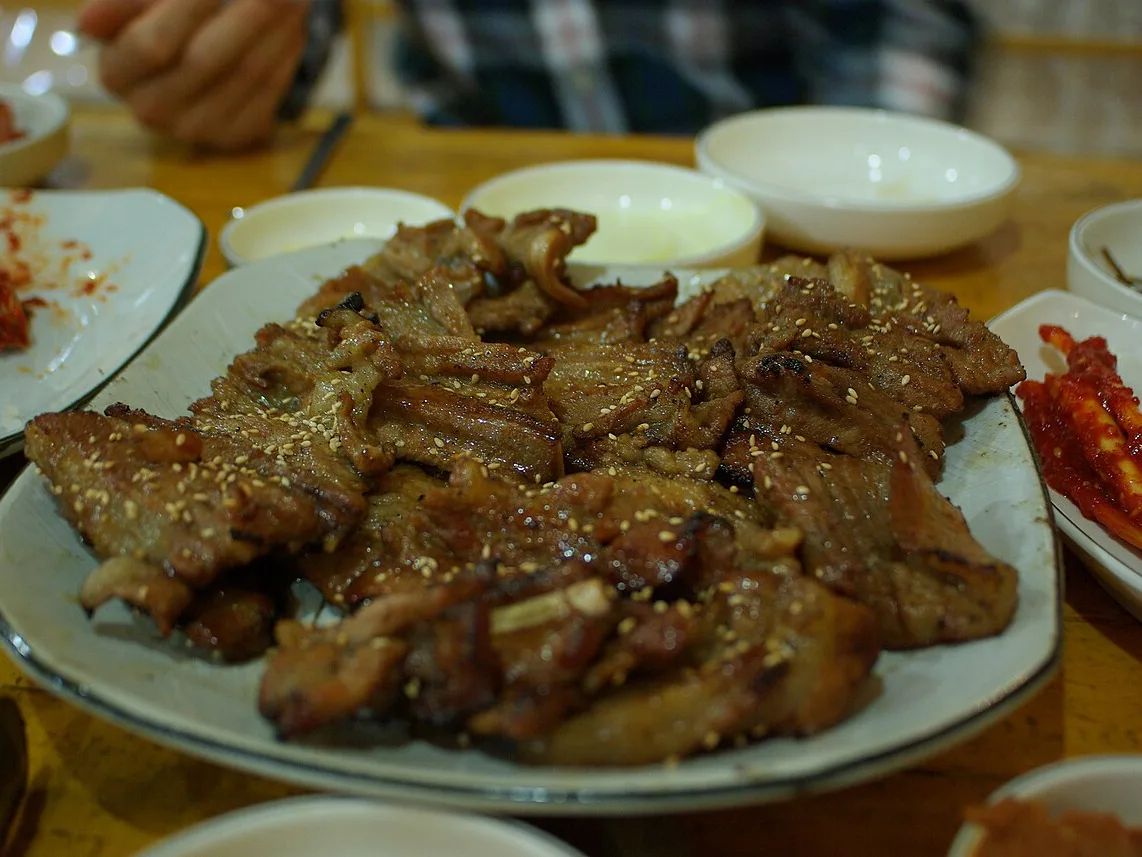
Between Ttukseom Station and Seoul Forest there’s a small cluster of dwaeji galbi (돼지갈비) restaurants that has been grilling marinated pork ribs over charcoal for around 30 years. According to the Seoul city government, the alley grew up around the old Ttukseom horse-racing track that closed in 1989. The oldest restaurant, Suwon Wonjo Galbi (수원원조갈비), opened in 1975. Daeseong Galbi (대성갈비) is the best known, partly thanks to TV appearances.
Expect plastic stools, sizzling grills, a table full of lettuce and side dishes, and office workers having a team dinner. Most places serve the meat already part-cooked on charcoal, and the staff will help you grill and cut it. Orders are usually per person (2-portion minimum is common). It’s the most “local” Korean BBQ experience in Seongsu, and much cheaper than the trendy beef places in the cafe streets.
- When to go: from about 5 pm; queues build fast after 6 pm. Go a little before the dinner peak.
- Tip: if one restaurant has a long line, try another in the same alley. Several are within a minute’s walk.
Map — Seongsu pork galbi alley: Google Maps · Naver Map (Naver Map is still the most reliable app for walking, bus and subway directions in Korea)
5. Grandma’s Recipe (할머니의 레시피): a full Korean table near Seoul Forest
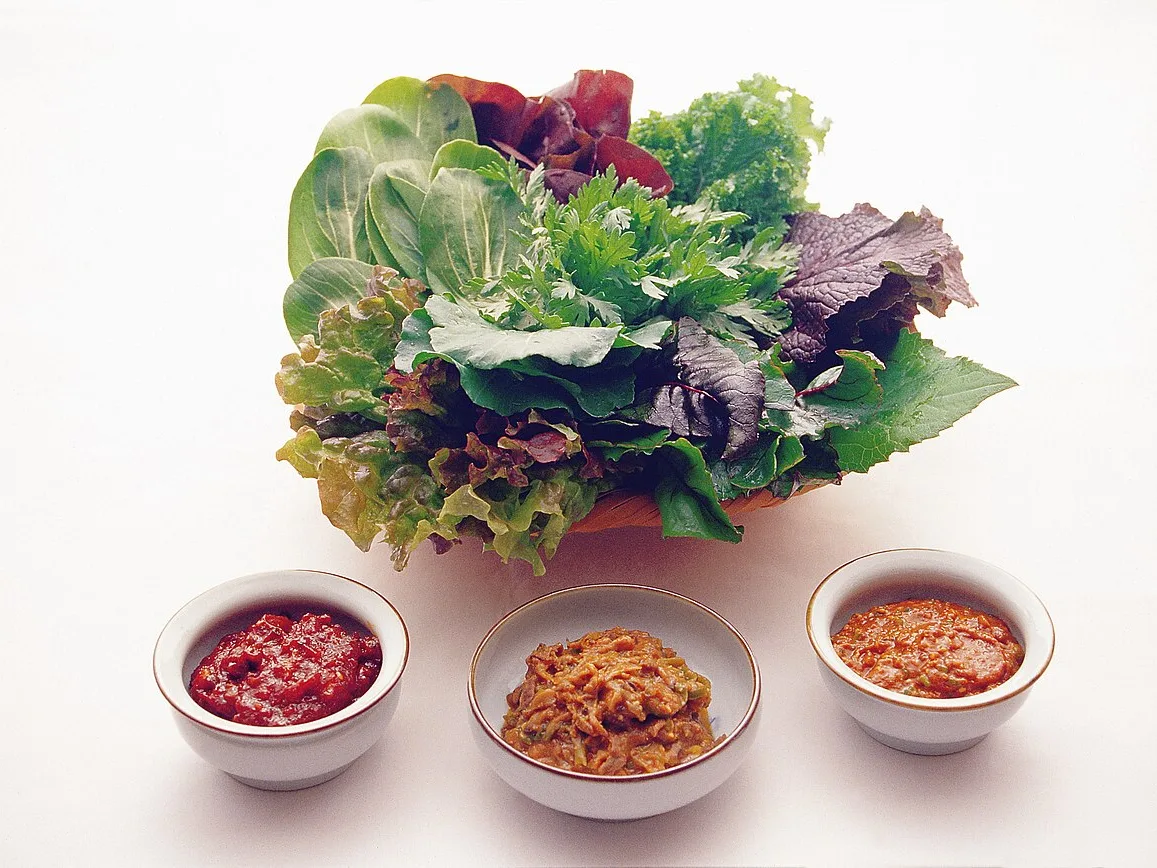
Grandma’s Recipe is a homestyle Korean restaurant on a quiet lane near Seoul Forest, and it appeared in the 2018 Michelin Guide Seoul. The signature is the ssambap set (쌈밥정식): a spread of leafy greens, rice, side dishes and grilled meat (spicy gochujang bulgogi or soy bulgogi) that you wrap into bite-size parcels. They also do grilled fish sets, rice with beef patties (tteokgalbi) and a pork bone soup. It’s a good choice if you want a proper, balanced Korean meal rather than one dish.
- Hours: 11:00 am–9:10 pm, open every day. Last order for lunch is 3 pm and for dinner 8:40 pm.
- Tip: it pairs well with a walk in Seoul Forest. Parking is hard, so come by subway (Seoul Forest Station, Suin-Bundang Line).
Map — Grandma’s Recipe: Google Maps · Naver Map (Naver Map is still the most reliable app for walking, bus and subway directions in Korea)
6. Nanpo (난포): modern Korean in Seoul Forest’s lanes
Nanpo serves updated Korean home cooking in a bright, design-led room, the kind of place young Seoulites book for a nice lunch. The dish everyone orders is the doenjang ssambap (강된장쌈밥): rice mixed with minced beef, wrapped in kale and served on a thick fermented soybean sauce. Other popular dishes include a beef bulgogi ssambap, a clear beef soup and shrimp and potato pancakes. Expect mild seasoning, which suits visitors who find Korean food too salty or spicy.
- Booking: reservations through CatchTable are recommended. Without one, expect around 40 minutes at Sunday lunch.
- Hours: a break in the mid-afternoon (lunch last order around 3:15 pm, dinner last order around 8:45 pm). Check CatchTable for today’s times.
- Getting there: Seoul Forest Station (Suin-Bundang Line), a 5-minute walk.
Map — Nanpo Seongsu: Google Maps · Naver Map (Naver Map is still the most reliable app for walking, bus and subway directions in Korea)
7. Zesty Saloon (제스티살룬): the burger that won Korea’s championship
Need a break from Korean food? Zesty Saloon opened near Seoul Forest in 2019 and is known for shrimp burgers: whole shrimp patties with wasabi mayo, jalapeño tartare or lemon basil sauce. In 2026 it won the Burger Korea Championship, and the owner says the beef burgers (try the Zesty Garlic Beef) deserve the same attention. Cheese fries and hot chipotle tenders round out the menu. It’s a safe pick for kids and picky eaters.
- Prices: burgers about 9,000–15,000 KRW (~$7–11).
- Hours: 11:30 am–9 pm, last order 8 pm.
- Waiting: dine-in and takeout have separate lines across two floors. Weekend lunch is busy; takeout is quicker.
- Find it: a red-brick building with a red awning on the second floor, near Seoul Forest Station Exit 5.
Map — Zesty Saloon: Google Maps · Naver Map (Naver Map is still the most reliable app for walking, bus and subway directions in Korea)
Cheap eats: Ttukdo Market (뚝도시장)
For something cheaper and less polished, walk to Ttukdo Market, the traditional market on the south side of Seongsu toward the Han River. It’s a working neighborhood market with snack stalls and small family-run restaurants serving stir-fried intestines (gopchang), soups and Korean pancakes. Prices are lower than in the café streets, and it feels a world away from the pop-ups. Go in the late afternoon or early evening, when the restaurants are open. Some small stalls prefer cash.
Map — Ttukdo Market: Google Maps · Naver Map (Naver Map is still the most reliable app for walking, bus and subway directions in Korea)
Rather eat with a guide? (Klook / GetYourGuide)
- Compare Seoul food tours on Klook: market tours, night food tours and Korean BBQ tours with an English-speaking guide.
- Seongsu-dong walking tour (GetYourGuide): a guided walk through the café streets and Ttukdo market. Meals aren’t included, so pair it with one of the places above.
Vegetarian, halal and dietary needs
- Pork is everywhere. Three of the seven places above are built around pork (gamjatang, jokbal, pork galbi), and many Korean soups use meat or anchovy stock even when they look vegetable-only.
- Vegetarians: Seongsu’s Western-style brunch places and bakeries are easier than Korean restaurants. At Korean places, ask for a dish “without meat” (gogi ppae-juseyo, 고기 빼 주세요), but broth is hard to avoid. Search “비건” (vegan) on Naver Map for current options nearby.
- Muslim travelers: we couldn’t confirm any halal-certified restaurants in Seongsu. Itaewon has Seoul’s biggest cluster of halal restaurants and is about 30 minutes away by subway.
- Allergies: carry a card in Korean listing what you can’t eat. Shellfish, peanuts and sesame show up in many sauces.
How to plan a Seongsu food day
- 11:30 am — early lunch at Neungdong Minari or Nanpo before the queues.
- 1:00 pm — cafés and pop-ups on Yeonmujang-gil (see Seongsu pop-up stores).
- 4:00 pm — Seoul Forest walk (see things to do in Seongsu).
- 5:30 pm — pork galbi in the alley, or jokbal to go.
- Late — gamjatang at Somunnan, which never closes.
Fitting Seongsu into a longer trip? Our Seoul itinerary puts it on a half day, and where to stay in Seoul compares Seongsu with other neighborhoods. Seongsu Station is on Line 2, so it’s easy to reach from Hongdae, Gangnam and City Hall (see the Seoul subway guide).
Accessibility
- Many Seongsu restaurants are in old buildings with a step at the door or a staircase to a second floor (Zesty Saloon is upstairs). Check photos on Naver Map before you go.
- The pork galbi alley and Ttukdo Market have narrow, uneven lanes. Strollers fit, but it’s tight at dinner time.
- Seongsu Station and Seoul Forest Station both have elevators, but only at some exits. Naver Map shows which.
- Floor seating is rare at the places in this guide; most have chairs and tables.
More of Seongsu
- Seongsu-dong guide — getting there and the main streets
- Seongsu cafés — warehouse cafés and bakeries
- Things to do in Seongsu — Seoul Forest, evenings and more
- Seongsu pop-up stores — how this week’s pop-ups work
- Naver Map in English — the app for finding restaurants
- Essential Korea travel apps — translation, taxis and more
FAQ
What food is Seongsu known for?
Gamjatang (pork bone stew) at Somunnan Seongsu Gamjatang, jokbal (braised pork trotters), the old charcoal pork galbi alley, and more recently Korean set meals and burgers near Seoul Forest.
Do I need a reservation for Seongsu restaurants?
Usually not. Most popular places use a walk-in waitlist instead. Nanpo recommends booking on CatchTable. Go on a weekday or at off-peak times to keep waits short.
Is there a late-night restaurant in Seongsu?
Yes. Somunnan Seongsu Gamjatang is open 24 hours, and Neungdong Minari is open until 11 pm.
How much does dinner in Seongsu cost?
A soup or single bowl is about 12,000–15,000 KRW (~$9–11) per person. Shared dishes like gamjatang or jokbal work out to roughly 20,000–30,000 KRW (~$15–23) per person, before drinks.
Can I pay by card?
Almost always. Foreign Visa and Mastercard cards work at restaurants across Seongsu (Somunnan also takes Amex). Keep a little cash for market stalls.
Sources: Taste Korean Food – Somunnan Seongsu Gamjatang (verified Aug 2026) · Korea Tourism Organization data – Somunnan Seongsu Gamjatang annex (Sep 2026) · Hot Place Hunter – Neungdong Minari Seongsu (Jul 2026) · W Korea – Seoul’s queue-worthy restaurants (2024) · Hot Place Hunter – Seongsu Jokbal (Apr 2026) · Seoul Media Hub – Seongsu pork galbi alley · Korea Tourism Organization data – Grandma’s Recipe · Siksin – Nanpo Seongsu · Seoul Eats – Top restaurants in Seongsu (Jul 2025) · Polle – Nanpo reviews · Newsis – Zesty Saloon, 2026 Burger Korea Championship (Jun 2026) · Korea Tourism Organization data – Zesty Saloon (Sep 2026) · iVisitKorea – Seongsu-dong guide (Aug 2026) · Korea JoongAng Daily – CatchTable English version
Photos: Nadia Prigoda / Wikimedia Commons, CC BY 2.0 · LR0725 / Wikimedia Commons, CC BY-SA 4.0 · egg (Hong, Yun Seon) / Wikimedia Commons, CC BY 2.0 · wizdata / Wikimedia Commons, CC0
RELATED POSTS
View all

Seongsu Pop-Up Stores: This Month’s List, How They Work and Where to Shop
October 18, 2026 | by Korea Bestie
Myeongdong Street Food (2026): What to Eat, Prices, Hours and the Best Time to Go
October 21, 2026 | by Korea Bestie
Sugar Skull Central City Review: Tacos Before Your Bus at Seoul Express Bus Terminal
October 14, 2026 | by Korea Bestie