


Things to Do in Seongsu: Seoul Forest, Shoe Street, Han River Nights and Two Easy Routes
October 18, 2026 | by Korea Bestie

Most people come to Seongsu-dong (성수동) for coffee and pop-up stores, but the best things to do in Seongsu are the ones in between: a slow walk through Seoul Forest to see the deer, the old shoe-workshop streets that gave the area its character, a gallery or two, and an evening by the Han River at Ttukseom. This guide covers all of it, with tips for rainy days and two ready-made routes (half day and full day) you can open straight in a map app. New to the area? Start with our Seongsu-dong guide for the big picture.
Last checked: October 2026. Dollar figures use about 1,330 KRW = 1 USD (October 2026).
Quick answer
- Top things to do: Seoul Forest and its deer, the shoe-workshop streets and converted factories, pop-ups on Yeonmujang-gil, and sunset at Ttukseom Hangang Park.
- Free: Seoul Forest, the deer enclosure and the 2026 Garden Expo gardens.
- Rainy day: D Museum, KWANGYA@SEOUL, Amore Seongsu and the big fashion and beauty flagships.
- At night: dinner on the side streets, then the river at Ttukseom (free drone show on October 31, 2026, 8:30–8:45 pm).
First time in Korea? Start here: our step-by-step guide from landing to your first day.
New to the area? Our Seongsu-dong guide covers the basics (stations, the café street, how pop-ups work). This page goes deeper on what to do. For where to eat and drink, see our Seongsu cafés and Seongsu restaurants guides, and for shopping, the Seongsu pop-up stores guide.
Things to do in Seongsu at a glance
- Seoul Forest (서울숲): a big free park with a deer enclosure, a ginkgo grove, ponds and riverside paths. Best in late October to early November.
- The shoe street: the blocks between Seongsu and Ttukseom stations, where small shoemakers still work next to converted factories.
- Galleries and indoor stops: D Museum, the SM Entertainment store KWANGYA@SEOUL, Amore Seongsu and the big fashion and beauty stores. Good for rain.
- Ttukseom Hangang Park (뚝섬한강공원): riverside picnics, bikes, convenience-store ramen and city lights after dark. Drone shows on some evenings.
- Getting there: Seongsu Station or Ttukseom Station on Line 2, Seoul Forest Station on the Suin-Bundang Line, Jayang Station on Line 7 for the river. Our Seoul subway guide explains lines and transfers.
1. Seoul Forest: deer, ginkgo and the river
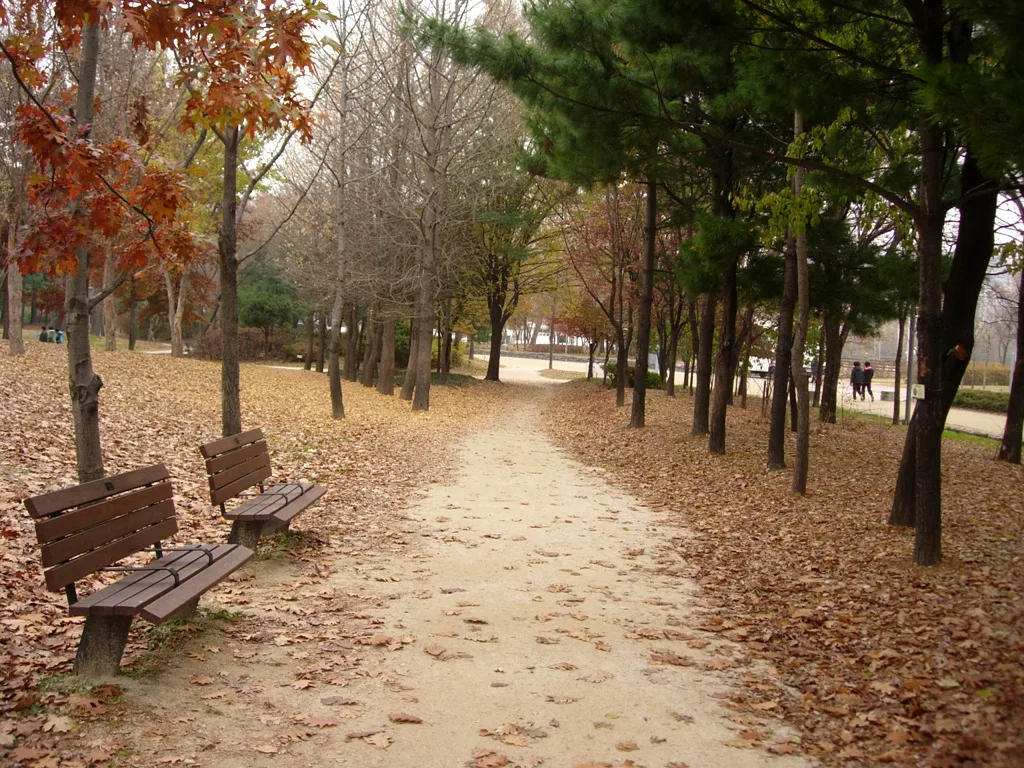
Seoul Forest is the green half of Seongsu. It’s a large, flat park on the site of an old racecourse and golf course, and it’s free and open all day. The cafés of Yeonmujang-gil are about a 10–15 minute walk east, so it’s easy to mix the two. The quickest ways in are Seoul Forest Station (서울숲역, Suin-Bundang Line) or Ttukseom Station (뚝섬역, Line 2), then follow the signs for 서울숲.
Going before October 27, 2026? Seoul Forest is the main venue of the 2026 Seoul International Garden Expo (서울국제정원박람회), which runs May 1 to October 27, 2026. It is free, needs no booking, and spreads 167 show gardens through the park and out into Seongsu-dong and along the Han River. After October 27 the event ends; the city has not said which gardens will stay, so treat the expo gardens as a bonus, not a plan.
The deer enclosure (사슴방사장)
The park’s best-known residents are its spotted sika deer, kept in a fenced enclosure in the Eco Forest section near the river side of the park. You watch them through the fence, often from a few steps away. Kids love it, and it’s free.
- Hours: the Eco Forest area is listed as open early morning to evening (published times differ, roughly 7:00 am–8:00 pm, longer in summer). Morning and late afternoon are when the deer are most active.
- Feeding: don’t bring your own food for the deer. Follow the signs at the enclosure; Seoul also bans feeding wild animals in city parks, with fines from 200,000 KRW (~$150).
- The Eco Forest is linked to the rest of the park by a footbridge, so allow 10 minutes from the main entrance.

Seoul Forest by season
- Autumn (best): the ginkgo grove turns bright yellow, usually in early November, and the maples around the ponds go red at about the same time. For 2026 the city foliage peak is forecast for roughly October 29 to November 8. Our Seoul fall foliage 2026 guide compares Seoul Forest with the palaces, Namsan and day trips.
- Spring: tulips and cherry blossoms from early to mid April, and lots of picnickers.
- Summer: shady paths and the waterside areas. The butterfly garden is listed as open May to October.
- Winter: quiet, bare and often frosty. Still a nice walk on a clear day; the deer are out all year.
Two small indoor spots are worth a look if you have kids: the Insect Botanical Garden (곤충식물원), a greenhouse with plants and small creatures, and the seasonal butterfly garden. Both are listed as closed on Mondays, with daytime hours of about 10:00 am–5:00 pm (shorter in winter). The park’s paths and lawns stay open regardless.
Map — Seoul Forest: Google Maps · Naver Map (Naver Map is still the most reliable app for walking, bus and subway directions in Korea)
2. Walk the shoe street and old factory blocks
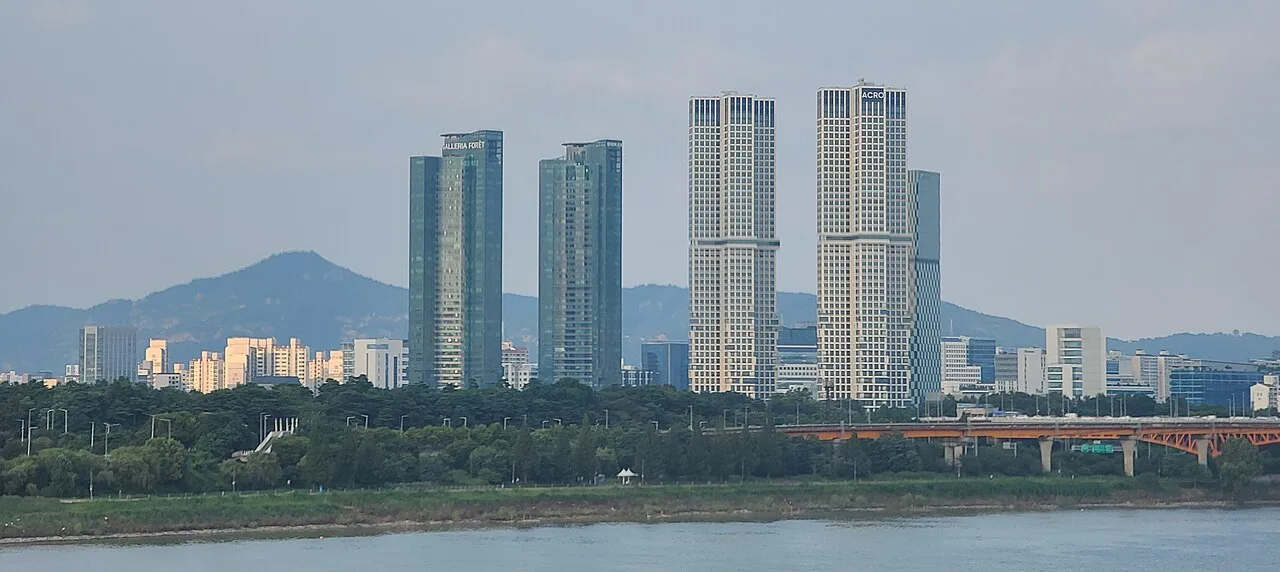
Long before the cafés, Seongsu was Seoul’s shoemaking district. Many small workshops and parts suppliers still run in the blocks around Seongsu Station, especially along Achasan-ro (아차산로) toward Ttukseom Station, which is why you’ll hear it called the “handmade shoe street” (성수 수제화거리). The fun is in the contrast: a workshop with a stitching machine and stacks of leather, next door to a brand flagship with a queue outside.
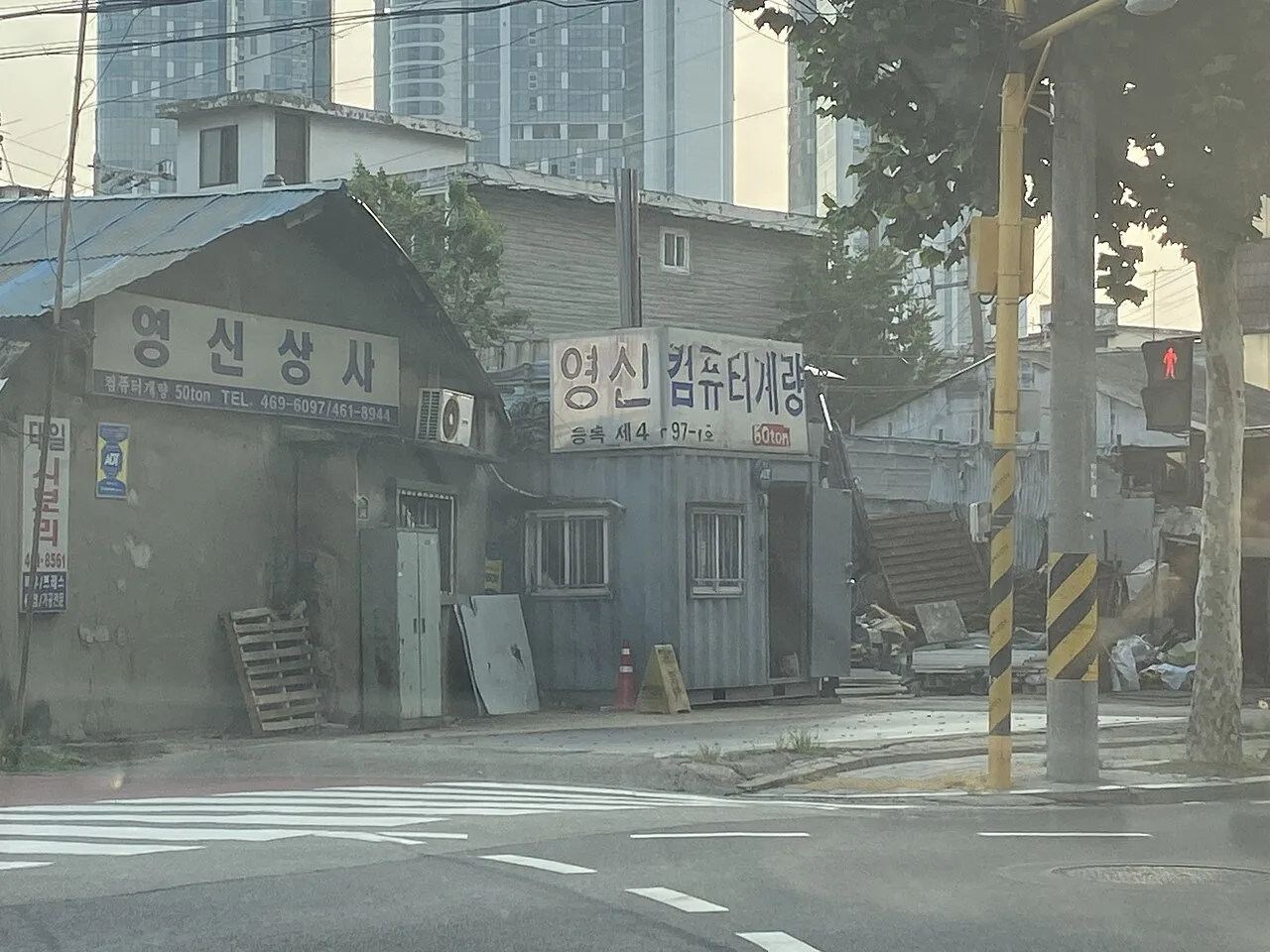
- What to look for: small shoe shops with a workshop in the back, many offering made-to-order or semi-custom shoes. Prices, lead times and English support vary a lot by shop, so ask before you commit. Custom pairs usually take longer than a short trip allows.
- Converted factories: many of Seongsu’s best-known cafés and stores are old warehouses and factories with the brick, steel beams and high ceilings left in. Daelim Changgo (대림창고), an early warehouse conversion, now houses a Musinsa store and still hosts pop-ups.
- Seongsu Shoemakers’ Park (성수수제화공원): a small park between the workshops that is one of the 2026 Garden Expo sites, with a garden by landscape architect Lee Nam-jin.
- When: weekdays, when the workshops are actually working. Many small shops close on Sundays.
This is a 30–60 minute wander, not a museum visit. Start at Seongsu Station Exit 3, cross over to Yeonmujang-gil for the cafés and pop-ups, then loop back along the side streets.
Map — Seongsu Station: Google Maps · Naver Map (Naver Map is still the most reliable app for walking, bus and subway directions in Korea)
3. Galleries, exhibitions and indoor stops (good for rainy days)
Seongsu’s exhibition scene changes as fast as its pop-ups, so think of these as places to check the day before rather than fixed sights.
- D Museum (디뮤지엄): a contemporary art and design museum in the ACRO Seoul Forest building, linked to Seoul Forest Station. Its last show, Art in Life, Life in Art 2, closed on September 20, 2026, and as of mid-October the official site says the next exhibition is in preparation. In past seasons it was closed Mondays, and tickets were about 12,000 KRW (~$9) for adults. Check the website before you go. Address: 서울 성동구 왕십리로 83-21.
- KWANGYA@SEOUL: SM Entertainment’s flagship store on B1 of ACRO Seoul Forest D Tower, a 5-minute walk from Seoul Forest Station, with official K-pop merch and photo zones. Travel guides list it as open daily, 10:30 am–8:00 pm, and free to enter unless there’s a special event.
- Amore Seongsu (아모레성수): Amorepacific’s beauty space in a converted car repair shop, where you can test products from the group’s brands on your face, not just your hand. It’s a good rainy-hour stop and free to browse. For more beauty shopping, see our Olive Young Seoul guide (it covers Olive Young N Seongsu).
- Brand flagships and pop-ups: most are indoors, free and open until 8–10 pm. Our Seongsu pop-up stores guide explains how to find this week’s line-up.
A rainy-day plan: start at D Museum or KWANGYA@SEOUL (both reachable from Seoul Forest Station without much walking), take a taxi or walk 15 minutes to Yeonmujang-gil for a long café stop, then spend the afternoon on the indoor stores. Convenience stores sell umbrellas for about 5,000–10,000 KRW (~$4–8).
Map — D Museum / KWANGYA@SEOUL (ACRO Seoul Forest): Google Maps · Naver Map (Naver Map is still the most reliable app for walking, bus and subway directions in Korea)
4. Ttukseom Hangang Park: sunset, bikes and Seongsu at night
When the shops close, head to the river. Ttukseom Hangang Park is one of the liveliest Han River parks, a short ride from Seongsu: take Line 2 from Seongsu Station to Konkuk University (2 stops), change to Line 7 and ride one stop to Jayang Station (자양역, formerly Ttukseom Resort Station). The park is right outside. A taxi from Seongsu takes about 10 minutes.
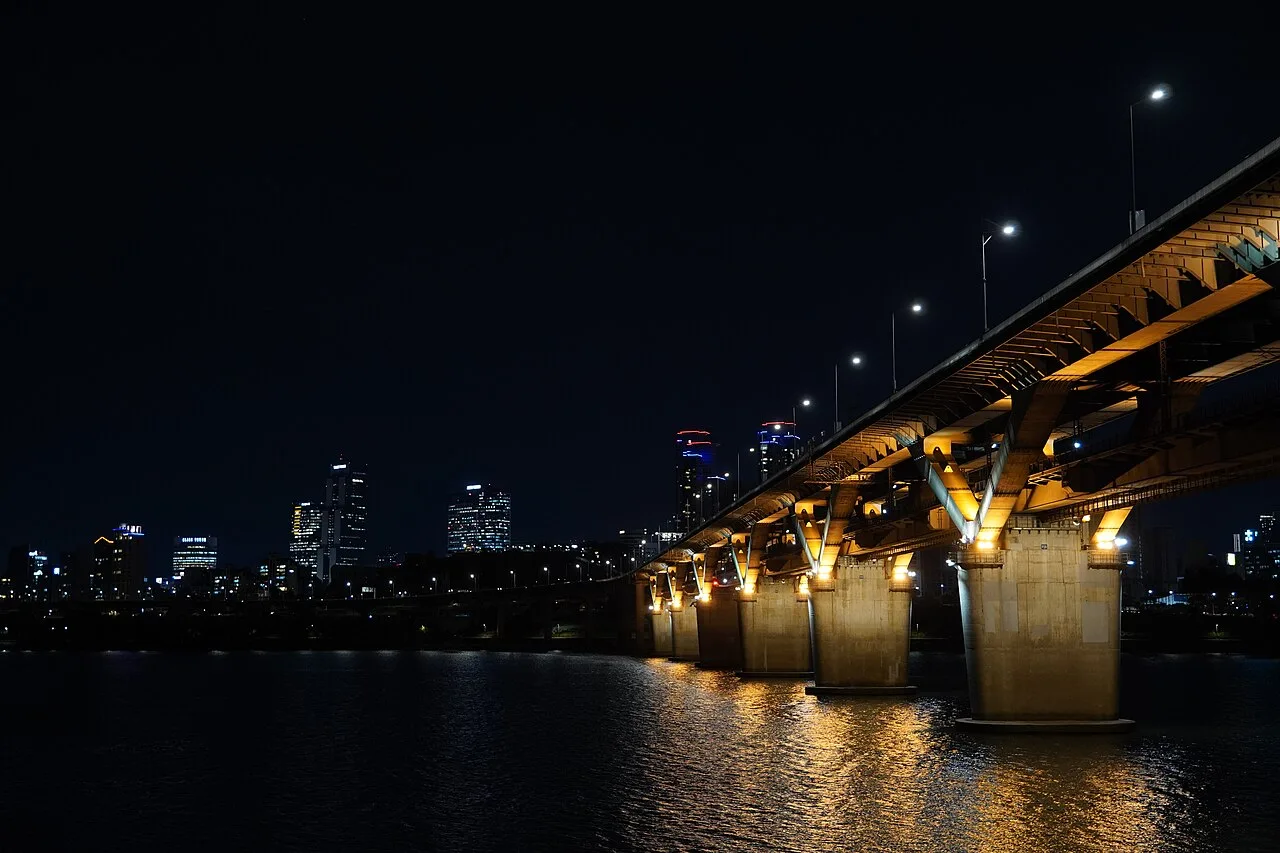
- Sunset and a river picnic: buy snacks at the riverside convenience store and try the instant ramen machine, where you cook the noodles yourself. It’s a Han River ritual for young Koreans. Sit on the steps or the lawn and watch the lights come on across the river.
- Bikes: the riverside cycle path is flat and car-free. Seoul’s public bikes, Ttareungyi (따릉이), can be rented with the app and a foreign card; a 1-hour pass is about 1,000 KRW (~$0.75). Ride west along the river toward Seoul Forest.
- Drone light shows: in 2026 Seoul is running free drone shows at Ttukseom. The last one this year is Saturday, October 31, 2026: the event runs 7:30–9:25 pm, and the drones fly from 8:30 to 8:45 pm at the waterside stage. Use Jayang Station Exit 1 (Exits 2 and 3 may be closed for crowd safety), and expect cancellations in rain or strong wind.
- Hangang Bus: the city’s river bus stops at Ttukseom on the Jamsil–Ttukseom–Seoul Forest–Oksu line. A ride costs 3,000 KRW (~$2.26) for adults, payable by transit card (no cash), and the Seoul Forest pier is listed as running only until the end of October 2026. Check the current timetable in Naver Map.
Rather ride with a guide? (Klook)
- Morning 3-hour bike tour along the Han River: a small-group ride that starts near Ttukseom Hangang Park and loops through Seoul Forest and Seongsu-dong. Bike, helmet and guide are included; check the listing for the current price, start time and age limits.
Seongsu at night: Yeonmujang-gil itself quietens after 9 pm, when most pop-ups close, but the restaurants and bars on the side streets stay busy, and the area feels safe at night. Pair an early dinner from our Seongsu restaurants list with the river, or the other way round.
Map — Ttukseom Hangang Park: Google Maps · Naver Map (Naver Map is still the most reliable app for walking, bus and subway directions in Korea)
Two Seongsu routes (with maps)
Half day (about 4–5 hours): the classic walk
- 1:00 pm — Seongsu Station Exit 3. Wander the shoe-workshop blocks and side streets for 30 minutes.
- 1:30 pm — Yeonmujang-gil. One café and two or three pop-ups. Our café guide helps you pick.
- 3:30 pm — Seoul Forest. Walk west to the park, cross to the Eco Forest for the deer, and finish in the ginkgo grove.
- 5:00 pm — the river side of Seoul Forest for the sunset over the Han, then out via Seoul Forest Station.
Route map — half day: open the walking route in Google Maps (for turn-by-turn walking directions, search the same stops in Naver Map)
Full day (9–10 hours): park, shops and the river at night
- 10:00 am — Seoul Forest while it’s quiet: the deer, the ponds and (until October 27, 2026) the Garden Expo gardens.
- 12:00 pm — D Museum or KWANGYA@SEOUL next to Seoul Forest Station, then lunch in Seongsu.
- 2:00 pm — Yeonmujang-gil and the shoe street. Cafés, pop-ups and the fashion and beauty stores. Leave bags in a subway locker if you’re shopping.
- 5:00 pm — to Ttukseom Hangang Park (Line 2 to Konkuk University, Line 7 to Jayang, or a short taxi). Sunset, ramen by the river, and a Ttareungyi bike ride if you have energy left.
- 8:00 pm — dinner back in Seongsu or around Konkuk University Station.
Route map — full day: open the walking route in Google Maps (for turn-by-turn walking directions, search the same stops in Naver Map)
Fitting Seongsu into a longer trip? Our Seoul itinerary slots it into a 3–5 day plan, and where to stay in Seoul explains why many visitors stay elsewhere on Line 2 and ride in.
Tips for foreign visitors
- Directions: use Naver Map, which has English menus. Our Naver Map in English guide shows how. Search Korean names like 서울숲 or 뚝섬한강공원 for the best results.
- Paying: foreign cards work almost everywhere in Seongsu, and some cafés and stores are cashless. A T-money card covers the subway, buses and the Hangang Bus.
- Weekends: Seongsu is packed on Saturday and Sunday afternoons. Do the park in the morning and the shops on a weekday if you can.
- Weather: late October to early November is ideal: cool, dry and colorful. See Korea weather by month.
Accessibility: strollers and wheelchairs
- Seoul Forest has wide paved or packed paths and is mostly flat. The footbridge to the Eco Forest (deer) has gentle slopes. Some lakeside and woodland paths are unpaved.
- The shoe street and Yeonmujang-gil are flat, but the sidewalks are narrow and some stretches have none. Many converted buildings have a step at the door.
- Ttukseom Hangang Park is flat and paved along the river. Jayang Station has elevators, but on drone show nights some exits close and the crowds make strollers hard work.
- Stations: Seongsu, Ttukseom, Seoul Forest and Jayang all have elevators, usually at only some exits. Naver Map shows which ones.
Nearby on Korea Bestie
- Seongsu-dong guide — the neighborhood basics
- Seongsu cafés — where to sit between sights
- Seongsu restaurants — lunch and dinner nearby
- Seongsu pop-up stores — this week’s brand stores and shopping
- Seoul fall foliage 2026 — Seoul Forest’s ginkgo and other autumn spots
- Seoul subway guide — Line 2, Line 7 and transfers
- Seoul Christmas market 2026 — if you’re visiting in December
FAQ
What are the best things to do in Seongsu-dong?
Walk Seoul Forest and see the deer, explore the shoe-workshop streets and converted factories, browse the pop-ups and flagships on Yeonmujang-gil, and end the day at Ttukseom Hangang Park by the river.
Is Seoul Forest free?
Yes. The park, the deer enclosure and the 2026 Garden Expo gardens are free. Some programs and exhibitions nearby charge separately.
When can I see the deer in Seoul Forest?
Daily, from morning to evening. The Eco Forest has published opening times of roughly 7:00 am–8:00 pm (longer in summer). Mornings and late afternoons are best.
What can I do in Seongsu at night?
Have dinner on the side streets, then go to Ttukseom Hangang Park for river views, a convenience-store ramen and, on October 31, 2026, the free drone show (8:30–8:45 pm).
Is Seongsu good for kids?
Yes. The Seoul Forest deer, the lawns, the insect garden and bike rides by the river are the highlights for children. Crowded weekend cafés are harder.
What do I do in Seongsu when it rains?
D Museum (check the current exhibition), KWANGYA@SEOUL, Amore Seongsu, the big fashion and beauty flagships, and a long café stop.
Sources: Newsis – 2026 Seoul International Garden Expo (Apr 2026) · Money Today – Garden Expo opening (May 2026) · Seoul Media Hub – Garden Expo visitor guide (2026) · Seoul Metropolitan Government – Han River drone light show, second half 2026 · Seoul Media Hub – Hangang Bus (Jul 2026) · Daelim Cultural Foundation – D Museum · SBS Biz – Seoul park feeding ban and fines (2025) · Seoul Media Hub – Seongsu handmade shoe street · Wikipedia – Seoul Forest
Photos: Enigma7seven / Wikimedia Commons, CC BY-SA 3.0 · Drcbrothephotographer / Wikimedia Commons, CC BY 4.0 · Ox1997cow / Wikimedia Commons, CC BY-SA 4.0 · CartoonChess / Wikimedia Commons, CC BY-SA 4.0 · Real rism / Wikimedia Commons, CC BY-SA 4.0
RELATED POSTS
View all

Kimchi Making Class in Seoul (2026): English Classes, Museum Kimchikan and Kimjang Season
October 17, 2026 | by Korea Bestie
Seongsu Cafe Street (2026): 8 Best Cafés in Seongsu-dong, With Map
October 18, 2026 | by Korea Bestie
Ikseon-dong Guide (2026): Seoul’s Hanok Café Alleys, Where to Eat and When to Go
October 23, 2026 | by Korea Bestie